

Published: May 19, 2024 | Last Updated: May 22, 2025

What is the mad scientist trope? Definition & Meaning
The mad scientist is a prevalent character trope in film and literature who is depicted as a brilliant but unhinged individual, often obsessed with their scientific pursuits to the point of ethical compromise. This character typically engages in experiments that defy moral, ethical, or natural laws, leading to unpredictable and often disastrous consequences.
Historical Context and Origins
The mad scientist trope’s origins can be traced back to 19th-century literature and theatrical plays.
One of the earliest and most influential examples is Mary Shelley’s Frankenstein (1818), where Dr. Victor Frankenstein becomes obsessed with reanimating the dead, leading to tragic results.
Characteristics of the Mad Scientist
The mad scientist frequently operates in morally grey areas, conducting experiments that question ethical norms. These experiments can involve human experimentation, genetic modification, or the creation of sentient beings. The experiments often lead to unpredictable, catastrophic outcomes.
They are often portrayed as individuals with an insatiable thirst for knowledge and a desire to push the boundaries of what is known. This obsession often isolates them from society because their intense focus on their work often leads to estrangement from family, friends, and society- ultimately, to ethical lapses.
Variations of the Mad Scientist Trope
Mad scientists come in many variations, not all evil, although the end rarely justifies the means.
The Benevolent Mad Scientist
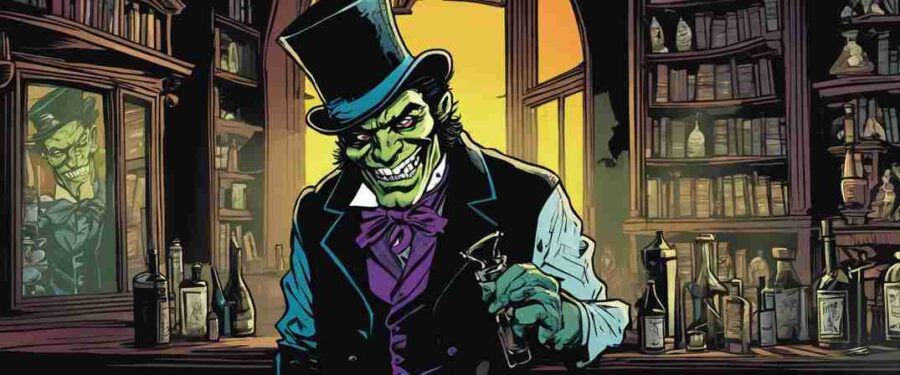
Some mad scientists are portrayed with benevolent intentions, aiming to benefit humanity but failing due to unforeseen consequences. Examples include:
- Dr. Jekyll and Mr. Hyde (1931)
- Flubber (1997)
The Malevolent Mad Scientist
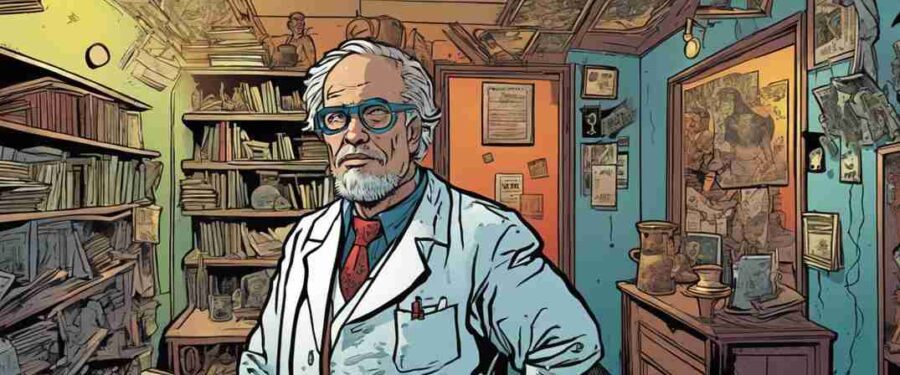
Others are depicted as malevolent figures who use their knowledge for personal gain or to inflict harm. Examples include:
- Dr. Moreau in The Island of Dr. Moreau (1996)
- Dr. Octopus in Spider-Man 2 (2004)
The Tragic Mad Scientist

This variation focuses on the tragic aspects of the characters, highlighting their fall from grace due to their hubris. Examples include:
- Dr. Seth Brundle in The Fly (1986)
- Dr. Victor Frankenstein in Frankenstein (1931)
The Comedy Mad Scientist

This is a more light-hearted take on the trope, where the mad scientist is friendly and a catalyst for adventure. Examples include:
- Dr. Emmett Brown (Doc Brown) in Back to the Future (1985)
- Dr. Egon Spengler in Ghostbusters (1984)
Summing Up
The mad scientist trope is a complex and multifaceted character trope that has evolved but remains a staple in film and literature. It often serves as a cautionary tale about the dangers of unchecked scientific ambition.
The trope raises questions about the ethical limits of scientific research and the potential consequences of playing God. It also reflects societal anxieties about technological advancements and their potential to disrupt the natural order.
If you want to use the Mad Scientist trope in your scriptwriting, I hope you’ve gotten a better overview of some possible variations.
Read Next: Want to write characters that feel real on the page?
Start with our Free Screenwriting Course — a complete foundation in structure, dialogue, and building compelling characters.
Then browse all character development articles — from internal conflict and arcs to ensemble design and protagonist logic.
Or return to the Screenwriting section for formatting, story structure, and writing tools.
