

Published: December 2, 2025

What is Walter Murch’s Rule of Six? Definition & Meaning
The Rule of Six is a list of editing priorities created by Walter Murch. It ranks what matters most when deciding where to cut a shot: emotion, story, rhythm, eye trace, 2D space, and 3D space. The higher the item on the list, the more it should influence your decision. The rule helps you choose cuts that match the scene’s emotion and keep the transition from feeling jarring or forced.
The Six Priorities of Editing (Ranked by Importance)
Murch assigns each priority a percentage to show how much weight it should carry. These are not exact rules. The numbers show which parts of the cut matter more when you need to make a choice.
| Priority | Editing Goal | Weight |
|---|---|---|
| 1 | Emotion | 51% |
| 2 | Story | 23% |
| 3 | Rhythm | 10% |
| 4 | Eye Trace | 7% |
| 5 | 2D Screen Plane | 5% |
| 6 | 3D Spatial Continuity | 4% |
If you have to break something, break the ones at the bottom of the list.
The Rule of Six Explained
If the cut is made emotionally right, the audience will be willing to accept any kind of technical error.
Walter Murch in In the Blink of an Eye (1995)
Each part of the list affects how the viewer feels, understands the scene, and stays engaged. The Rule of Six helps you decide what matters most when you can’t satisfy everything at once.
1. Emotion (51%) — Editing Is Emotional First
The main question to ask is: Does this cut hold or raise the emotion the scene is built around?
Editors often hold a shot longer if the character’s emotion hasn’t fully played out or reached the viewer.
In the opening hotel room scene of Apocalypse Now, Murch holds on Willard’s close-up so the sense of dread can fully sink in. He doesn’t rush to cut just because the shot has run for a certain length. He waits until the character’s emotion has fully played out and the moment feels complete.
2. Story (23%) — What Does This Cut Tell Us?
A good cut should help the viewer understand the story. It might reveal a reaction, shift focus, or hide something until the right moment. Even if the shot looks great, it doesn’t work if it makes the scene unclear or distracts from the key action or idea.
3. Rhythm (10%) — Cut Where the Viewer Would Blink
Murch believes we blink when a thought ends or an emotion settles. A cut should come at those moments. This makes the edit feel natural, like how we shift attention in real conversations or emotional moments. When the rhythm matches that flow, the cut disappears.
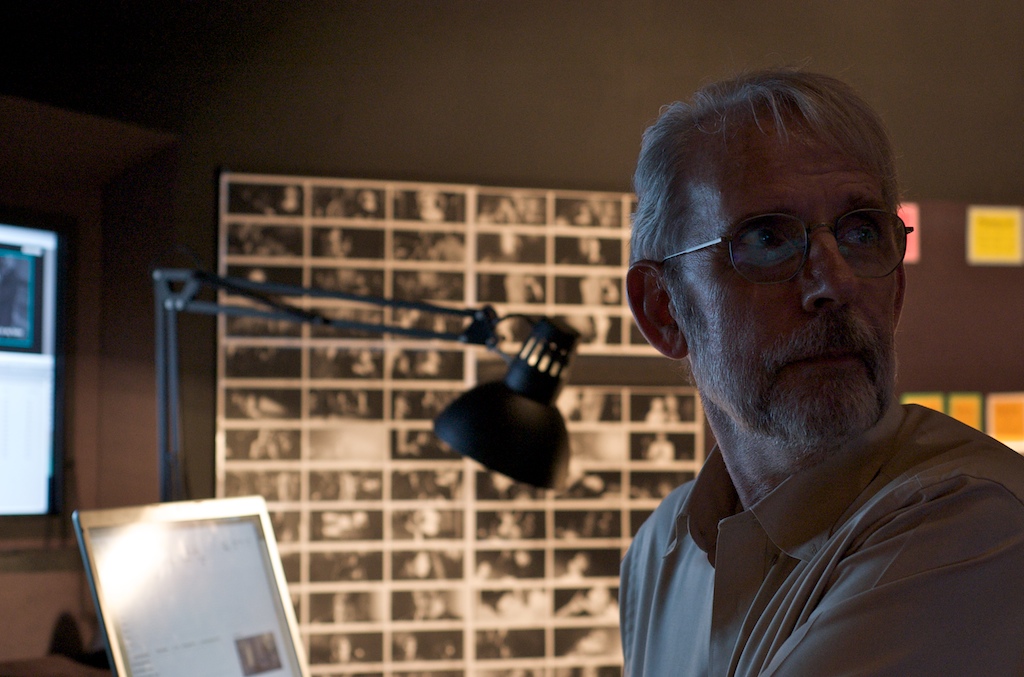
Who Is Walter Murch and Why Should You Care?
Walter Murch, the legendary editor of Apocalypse Now, The Conversation, and The English Patient, developed a method for making cuts that feel smooth and match how the characters and viewer should feel in that moment. He helped shape modern editing and sound design.
He’s known for linking editing to how we naturally take in visual and emotional information, especially how blinking happens when a thought or feeling ends.
He also helped develop nonlinear digital editing systems. His Rule of Six comes from his book In the Blink of an Eye (1995) and is now taught in film schools to show how editing choices affect what the viewer feels, what they understand, and how they follow the rhythm of a scene.
4. Eye Trace (7%) — Lead the Viewer’s Eye
The viewer’s eyes should land in the same area from one shot to the next. That way, they don’t need to search the frame to know where to look. This smooths the edit and keeps attention focused. Even in short videos like TikToks or trailers, editors use eye trace to keep transitions readable and fast to follow.
5. 2D Screen Plane (5%) — Keep Direction Consistent
This refers to screen direction. If someone exits left, they should enter from the left in the next shot. If this flips, the viewer may feel disoriented or unsure where the characters are in the scene. Murch places this lower on the list because most viewers care more about emotion and clarity than technical consistency.
6. 3D Spatial Continuity (4%) — Geography Comes Last
This means making sure the layout of the space makes sense (like where characters stand, which way they look, and how they move through the room) so the viewer doesn’t get confused. If the feeling is strong and the story is clear, you can bend these rules.
For example, scenes may cut between mismatched angles during a chase, but if the emotion and pace are right, the audience stays with it.
How to Use the Rule in Real Edits
Editing always involves trade-offs. You can’t protect everything. This rule helps you know what to protect first.
- Does the cut feel emotionally true?
- Does it help the viewer understand what matters?
- Does the timing match the pace of thought or feeling?
- Is the viewer’s eye landing where it should?
- Does the screen direction make sense?
- Is the space clear enough for the story to work?
These questions shift editing from solving technical problems to making emotional decisions.
How It Compares to Other Editing Styles
Other editing styles focus on different goals, but the Rule of Six puts emotion at the top and fits the rest around it.
- Soviet montage focuses on contrast and collision.
- Continuity editing puts realism first and keeps space intact.
- Jump-cuts break space or time on purpose to feel raw or sudden.
Murch’s Rule brings these approaches together and puts emotion first. What the viewer feels matters most.
Where It’s Used Today
The Rule of Six is used far beyond feature films. Editors apply it in:
- Documentaries
- Branded videos
- Short-form journalism
- Social media content
- Narrative games
- Vertical formats like TikTok or Reels
In fast-paced formats like YouTube or Reels, eye trace and rhythm are especially important. Attention is fragile. You only get a few seconds to guide the viewer before they scroll away.
Even when timelines are rushed or full of footage, the Rule of Six helps you focus on what matters most.
The Blink Theory
Murch believes editing should follow the natural rhythm of how we think and feel, when thoughts end, or emotions shift. He connects cutting to blinking. We blink when a thought ends or an emotion shifts. Cut at that moment, and the viewer won’t notice the edit. It feels natural.
This shows that editing isn’t just visual. It works best when it mirrors how the brain transitions between moments.
Summing Up
Emotion comes first. Story comes next. Everything else supports those two.
This is the heart of the Rule of Six: a guide to help you cut in ways that match the story’s emotion and guide what the viewer feels and notices.
Read Next: Want to sharpen your editing instincts?
Start with our breakdown of the different types of video editing and learn how each approach shapes tone and flow.
Then explore how film cuts function as visual punctuation, or how scene transitions control time, emotion, and rhythm.
Still curious? Browse the full Editing section for techniques, examples, and theory.
