Published: June 15, 2019 | Last Updated: June 15, 2025

The difference between Naturalism and Realism in art; Definition & Meaning
Naturalism and Realism are related art movements from the 19th century that both aimed to depict the world truthfully. However, Naturalism focused on scientific observation, while Realism concentrated on everyday life and social conditions.
Origins of Realism: Art in Response to the 1848 Revolution
Realism began in France in the 1840s, especially after the 1848 Revolution. Artists like Gustave Courbet rejected idealized figures and focused on real people in real settings. Their goal was to show life as it was, including labor, poverty, and social inequality.
Many Realist artists believed that by representing real conditions truthfully, art could encourage reflection or even reform. Realism was as much political as aesthetic, born of the 1848 Revolution and a belief that humble individuals deserved attention in art.
It also reacted against Romanticism’s emotional excess and idealized characters, choosing instead to portray life as it appeared in daily experience.
Gustave Courbet and the Shock of Scale
Courbet shocked the Paris Salon in the 1850s by painting everyday laborers on massive canvases, the kind usually reserved for myth or history.
This bold move challenged the traditional hierarchy of subject matter and signaled a departure from academic norms. Realism wasn’t only about content; it also questioned scale, audience, and purpose.
Origins of Naturalism: Art Meets Science
Naturalism followed in the 1870s and 1880s. It was shaped by the rise of science and literature in the late 19th century. Writers like Émile Zola argued that artists should observe the world like scientists, recording facts without moral judgment.
Naturalist painters followed that idea, avoiding emotion or symbolism. They focused on the physical world (think light, texture, posture) and let the image speak for itself.
In contrast, Realist painters often chose scenes of labor, poverty, or domestic routine to make quiet social statements. They were less concerned with neutrality and more interested in how people lived under changing political and economic conditions.
Naturalism vs Realism: Visual Style and Subject Matter

It helps to separate how something is painted from what is being shown. Naturalism describes visual accuracy, like realistic anatomy, light, and shadow. Realism focuses on content and theme.
A painting can be naturalistic in style but not realistic in subject, especially if it shows myths, idealized beauty, or fantasy. Flemish baroque painter Peter Paul Rubens, for example, painted with extreme naturalism, but his scenes of gods and goddesses would not qualify as Realism.
The Tone of Naturalism: Not Always Bleak
While Naturalism in literature often focused on bleak conditions and survival, painters sometimes used the same methods to capture beauty in landscapes or natural light. In that sense, Naturalist art could appear more serene than its literary counterpart.
Naturalism often emphasized nature over the supernatural, portraying the visible world without symbolic or religious filters. It also extended beyond painting into philosophy, literature, and theater, making it one of the broadest currents of 19th-century representation.
Key Differences Between Naturalism and Realism
These movements overlapped, but scholars usually date Naturalism slightly later, in France during the 1870s, with its influence extending to American literature and journalism by 1900.
| Feature | Realism | Naturalism |
|---|---|---|
| Main Focus | Depiction of everyday life and ordinary people | Scientific observation of behavior, environment, and heredity |
| Philosophy | Social reflection and objective observation | Determinism based on Darwinian theory; interest in psychology and internal character |
| Tone | Neutral or occasionally hopeful | Often bleak or deterministic, though sometimes serene in landscape painting |
| Subjects | Broad range of ordinary people and settings | Marginalized figures, working-class life, and sometimes human instinct or violence |
| Artist’s Role | Observer and interpreter | Recorder of external forces shaping life |
Painting Examples of Realism and Naturalism
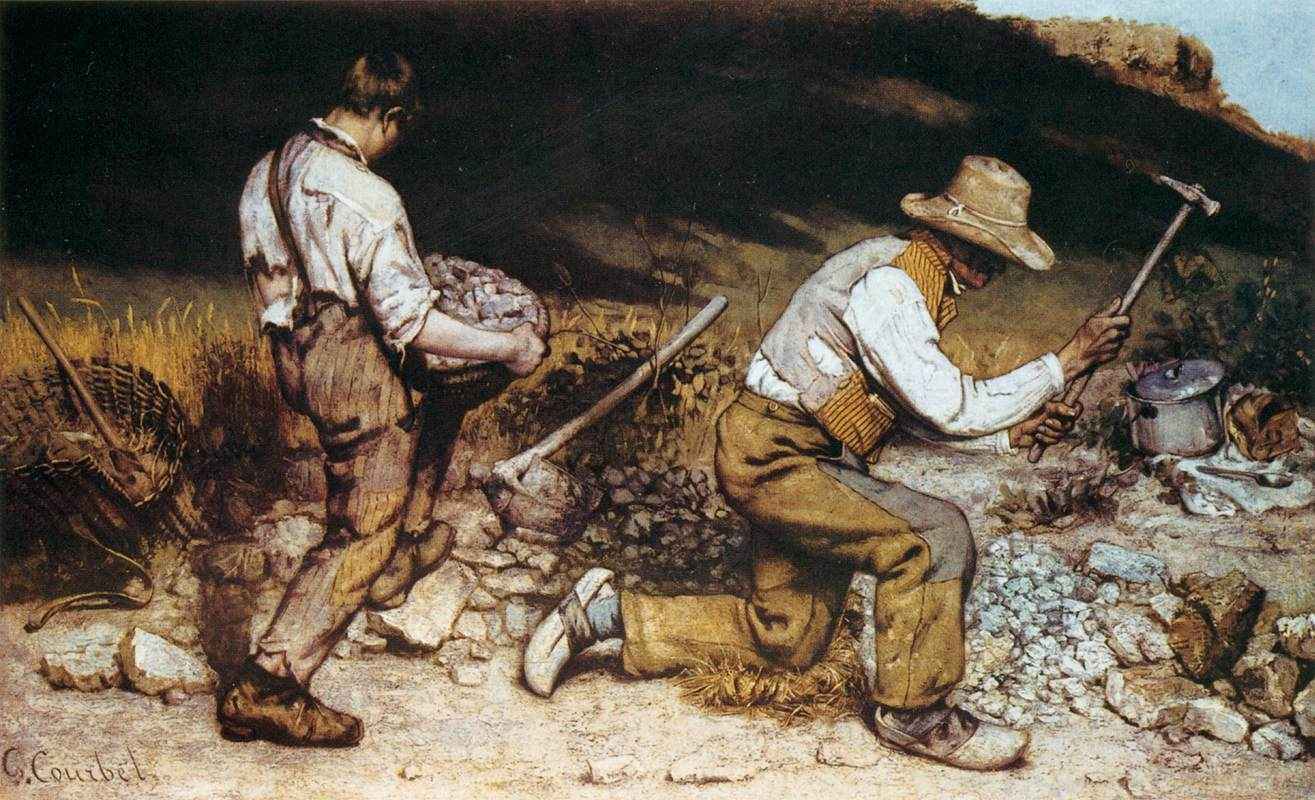
A good example of Realism is Courbet’s The Stone Breakers (1849), where two workers are shown breaking rocks on a roadside. Their labor is hard and unglorified, and the painting asks the viewer to notice that.

In contrast, Jean-François Raffaëlli’s The Absinthe Drinker (1881) offers a clear example of Naturalism. The figure’s worn shoes, dry hands, and stubbled face are painted in muted tones. The background includes smokestacks and coal carts, placing the man in a suburban industrial setting.
Raffaëlli’s approach doesn’t only capture outer detail, it also suggests the man’s inner condition through texture and mood.
Naturalism and Realism in Film History
Realist cinema often reflects everyday life through character and social themes, like in Bicycle Thieves (1948, Ente Nazionale Industrie Cinematografiche).

Read my case study on Bicycle Thieves about the excellent use of the frame within frame shots.
Naturalist film, though rarer, leans into objectivity and atmospheric accuracy, like in Rosetta (1999, Les Films du Fleuve), where handheld cameras and ambient sound heighten the sense of real time.

Both movements continue to shape film history. Italian Neorealism, for example, took inspiration from Realism’s social focus, using non-actors and real locations to depict postwar hardship.
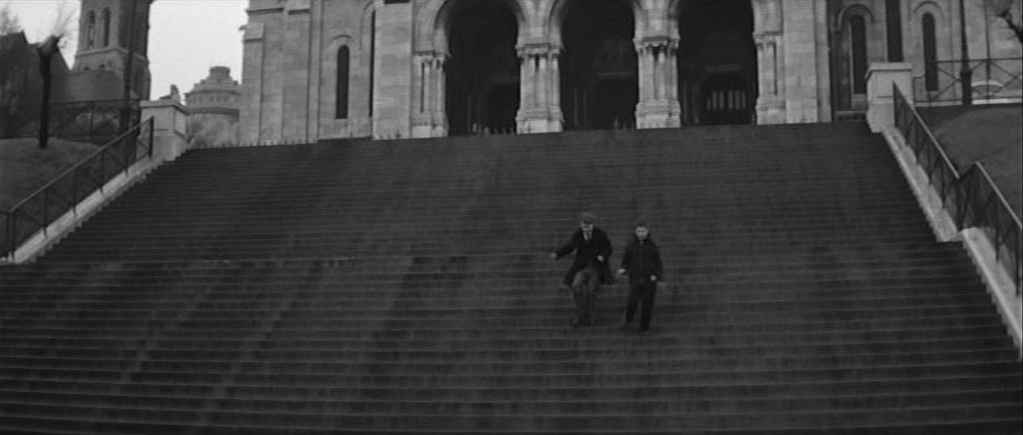
Directors like Vittorio De Sica and Roberto Rossellini helped define this cinematic realism. Later movements like the French New Wave also borrowed Naturalist elements (like observational detail and loose, location-driven storytelling) seen in films such as The 400 Blows (1959, Les Films du Carrosse).
Summing Up the Difference Between Naturalism and Realism
Realism and Naturalism are often confused, but they reflect different artistic intentions. Realism centers on life as it is lived, with attention to class and labor. Naturalism aims to observe the world with detachment, drawing from science more than politics.
Both movements shaped modern art by replacing ideal beauty with the ordinary and the observed.
Some works, like Courbet’s The Stone Breakers, combine both approaches. The subject reflects Realism, while the technique uses Naturalist detail.
Read Next: Curious how art movements shaped film?
Explore our full Visual Art Timeline to see how styles like Surrealism, Cubism, and Suprematism influenced cinema’s most experimental moments.
Or keep browsing our Film Movements & World Cinema section for more on the histories that shaped screen culture around the globe.