

Published: October 1, 2025 | Last Updated: January 7, 2026

What is The Rashomon effect? Definition & Meaning
The Rashomon effect is when different people give contradictory accounts of the same event, each believing their version is true. It shows how memory, perception, and bias can lead to multiple, plausible (but conflicting) versions of what happened. The term comes from Akira Kurosawa’s 1950 film Rashomon.
Origin and the Role of Kurosawa’s Rashomon
Akira Kurosawa’s Rashomon (1950) is based on two short stories by Ryūnosuke Akutagawa. In it, three characters describe the same crime (a murder and rape) in completely different ways. Each account clashes with the others, and none is confirmed as true. The film questions how truth is shaped by belief.
Kurosawa doesn’t reveal a “correct” version. Kurosawa never confirms a true version of the crime. He uses long, winding tracking shots in the forest to create disorientation, then shifts to static frames in the court to suggest authority.
Each testimony is filmed differently. The bandit’s story uses low angles and quick, erratic edits that match his bravado. The wife’s account relies on close-up shots and shifting focus that stress emotion. The husband’s version, told through a psychic medium, feels distant and eerie with longer, restrained takes. Even the woodcutter’s retelling is shaped by careful framing that hides what he leaves out.
Because of this, the film became the model for what’s now called the Rashomon effect. Over time, the term has spread beyond film into law, journalism, and psychology to describe cases where multiple people recall the same event differently, with no clear way to prove who’s right.
Core Components of the Rashomon Effect
The Rashomon effect is more than just different opinions. For it to apply, three conditions usually need to be present. These help define whether a story structure or real-life event qualifies as a true Rashomon-style situation.
- Multiple accounts of the same event, each told by someone directly involved.
- No conclusive evidence to prove which version is accurate.
- Pressure for resolution, i.e., people want to know the “truth,” but the story won’t give a clear answer.
In full, the Rashomon effect is when multiple people give different yet believable accounts of the same event, under conditions where there’s no way to verify who is right, and where people are looking for closure or truth.
Rashomon Effect vs. Unreliable Narrator
The Rashomon Effect is often confused with the unreliable narrator, but the two are not the same.
An unreliable narrator usually involves a single storyteller whose version of events cannot be fully trusted due to bias, limited knowledge, or deliberate deception. The audience is meant to question that narrator.
The Rashomon Effect, by contrast, presents multiple narrators, each offering a believable but conflicting account of the same event. There is often no definitive version of the truth—only competing perspectives.
In film terms, the unreliable narrator asks, “Can we trust this person?” The Rashomon Effect asks, “Can objective truth even exist?”
Understanding the difference helps writers and filmmakers choose the right narrative tool for the kind of ambiguity they want to explore.
Examples of the Rashomon Effect in Film
Many films after Akira Kurosawa’s Rashomon (1950) have explored how truth breaks down when events are retold from multiple perspectives.
The examples below each use conflicting accounts to create mystery, tension, or moral ambiguity. Some follow the Rashomon structure directly, while others adapt it in more stylized ways.
Gone Girl (2014)
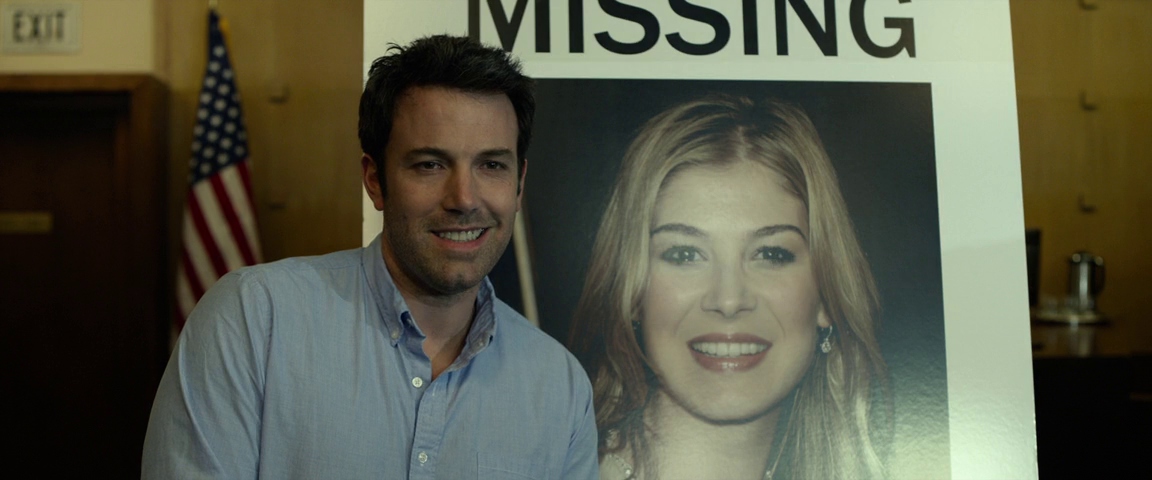
In Gone Girl, a woman named Amy goes missing, and her husband Nick becomes the main suspect. The film presents their relationship through two conflicting narratives: Nick’s current point of view and Amy’s diary, which may or may not be truthful.
A major plot twist shifts the truth midway through and shows that both accounts are manipulative. The film shows how public judgment is shaped not by facts but by who controls the narrative.
Vantage Point (2008)
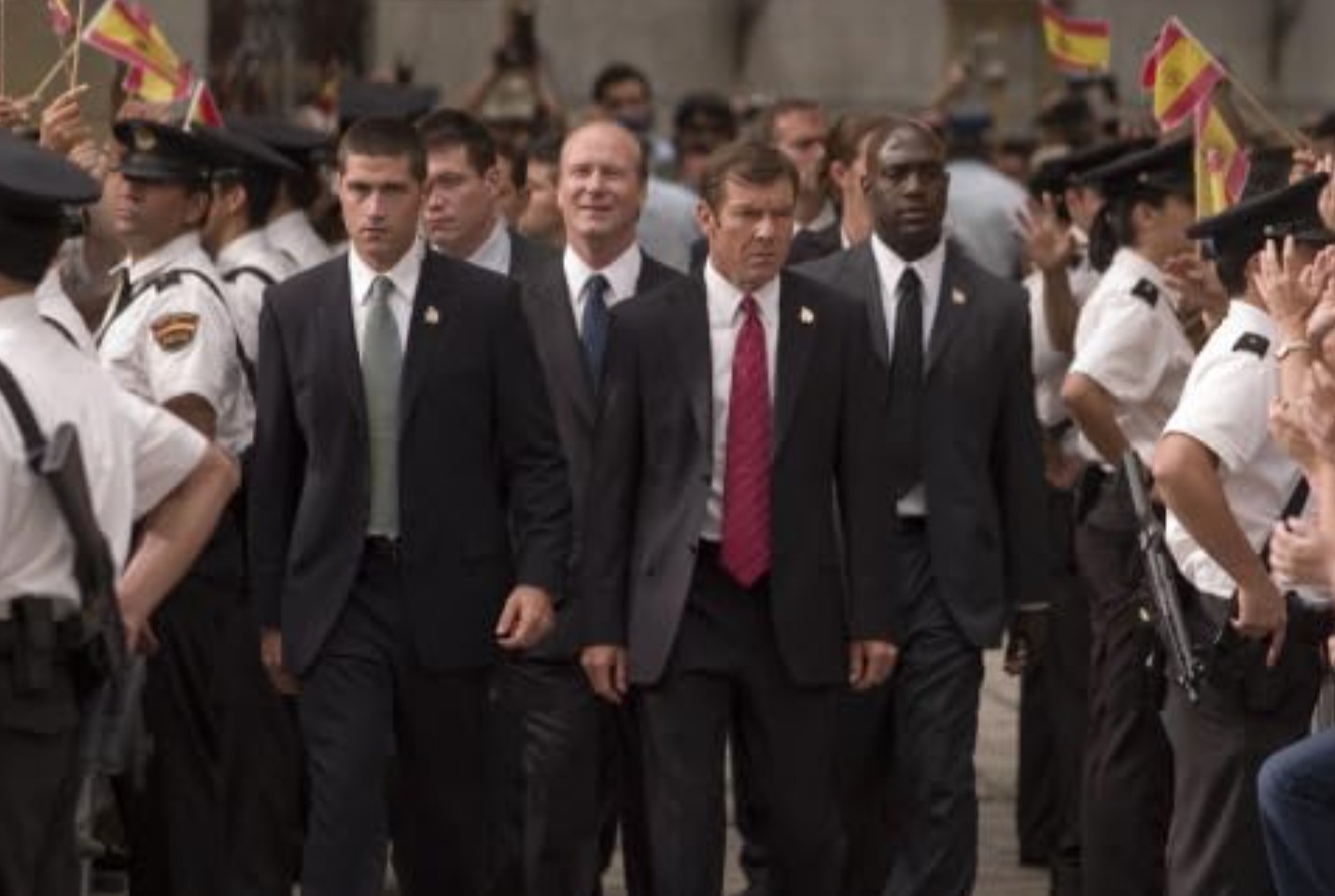
In Vantage Point, an attempted assassination of the U.S. president takes place during a summit in Spain. The same incident is replayed from the perspectives of different characters, including a news producer, a tourist, a secret service agent, and a terrorist.
Each retelling adds new details that reshape what we think happened. Some accounts contradict others. The film builds tension by showing how incomplete or biased perspectives can hide the full truth until every angle is seen.
Hero (2002)
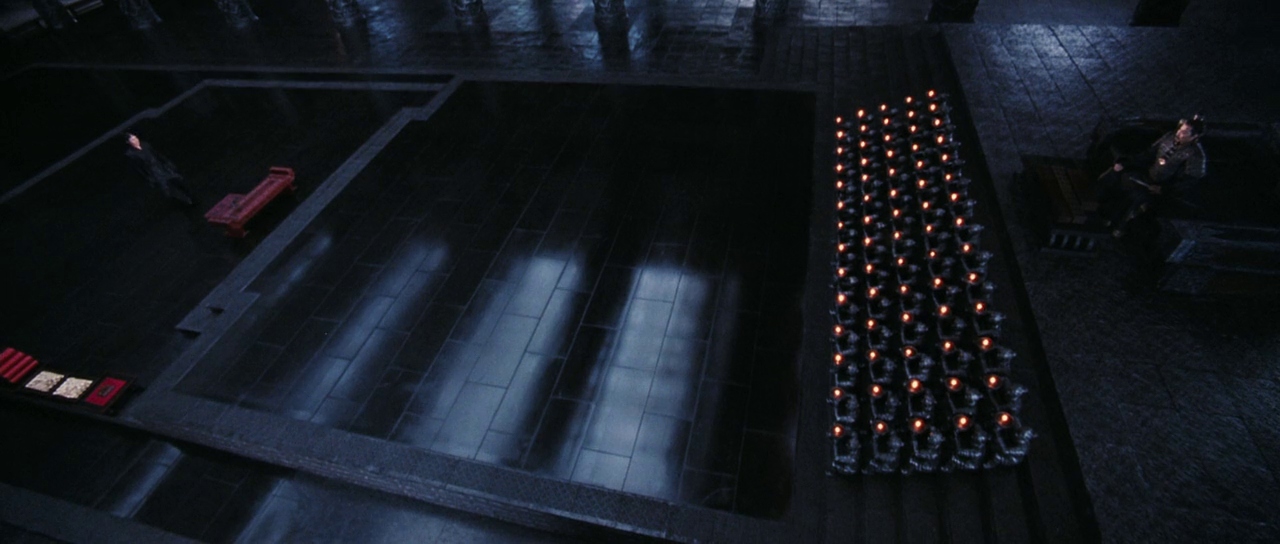
In Hero, the main character, Nameless, tells the King of Qin how he defeated three assassins. The film presents multiple versions of this story, each shown with distinct colors, emotions, and motivations. The King challenges each account, forcing Nameless to revise it.
Each version reflects not just what Nameless believes, but what he wants the King to believe. The King also offers his own version, revealing how both characters use their story to shape truth.
Elephant (2003)
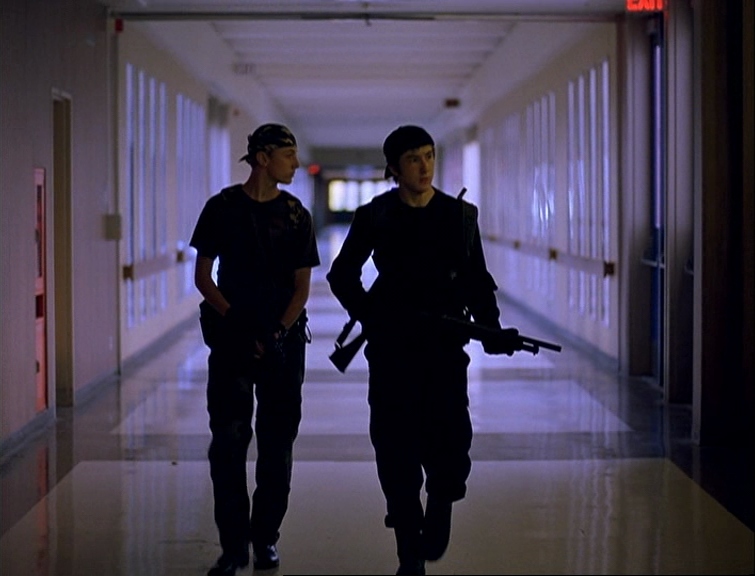
Elephant follows a day in the lives of several high school students, ending in a tragic school shooting. The story is told through overlapping timelines and different character viewpoints, with some scenes replayed from new angles as the narrative shifts.
The film doesn’t offer explanations or clear motives. Instead, it lets viewers experience how disconnected and uncertain memory can feel in the aftermath of violence. The Rashomon effect appears in how each perspective reveals small parts of a larger, ungraspable truth.
The Outrage (1964)
A Western remake of Rashomon, this film retells the same crime through different testimonies. Each witness, including the dead man through a medium, gives a story that contradicts the others. It mirrors Kurosawa’s structure closely, but in an American frontier setting.
The Rashomon Effect Beyond Film: Real-World Examples
While the Rashomon Effect is most often discussed in cinema and literature, it also appears in real life whenever people experience the same event but come away with different versions of what “really happened.”
Rashomon Effect in Law and Eyewitness Testimony
In legal settings, the Rashomon Effect helps explain why eyewitness testimony can be unreliable. Two people may observe the same incident and still disagree on important details, not because they are lying, but because stress, limited visibility, and personal bias influence how events are perceived and remembered.
Research into eyewitness evidence has shown that memory is not a perfect recording of events. Instead, recall is shaped by conditions at the time of the incident and by what happens afterward, which is why conflicting testimony can still be sincere.
For a deeper look at why eyewitness accounts can diverge (even when people are honest), see the National Academies’ review of eyewitness identification: https://www.nationalacademies.org/projects/PGA-STL-13-02/publication/18891
Rashomon Effect in Journalism and Reporting
In journalism, the Rashomon Effect often emerges when an event becomes a clash of narratives. Different witnesses, institutions, or participants may describe the same moment in ways that don’t align, particularly in conflict reporting or politically sensitive situations.
Journalists must work through these competing accounts, verifying what can be confirmed while acknowledging that perspective shapes how events are framed. In these cases, the challenge isn’t just finding facts, but understanding how viewpoint influences interpretation.
Rashomon Effect in Psychology and Memory
From a psychological perspective, the Rashomon Effect closely mirrors how human memory works. Studies on memory recall and eyewitness accounts show that people don’t remember events like a video recording.
Instead, memories are reconstructed over time and shaped by emotion, context, and information learned after the fact. This helps explain why multiple people can experience the same event and still produce conflicting but believable accounts.
A classic example is the Loftus & Palmer study on how wording can change what people later report remembering: https://labs.la.utexas.edu/gilden/files/2016/04/Loftus_Palmer.pdf
Strengths and Risks When You Use It
The Rashomon effect can help you build complex stories that reveal how people lie, justify their actions, or bend reality to fit their own goals. But using it well requires more than just retelling a scene from different angles.
Each version should add something new, either a detail, a motive, or a shift in emotion. If all the versions feel the same, the effect becomes flat or confusing. It also risks losing the viewer’s trust if the contradictions feel like tricks instead of meaningful layers.
The goal is not just to hide the truth, but to show why each character believes their own version. That’s what makes the Rashomon effect powerful (and hard to pull off).
Summing Up
The Rashomon effect shows how memory, bias, and personal perspective shape what seems true. It requires conflicting accounts, no proof of what really happened, and the need for resolution. First seen in Kurosawa’s Rashomon, this technique now shapes stories, trials, and public debate. When used well, it forces you to question not just who’s lying, but whether truth is even possible.
Read Next: Curious how film theory shapes the way we watch movies?
Start with the Film Theory section to break down realism, formalism, structuralism, and more — with examples from iconic films.
If you want studying film theory I recommend starting with The FilmDaft overview of film theory discourses to break down realism, formalism, structuralism, and more — with examples from iconic films.
Then explore the full Film History, Theory & Genre collection to see how movements, styles, and storytelling traditions have evolved.
Whether you’re into Soviet montage or 2000s genre mashups, there’s something here to sharpen your understanding.
Further Reading and Sources
The Rashomon Effect shows up in film studies, communication theory, and research on memory and eyewitness accounts. If you want to go beyond a general definition and anchor the concept in widely cited work, the sources below are a strong starting point:
Stephen Prince (Criterion) — “The Rashomon Effect”:
https://www.criterion.com/current/posts/195-the-rashomon-effect
Britannica — “Rashōmon” (Akutagawa) + connection to “In a Grove”:
https://www.britannica.com/topic/Rashomon-by-Akutagawa-Ryunosuke
Routledge — Rashomon Effects (Davis, Anderson, Walls), 2015:
https://www.routledge.com/Rashomon-Effects-Kurosawa-Rashomon-and-their-legacies/Davis-Anderson-Walls/p/book/9781138590663
Canadian Journal of Communication — Anderson (2016) “The Rashomon Effect and Communication”:
https://cjc.utppublishing.com/doi/10.22230/cjc.2016v41n2a3068
National Academies Press — Identifying the Culprit (NRC, 2014):
https://www.nationalacademies.org/projects/PGA-STL-13-02/publication/18891
Loftus & Palmer (1974) PDF (University of Texas host):
https://labs.la.utexas.edu/gilden/files/2016/04/Loftus_Palmer.pdf
