

Published: June 12, 2019 | Last Updated: June 19, 2025

What is Pop Art? Definition & Meaning
Pop Art is a 20th-century art movement that draws on commercial imagery, mass media, and consumer products, using bold colors, flat forms, and mechanical techniques to comment on modern culture.
Origins and Style of Pop Art
Pop Art first emerged in Britain during the 1950s, where artists like Richard Hamilton and Eduardo Paolozzi experimented with collage and magazine cutouts to highlight consumer obsession. They used advertising, comic strips, and brand packaging as raw material, treating visual clutter from postwar life as worthy of serious art.
The movement expanded and transformed in the United States during the 1960s. There, Pop Art became flashier and more confrontational. Artists began using industrial materials like silkscreen and enamel, exaggerating flatness and repetition.
The goal was to hold up a mirror to American consumerism, fame culture, and mass production. The style used simplified forms, bright synthetic colors, and graphic outlines. Flat planes and mechanical textures became common, with no attempt to hide the hand of the artist.
Key Artists and Techniques

Andy Warhol defined the American version of Pop Art with silkscreen portraits of Marilyn Monroe, Elvis Presley, and Campbell’s Soup cans. His method of repeating the same image over and over reflected mass production and desensitization.
American artist Roy Lichtenstein borrowed directly from comic books, using Ben Day dots and thick outlines to simulate cheap offset printing.
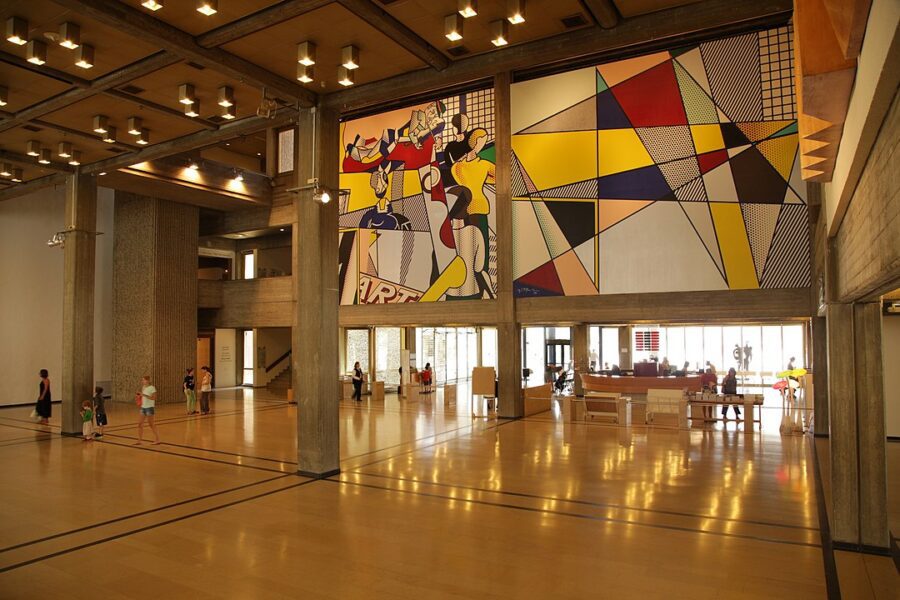
American artist James Rosenquist started in Abstract Expressionism, but moved on to pop art. He’s especially known for his billboard-sized paintings (like President Elect, Zone, and the monumental F-111 – see below) that mash together ads, textures, and faces into chaotic commercial montages.
British artist David Hockney approached Pop from a more personal angle. His acrylic paintings of pools, sunlight, and suburban architecture used graphic clarity but introduced intimacy and isolation. He helped broaden the movement beyond irony, especially in his depictions of queer domestic life. You can see a collection of his works in the video below:
Pop Art in Film
Pop Art’s look and logic entered cinema during the late 1960s. Michelangelo Antonioni’s Blow-Up (1966, MGM) showed a London fashion world filled with synthetic colors and mod interiors. One scene features a flat, geometric painting on the wall that mirrors the artificiality of the room itself.
Barbarella (1968, Paramount) was heavily influenced by comic art and kitsch aesthetics, especially from French bandes dessinées (graphic novels).
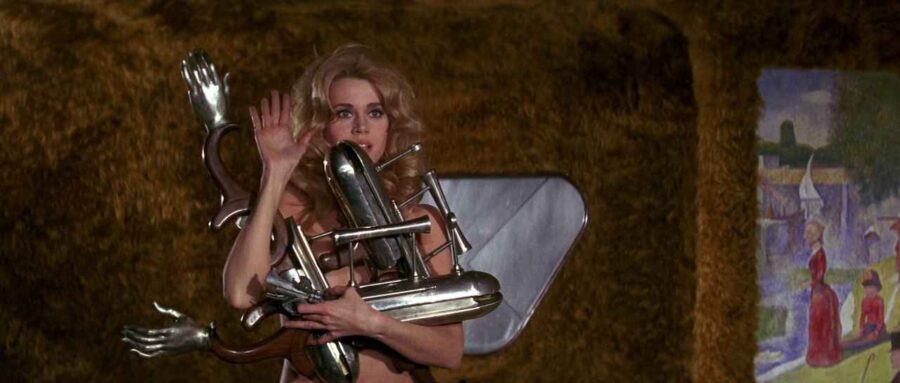
The costume (or lack thereof) and set design use saturated color and camp style, elements that overlap with Pop Art style. It shares visual DNA, especially in the flat color and stylized portrayal of Barbarella herself.
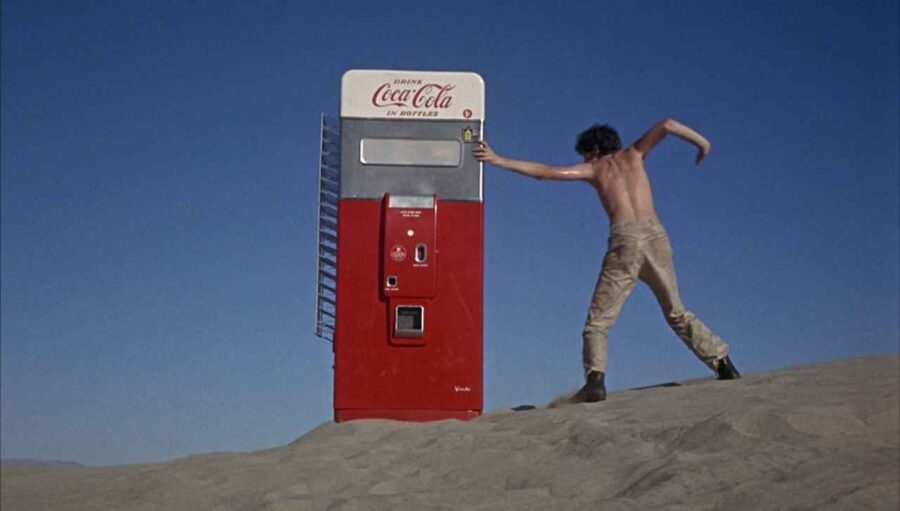
The Monkees’ film Head (1968, Columbia Pictures) cuts between commercials, visual gags, and fake media segments in a way that mimics Warhol’s mixed-media approach.
These films didn’t just borrow the aesthetic. They used the same structure as Pop Art, built around fragmentation, repetition, and ironic distance.
Long-Term Influence on Media and Design
Pop Art shaped how brands, magazines, and music videos present images. Its emphasis on fast recognition and iconic repetition laid the groundwork for meme culture, graphic design trends, and social media aesthetics.
Warhol’s use of silkscreen directly inspired album covers and ad layouts. Lichtenstein’s style still appears in video game art and retro-themed campaigns.
Summing Up
Pop Art began in 1950s Britain and gained global reach in the 1960s through bold, graphic images that reflected mass culture. By turning product labels, celebrities, and cartoons into fine art, the movement critiqued the media’s power over attention and identity.
Artists like Warhol, Lichtenstein, and Hockney used mechanical reproduction and commercial symbols to create new visual languages. Its impact stretched far beyond the gallery and helped shape how movies, music, and digital content are designed and consumed today.
Read Next: Curious how art movements shaped film?
Explore our full Visual Art Timeline to see how styles like Surrealism, Cubism, and Suprematism influenced cinema’s most experimental moments.
Or keep browsing our Film Movements & World Cinema section for more on the histories that shaped screen culture around the globe.
