

Published: April 28, 2024 | Last Updated: June 22, 2026

From Rita Hayworth’s sultry whispers in Gilda to Sharon Stone’s icy manipulations in Basic Instinct, the femme fatale archetype has captivated cinema audiences for decades.
I’ve cherry-picked some of the best femme fatales from cinema history in this article. Because they are attributed to the noir genres, they are essential knowledge for any film student. They are listed here in chronological order.
Brigid O’Shaughnessy in The Maltese Falcon (1941)

Mary Astor in The Maltese Falcon trailer (1941).
Trailer screenshot. Public Domain.
Directed by John Huston, The Maltese Falcon (1941) features Brigid O’Shaughnessy (Mary Astor) as a textbook femme fatale. She charms and manipulates everyone around her to get what she wants. Her role helped shape film noir, which combined mystery, tricky relationships, and moral gray areas.
Phyllis Dietrichson in Double Indemnity (1944)
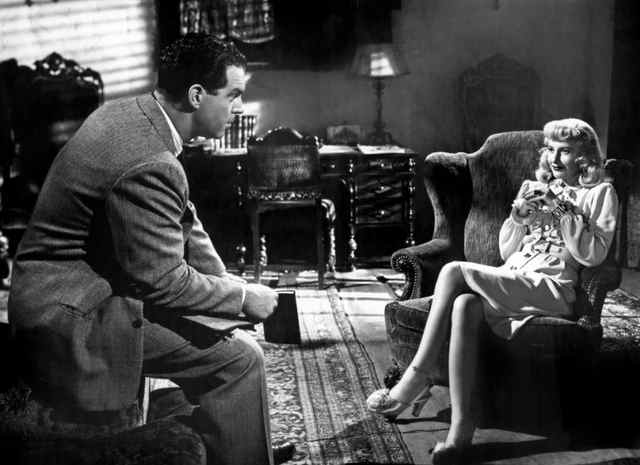
Phyllis Dietrichson in Double Indemnity (1944).
Time Inc.; photograph by Paramount Pictures (no photographer credited), Public domain, via Wikimedia Commons
Directed by Billy Wilder, Double Indemnity (1944) brings us one of film noir’s key femme fatales. Phyllis Dietrichson (Barbara Stanwyck) manipulates an insurance salesman to kill her husband. Her character helped set the standard for early femme fatales as she uses her allure to drive men toward crime. This film is a must-see for its major impact on the genre.
Gilda in Gilda (1946)
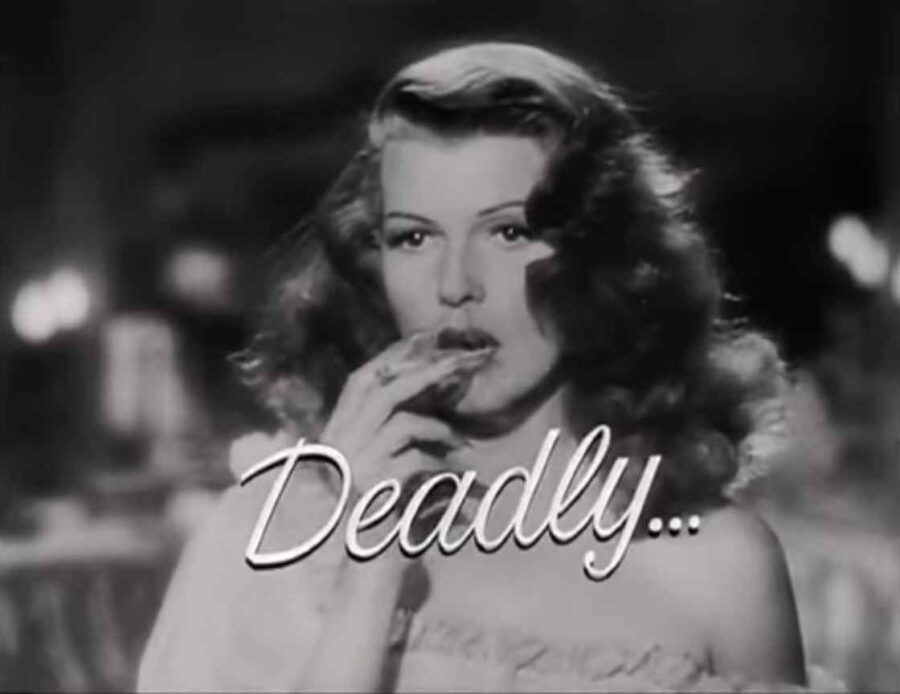
Rita Hayworth in Gilda (1944).
Screenshot from the trailer. Public Domain.
In Gilda (1946), directed by Charles Vidor, Rita Hayworth plays Gilda, capturing the seductive and layered essence of a femme fatale.
Her iconic performance, especially the ‘Put the Blame on Mame’ scene, explores themes of desire and betrayal, cementing this film as a key moment for complex female characters in cinema.
Cora Smith in The Postman Always Rings Twice (1946)
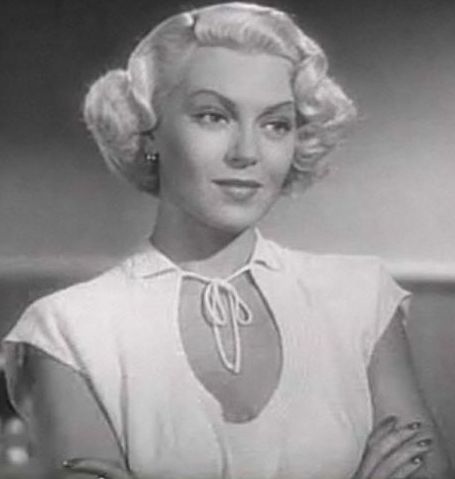
Lana Turner as Cora in The Postman Always Rings Twice (1946).
Trailer screenshot. Public Domain, via Wikimedia Commons.
Cora Smith (Lana Turner) is a classic example of a femme fatale. In this adaptation of James M. Cain’s novel, she teams up with her lover to murder her husband. The film stands out for showing the femme fatale as a layered character motivated by desperation and desire and breaks away from earlier one-dimensional portrayals.
Judy Barton/Madeleine Elster in Vertigo (1958)
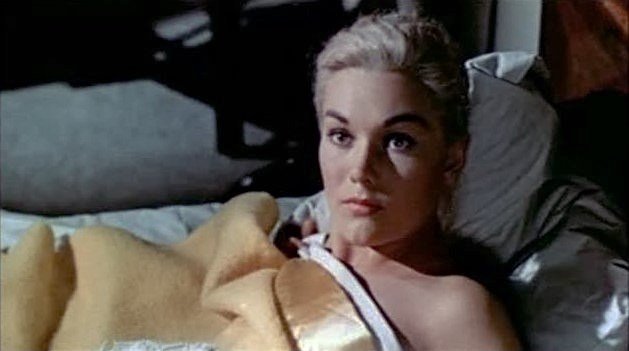
Kim Novak as Madeleine in Vertigo (1958).
Screenshot from the 1958 trailer. Public Domain.
Directed by Alfred Hitchcock, Vertigo (1958) explores obsession through Judy Barton/Madeleine Elster (Kim Novak). It looks at identity and emotional manipulation and shows a femme fatale stuck in deception and love. This psychological thriller stands out for its intricate plot and sharp focus on character.
Evelyn Mulwray in Chinatown (1974)
Faye Dunaway’s Evelyn Mulwray in Chinatown (1974) twists the femme fatale archetype into something more sympathetic. Instead of being purely manipulative, she’s also trapped by her circumstances and shows how these characters can be victims. This shift adds depth to the neo-noir genre and makes it feel more real.
Matty Walker in Body Heat (1981)
Kathleen Turner’s Matty Walker in Body Heat (1981), directed by Lawrence Kasdan, brought new life to the femme fatale archetype in a hot neo-noir setting. She manipulates a lawyer to commit murder, echoing classic femme fatale motives against the sweltering backdrop of a Florida heatwave. This twists the archetype into something modern and fresh.
Rachael in Blade Runner (1982)
In the cyberpunk and tech noir classic Blade Runner (1982), directed by Ridley Scott, Rachael (Sean Young) gives the femme fatale a futuristic spin. Her character blurs the lines between humanity and ethics, mixing film noir with sci-fi to explore questions about reality and identity.
Nikita in La Femme Nikita (1990)
Anne Parillaud stars as Nikita in La Femme Nikita (1990), a French film by Luc Besson that blends the femme fatale’s allure with intense espionage.
The movie flips the archetype by showing a woman transformed by the state from a drug addict into a lethal, seductive assassin and brings a new angle to the classic femme fatale.
Catherine Tramell in Basic Instinct (1992)
In Basic Instinct (1992), directed by Paul Verhoeven, Sharon Stone’s Catherine Tramell updated the femme fatale for modern audiences. She combines bold sexuality with cunning, high IQ, and danger. The film sparked debates about gender and power and cemented Tramell as a key character in film history.
Charlotte Millwright in The Last Seduction (1994)
In The Last Seduction (1994), Linda Fiorentino’s Charlotte Millwright is all about ruthlessness and smarts. She flips the usual film noir script and takes control of the story, outplaying the traditional male roles.
Mia Wallace in Pulp Fiction (1994)
Mia Wallace (Uma Thurman) in Pulp Fiction (1994) isn’t your typical femme fatale, but she has the vibe. She’s seductive and mysterious, and her actions mess things up for people around her. Pulp Fiction is a modern spin on the archetype that mixes crime with drama to tweak how we think about femme fatales.
Violet in Bound (1996)
In Bound (1996), directed by The Wachowskis, Violet (Jennifer Tilly) and Corky (Gina Gershon) reshape the femme fatale within an LGBTQ+ lens. Violet starts as a classic femme fatale, especially in her dynamic with Caesar, but her connection with Corky shifts the narrative. When Violet fully embraces her sexuality, the traditional archetype evolves. The film’s focus on sexual fluidity sets it apart as a bold reimagining of the femme fatale in cinema.
Characters in Sin City (2005) and Sin City: A Dame to Kill For (2014)
The neo-noir movie Sin City (2005) and its sequel Sin City: A Dame to Kill For (2014), directed by Robert Rodriguez and Frank Miller, brought us femme fatales like Jessica Alba, Rosario Dawson, and Eva Green. The movies were true to the comic book aesthetics and kept the noir vibe fresh while taking the genre in new directions.
If you like the neo-noir comic book style, I can also recommend The Spirit (2008), with Sand Saref (Eva Mendes) and Silken Floss (Scarlett Johansson) as the femme fatales.
Vesper Lynd in Casino Royale (2006)
Eva Green’s Vesper Lynd in Casino Royale (2006) gave the femme fatale a modern edge in a high-stakes espionage setting. Her complicated relationship with James Bond and tragic fate adds a fresh take on the archetype and shows that the allure of the femme fatale works across genres.
Summing Up
Femme Fatales, from Phyllis Dietrichson in Double Indemnity (1944) to Vesper Lynd in Casino Royale (2006), still grab our attention and shake things up. Using charm and mystery, they don’t just stick to a classic character trope—they also shift how women’s roles are seen in these stories.
Their enduring allure underscores their central role in shaping the film noir genre and beyond, proving that the femme fatale is still a beloved and provocative figure in cinema.
Read Next: What is Tech Noir?