Published: April 22, 2026

You feel it before you understand it. The cuts are coming faster now, the music is tightening, something is building, and you’re leaning forward in your seat without having consciously decided to. That’s rhythmic editing doing its job: using the tempo of cuts to control your nervous system.
What Is Rhythmic Editing? Definition and Meaning
Rhythmic editing is the deliberate use of cut timing, shot duration, and the tempo of transitions to create an emotional and physical experience in the viewer. Rather than cutting simply when a scene requires it, the editor treats the sequence of cuts as a rhythm, with beats, pauses, acceleration, and resolution, that works on the audience at a level below conscious thought.
It’s closely related to pacing but more precise: pacing is the overall sense of speed across a film or scene, while rhythmic editing refers specifically to the beat-by-beat timing of individual cuts and how that timing produces feeling.
Why Rhythm Works on the Body
Rhythm is one of the most primitive forms of human response. Your heartbeat, your breathing, your walking pace, all of these are rhythmic, and all of them are susceptible to entrainment: the tendency to synchronise with an external rhythm. Music exploits this constantly. Film editing does too.
When cuts come regularly and quickly, your nervous system reads it as urgency and tension. When cuts slow down and shots linger, you read it as calm, contemplation, or dread, depending on the context. The editor isn’t just choosing when to cut to the next image. They’re conducting a physiological experience.
Walter Murch, the Oscar-winning editor of Apocalypse Now and The Conversation, describes the ideal cut as one that hits at the precise moment the viewer would have “blinked”, the natural pause in attention that punctuates perception. When cuts align with those natural pause points, they feel inevitable. When they don’t, they jar. Rhythmic editing is partly the art of finding those points and exploiting them systematically across an entire sequence.
Three Films That Make Rhythm the Point
Below, I’ve selected three of my favorite films that use rhythmic editing well:
Baby Driver (2017): Editing Locked to a Soundtrack
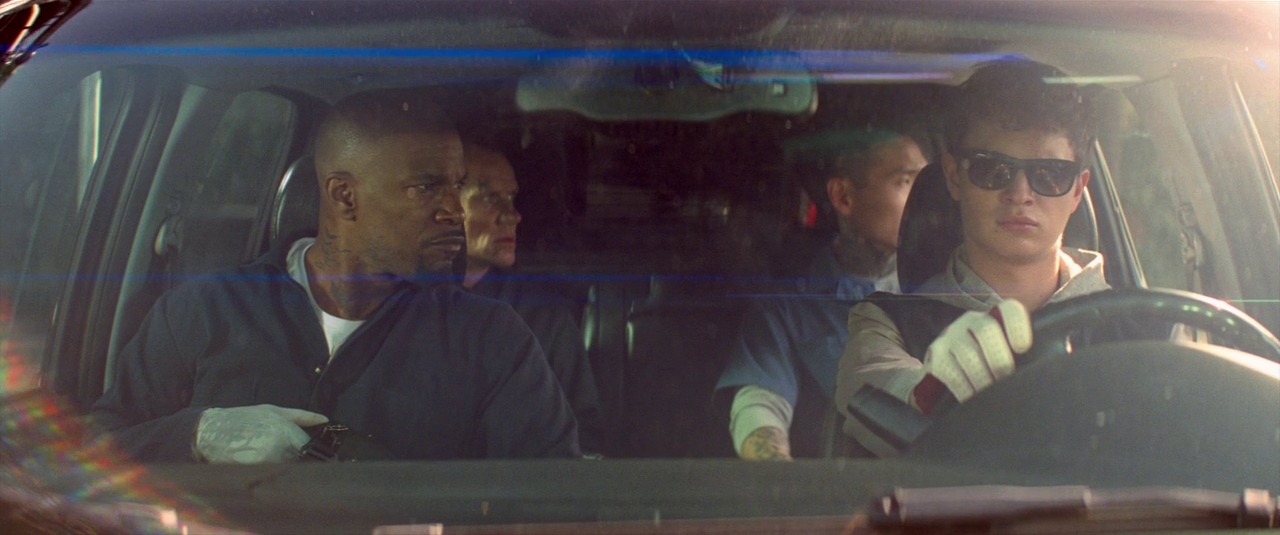
Edgar Wright’s film is the most explicit demonstration of rhythmic editing in recent cinema: every cut in the film is locked to the beat of whatever song Baby is listening to. Gun reloads happen on the snare. Cars turn on the bass. Dialogue lands on musical phrases. The editing isn’t just rhythmic, it’s literally musical.
Wright and editor Paul Machliss cut the film to the music tracks first, building an animatic of the action sequences timed to each song before a single scene was shot. The actors then performed to playback, and the camera operators knew exactly which beat each move needed to hit.
Here’s Paul Machliss telling more:
The result is a film where the rhythm feels biological rather than mechanical, not because it was improvised, but because it was planned with such obsessive precision that the seams became invisible.
The lesson from Baby Driver isn’t that you should always edit to music, but that rhythm needs a source. Wright found his in the soundtrack. Other filmmakers find it in dialogue, in action, in the natural cadence of performance. But something has to set the tempo, or the editing becomes arbitrary.
Whiplash (2014): Rhythm as Psychological Pressure
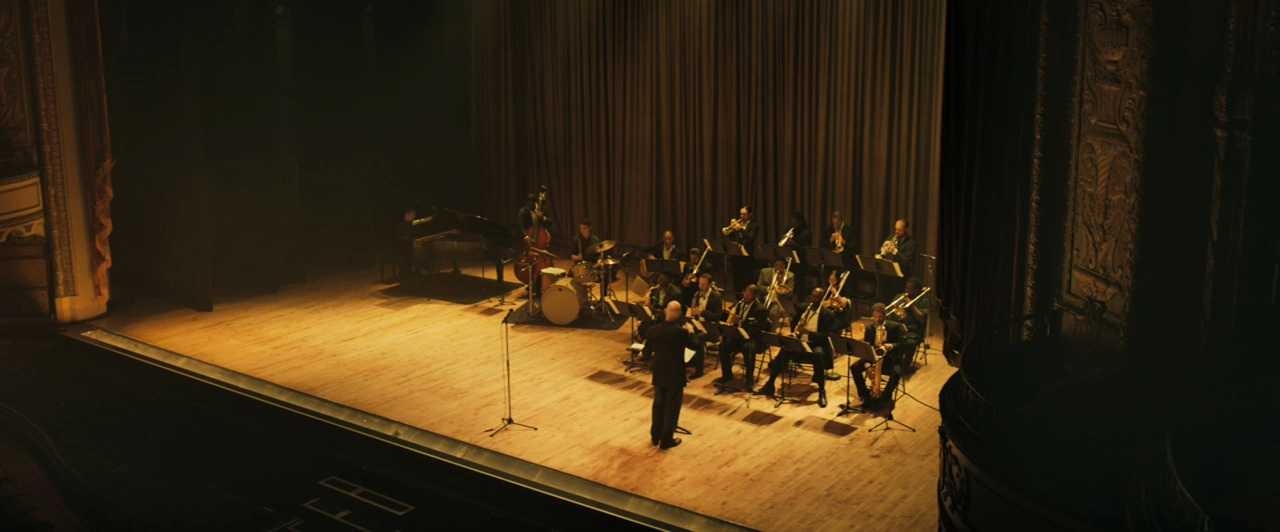
Damien Chazelle and editor Tom Cross use rhythmic editing to put the audience inside Andrew Neiman’s head. The film’s practice sequences are cut to the actual tempo of the drumming, fast passages cut fast, slow passages breathe, so the viewer feels the same kinetic pressure that Andrew does.
When Andrew struggles to keep up with the big band, the cuts become slightly disjointed, fractionally off the beat, creating a physical sensation of falling behind.
The climactic performance sequence builds from tight, precisely rhythmic editing into something increasingly frantic, and then, at the moment of mastery, settles into a controlled, almost serene tempo that signals triumph without the film ever saying so. The rhythm tells you Andrew has arrived before the expression on Fletcher’s face does.
Mad Max: Fury Road (2015): Sustained Rhythmic Intensity
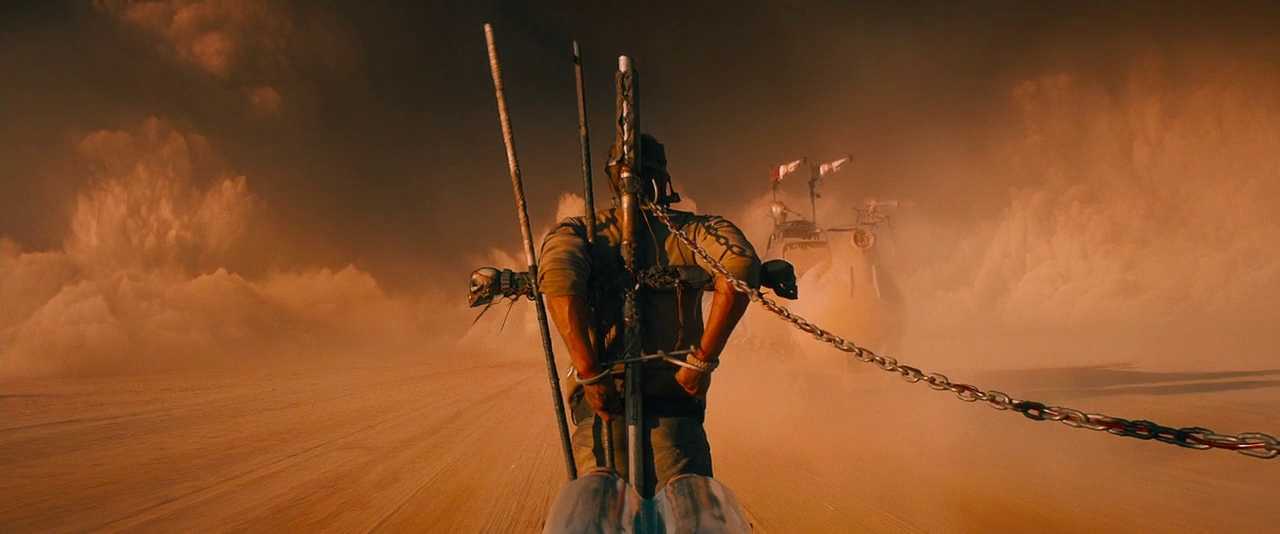
Margaret Sixel’s editing of Fury Road is a masterclass in sustaining rhythmic intensity across a feature-length action film without exhausting the audience. The key is variation: the film doesn’t maintain a single tempo throughout. It accelerates into action sequences, pulls back slightly during dialogue, then builds again. The rhythm breathes, which is why two hours of essentially non-stop action never becomes numbing.
Sixel identified what she called “the heartbeat of the film”, a base tempo that the editing returns to between peaks, and used departures from that tempo as the primary emotional signal. When cuts slow relative to the baseline, something important is happening emotionally. When they accelerate beyond it, the action is at its most intense. The audience learns to read the rhythm, often without realising they’re doing it.
The Relationship Between Editing Rhythm and Music
The connection between film editing and music is deep and not coincidental. Both art forms unfold in time. Both use repetition, variation, acceleration, and resolution to create feeling. Many of the most influential editors, including Murch and Eisenstein, drew directly on musical concepts to describe their work.
Sergei Eisenstein, the Soviet director and theorist who pioneered montage editing in the 1920s, wrote extensively about what he called “metric montage”, cutting strictly to a regular beat regardless of the content, and “rhythmic montage,” where the content of the shot influences the cut timing. He argued that the tension between metric regularity and rhythmic variation was where the most interesting editing lived. The Odessa Steps sequence in Battleship Potemkin (1925) remains the clearest demonstration of that principle in action.
Not all rhythmic editing is tied to music, of course. Dialogue has its own rhythm, the natural cadence of speech, the pauses between lines, the overlaps and interruptions. Editing a conversation scene well means finding that rhythm and cutting to it, so the dialogue feels like it’s flowing naturally even when it’s been assembled from dozens of separate takes.
Silence as Rhythm
One of the counterintuitive lessons of rhythmic editing is that silence and stillness are as rhythmically significant as action and sound. A long, static shot after a sequence of rapid cuts is a beat of rest, and like the silence between musical notes, it gives the preceding sequence its meaning. Without it, the fast editing becomes noise.
Stanley Kubrick understood this. His films use extremely long takes punctuated by rapid editing, and the contrast between the two modes is itself rhythmic. The slow sections aren’t slow because nothing is happening, but because the film needs to breathe before the next acceleration. The transitions between the two modes are the rhythm.
Applying It Practically
If you’re editing a scene and something feels wrong without you being able to say why, the problem is often rhythmic. Cut the scene against a piece of music with a clear tempo and listen for where the cuts land relative to the beat. If they’re consistently on the beat, try some off the beat. If they’re all over the place, try locking them to the rhythm more firmly. The relationship between the two, the editing and the music, will tell you something about the scene’s internal tempo that you can then replicate without the music.
Also, watch your shot durations. Print them out if you need to. A sequence where every shot is 2–3 seconds will feel very different from one where shots range from half a second to eight seconds. Variation in duration is the basic building block of editing rhythm. You could say, that without it, you have a metronome, not a performance. And as any musician will tell you, perfect metronomic regularity feels inhuman precisely because it never breathes.
Summing Up
Rhythmic editing is the editor’s most intimate tool, the one that works directly on the body rather than the intellect. When it’s working, the audience doesn’t notice the cuts at all. They just feel something, and they can’t quite say why. That invisibility is the goal, and it requires the same attention to timing, variation, and breath that a musician brings to performance. The cuts are notes. The sequence is the song.
Read Next: Want to sharpen your editing instincts?
Start with our breakdown of the different types of video editing and learn how each approach shapes tone and flow.
Then explore how film cuts function as visual punctuation, or how scene transitions control time, emotion, and rhythm.
Still curious? Browse the full Editing section for techniques, examples, and theory.
References
- Eisenstein, Sergei. 1949. Film Form: Essays in Film Theory. Translated by Jay Leyda. New York: Harcourt Brace.
- Murch, Walter. 2001. In the Blink of an Eye: A Perspective on Film Editing. 2nd ed. Los Angeles: Silman-James Press.
- Reisz, Karel, and Gavin Millar. 2010. The Technique of Film Editing. 2nd ed. Oxford: Focal Press.
- Bordwell, David. 2006. The Way Hollywood Tells It: Story and Style in Modern Movies. Berkeley: University of California Press.
- Ondaatje, Michael. 2002. The Conversations: Walter Murch and the Art of Editing Film. New York: Knopf.
- Dmytryk, Edward. 1984. On Film Editing: An Introduction to the Art of Film Construction. Boston: Focal Press.