Published: October 6, 2025

What is An anagram? Definition & Meaning
An anagram is a word or phrase formed by rearranging the letters of another word or phrase, using all the original letters exactly once.
You must use each letter, and no letter may be added or left out. The new result should be a valid word or phrase that makes sense on its own.
How Anagrams Work
To make an anagram, write down all the letters of a word or phrase. Then rearrange them to form something new. For example, “secure” becomes “rescue,” and “astronomer” becomes “moon starer.”
Even full phrases can work: “a decimal point” becomes “I’m a dot in place.”
The number of possible rearrangements grows fast. A 6-letter word has 720 combinations. But most don’t form real words. That’s why good anagrams feel clever; they’re both accurate and meaningful.
Types of Anagrams
- Perfect anagram: A direct rearrangement using all letters. Example: “listen” → “silent.”
- Phrase anagram: Multiple words rearranged. Example: “The eyes” → “They see.”
- Antigram: An anagram with the opposite meaning, like “restful” → “fluster.”
- Cognate anagram: One with a related meaning, like “angered” → “enraged.”
- Semordnilap: A word that becomes a different word when reversed, like “desserts” → “stressed.”
- Blanagram: A near-anagram with one letter changed—used in word games and puzzles. Example: “angel” becomes “angle” by replacing the “e” with an “l.”
Uses in Literature, Film, and Puzzles
Anagrams often appear in character names, plot clues, or puzzle-solving moments.
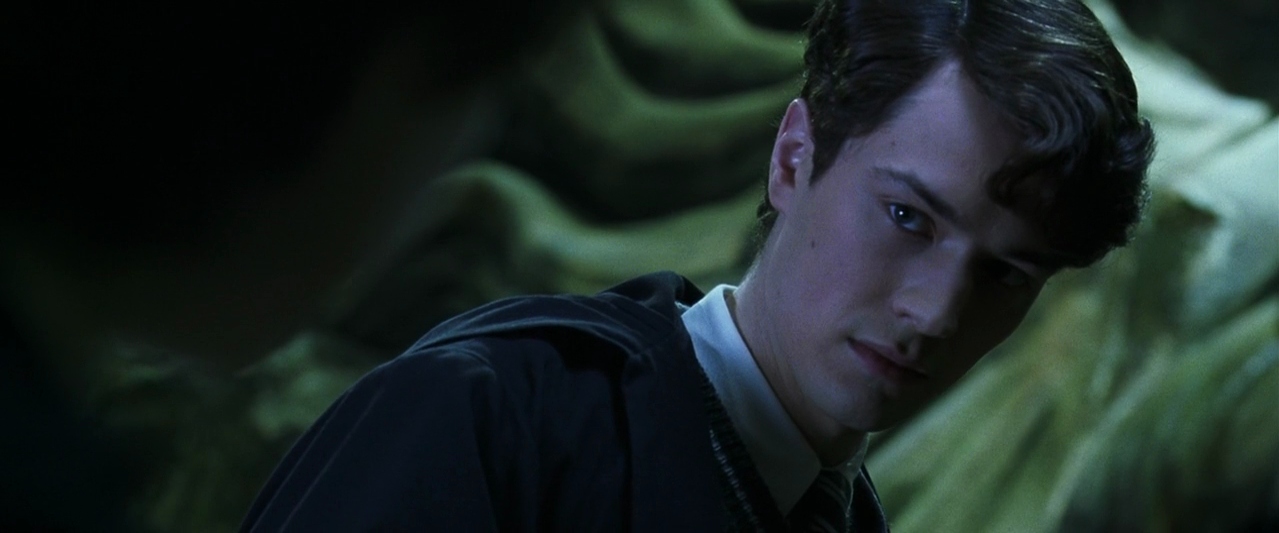
In Harry Potter and the Chamber of Secrets (1998 book, 2002 film), Tom Riddle writes out his full name, “Tom Marvolo Riddle,” and rearranges it to reveal, “I am Lord Voldemort.” This is a perfect anagram that hides his true identity inside his birth name.
The Da Vinci Code (2003 book, 2006 film) builds clues around anagrams, like “Oh, lame saint” for “The Mona Lisa.”
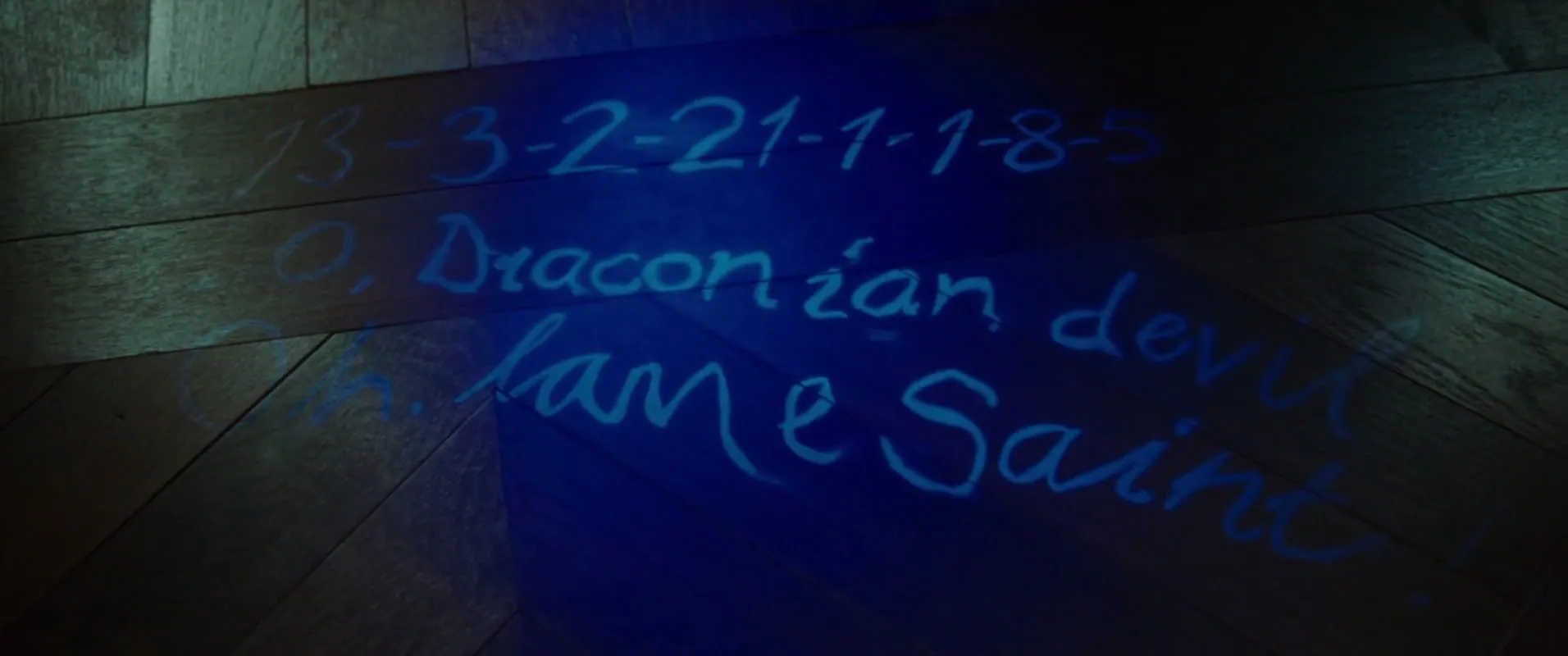
In crosswords, clue words like “twisted” or “scrambled” often signal that an anagram is part of the answer.
The film Tenet (2020) builds its entire structure around wordplay. The title is a perfect palindrome, and many character names come from the Sator Square, a Latin word puzzle made of interlocking palindromes and anagrams:
S A T O R
A R E P O
T E N E T
O P E R A
R O T A S
Words like “Sator,” “Arepo,” “Tenet,” “Opera,” and “Rotas” all appear in the film as names or clues.
Cautions and Misconceptions
Not every scrambled word is a real anagram. This section clears up common mistakes and explains how to spot false or misleading examples.
- A real anagram must use every letter exactly once, i.e., no dropping or repeating letters.
- Anagrams are not the same as palindromes (words that read the same forward and backward) or acronyms (words formed from initials).
- Many rearrangements are random or meaningless. A strong anagram has a clear connection to the original.
History and Origins
Anagrams go back to ancient times. The word comes from Greek: “ana” means again, and “gramma” means letter. Early writers used them to hide names or insert secret meanings into texts.
During the Renaissance, poets and scholars used anagrams for puzzles and codes. Lewis Carroll created long, poetic examples like “Flit on, cheering angel” from “Florence Nightingale.”
Summing Up
An anagram is a precise rearrangement of letters from one word or phrase into another, using all letters exactly once. Writers and creators use them for mystery, wordplay, or hidden meaning. Knowing how to spot and use anagrams adds another layer of control to your writing, puzzles, or creative projects.
Read Next: Want to dig deeper into screenwriting?
Start with the Screenwriter’s Toolkit on literary devices vs. elements – a deep resource covering every major literary device and element used in writing.
Then explore our collection of practical writing techniques covering dialogue, structure, and pacing.
Or jump into the free screenwriting course to start your first draft today.
You can also head back to the Screenwriting section for more tools, theory, and breakdowns.