Published: September 12, 2019 | Last Updated: January 19, 2026

For a basic three-point lighting setup, you must choose the wattage for your key, fill, and backlight (if you have one). Key lights are your strongest and should generally be around 500-2000 watts. The fill light used to fill in the shadows of your subject should be less powerful, 250-500 watts. Finally, your backlight used to give that nice edge-light or “halo” effect on your subject should be equal to or less than your fill.
Key Light
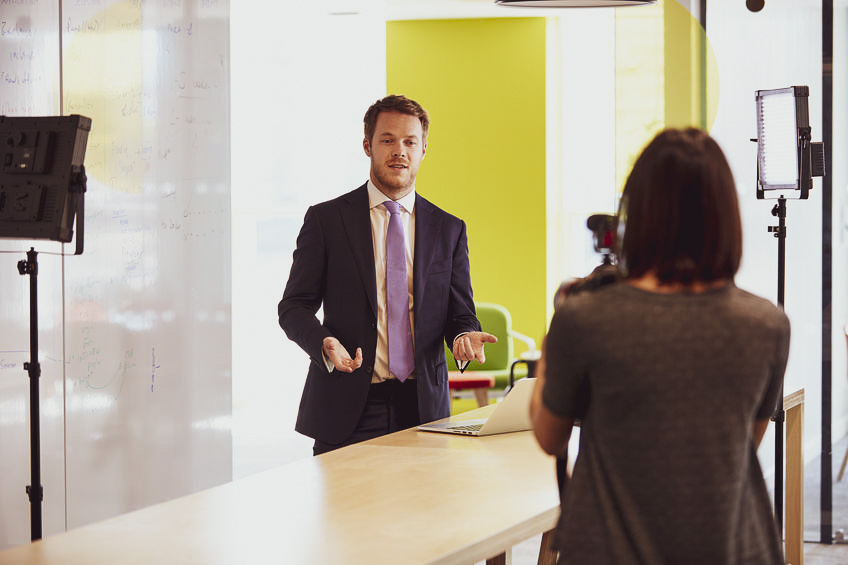
Your key light is the main light source in your lighting setup and is the primary illuminating factor on your set. Key lights range from 1000 watts (1K) to 10,000 or even 20,000 (10K and 20K).
What could you possibly need a 10K or 20K light for? Well, on big-budget sets, these are used to simulate the sun or a heavy full moon-esque brightness during the night.
Think of movies with bright, moonlit nights or “outdoor” day scenes you know for sure were shot on a sound stage in a studio. Lord of the Rings, the Two Towers is a great example during the battle of Helms Deep.
Another great use for these powerful wattage lights is on interior scenes when you’re pushing “sunlight” through the windows of your setting.
Depending on the distance and diffusion you’re using, these can give off nice crisp lines and hard shadows or be softer and gentler.
When paired with some blinds to create shadow and depth or that cherished “sunray” look over your subjects, this can give a great noir look when paired with some blinds to create shadow and depth.
If you’re interested in learning more about noir lighting, here’s a link to my guide on using low-key lighting for dramatic effect.
However, you will far more likely end up using 500-watt to 2K-watt lights on your indie film shoots. These will give you a nice brightness to work with as a key for most interior scenes, office videos, studio shoots, and YouTube vlog videos.
Lower-wattage lights can be rented in kits and packs from most equipment rental houses for fairly affordable rates, so don’t skimp out on good lighting because you don’t have the right bulbs in your basement.
If you go to film school, check your rental store. They should also have light kits covering 250-1K and maybe even single 2Ks or 5Ks to rent.
Fill Light
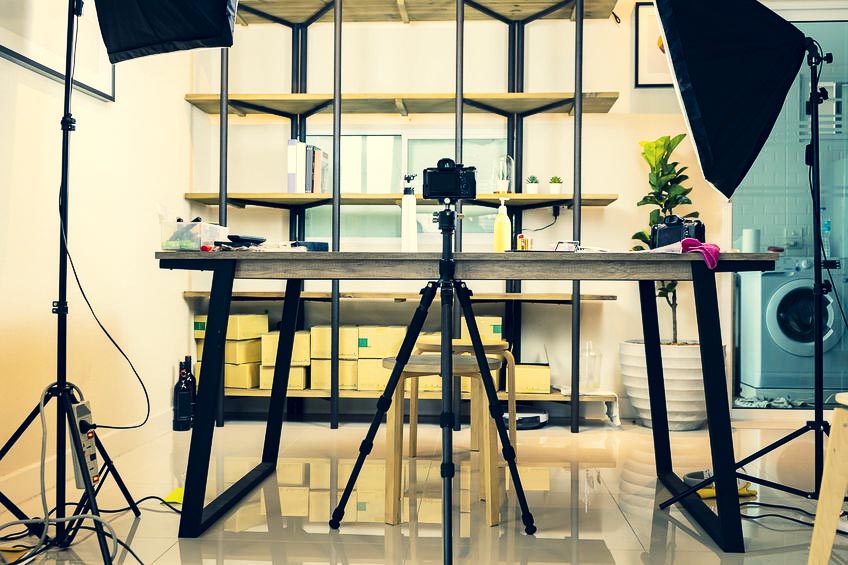
As I mentioned above, fill lights are the less powerful companions to key lights, designed to fill in the harsh shadows thrown due to the intensity of the key.
Think of sporting matches where the players are fully illuminated with nary a shadow on them but have four shadows trailing them on the ground. This is because lights are set up on all sides to fill in the shadows on their bodies, so visibility is as good as can be.
Film is less drastic, and we want to keep some shadow for depth and eye-catching pleasure, so don’t blast your subject from all sides.
Fill lights should not be as strong as the key light, so whatever strength your key has, do not exceed that with your fill. This means that your standard shoots, which I already mentioned (low-budget shorts, office shoots, YouTube vlogs, and reviews), will work with 500 or fewer watts if you’re using 1K or 2K keys.
Those day-for-night, hard sunlight or moonlight-emulating scenes that are lit with much higher wattage will also exponentially apply to the fill. In these cases, fill lights can go all the way to 5K.
Whatever you choose will be a matter of taste for you or your employer. Season to taste, as the cooking recipes say.
A Quick Baseline
A 1K key and a 250-500 watt fill are optimal for a solid, pleasing three-point setup. This creates a slight differential on the face of your subject, giving some depth without creating hard shadows.
It’s an easy way to achieve a professional-looking image, and most corporate gigs or videography employers will appreciate this look for its easy filmic quality.
It also won’t cost insane amounts to rent these lights together in a kit. The lights are small enough to be wieldy and encourage you to play around with shaping and brightness using flags (large pieces of felt), barn doors (the metal flaps surrounding the lightbulb), diffusion (semi-transparent material to soften light), or scrims (metal netting used to dim light intensity).
Optional: Back Light
If you decide to really up the flair in your image, a backlight will add that little bit of extra oomph. As mentioned above, a backlight is positioned behind the subject to catch their edge with a tad bit of glow. This gives a nice shine or halo effect and helps distinguish hair, especially from the background.
Since it’s designed to accent what is already there, a backlight should be equal to or less than your fill light. The maximum is 250-500 watts unless you’re working with some really powerful lights.
Remember, the backlight is designed to work with your fill, so don’t blast your subject from behind unless silhouetting them is a creative choice.
Outdoor Shooting?
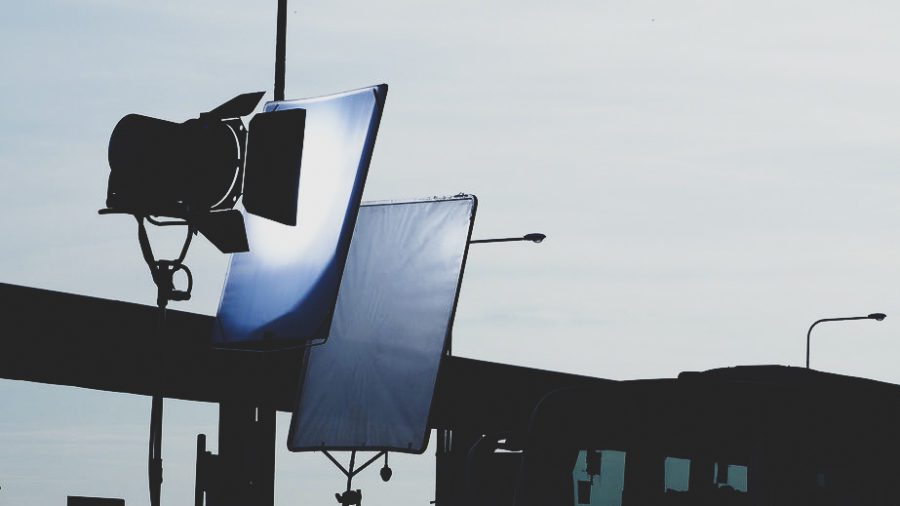
A quick note about outdoor scenes on low-budget shoots: unless you’re using a generator or running cables from a nearby building, you most likely won’t be running lights. Therefore, you shape the light you’re working with.
Bounce boards and reflectors will be most useful for bending natural light to your advantage. You can also use flags or diffusion to create large areas of shadow to avoid direct sunlight.
Shooting in Glass Castles?
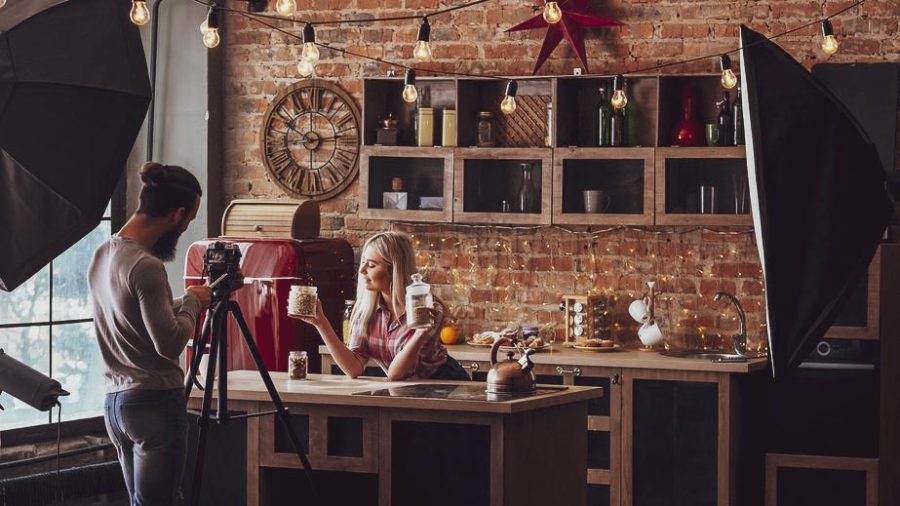
Also known as a corporate office, shooting in a space full of windows can be challenging due to the sun’s light spilling in, outside lighting, etc.
To combat this, you can either black out all the windows with tarps or some other equally light-absorptive material or try to work with the natural light and supplement it with your lights.
The best windows to use are northern and southern-facing windows, as these will not be in the sun’s arc throughout the day, and as such, they receive a softer, more constant natural glow all day.
If you use natural light as a key, you’ll need a stronger fill to match the brightness, and then you’ll need to offset that brightness by setting your camera to a higher f-stop. If natural lighting is your key light on a bright and sunny day, then a fill of 1K or more will be necessary as a fill.
Also, make sure you slap a blue gel on the tungsten lights you’re using so they will match the color temperature of the natural light.
Safety Tips
About plug safety: To avoid potentially overdrawing what normal power circuits can provide and tripping the circuit breakers in your location, or worse, starting an electrical fire, it’s important to note how many watts most outlets are rated for.
Most residential circuits are rated 1800 to 2400 watts before the breaker trips. How can this be calculated?
To start, you need to know the circuit’s amps. Most home circuits are 15 or 20 amps. Next, you need to figure out the voltage. Standard three-prong outlets are 120 volts. To calculate the amperage being used, you need the total watts plugged in divided by volts.
The equation looks like: (watts) / (volts) = (amps)
This is a quick way to ballpark whether you’ll be in danger of overloading a circuit and will help you spread out your power load safely at your location.
Since you’re messing around with lights that can greatly exceed the standard amount of amperage, it’s a good idea to keep all your lights plugged in to separate outlets if you can manage it.
Otherwise, all the small wattage lights (250s, 500s) should be grouped, and the big juice hogs should be separated.
Also, avoid outlets with appliances, or other power-hungry machines plugged into them, such as toasters, AC units, computers, heaters, refrigerators, etc. Unplug those appliances before using the outlets, or avoid them altogether.
LEDs & Lumens
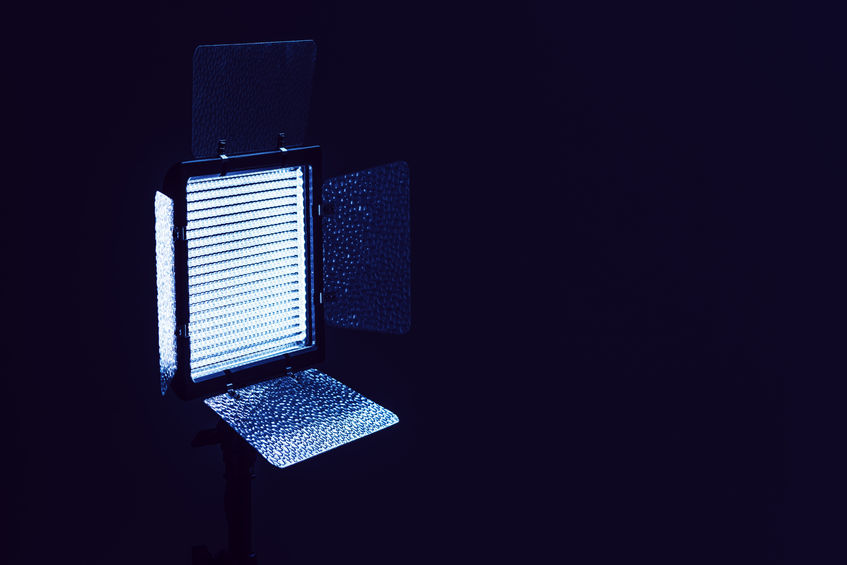
Another way to keep your wattage under control and avoid potentially overloading a circuit is by using LEDs instead of tungsten lights.
LED lights are designed to use much less wattage to deliver strong brightness. So, a 500-watt tungsten does not equal the brightness of a 500-watt LED; in fact, a 500-watt LED would be considerably brighter.
To understand the differential, we have to talk about lumens.
Lumens measure the light given off by a bulb or any light-emitting source.
In other words, lumens are the brightness of a light, and wattage is the energy used by the same light.
Because the wattage difference of LEDs throws a wrench into understanding how much brightness they give off, we usually talk about LEDs in terms of lumens.
Tungsten vs. LED Wattage and Lumens Comparison
In general, tungsten lights produce about 12-18 lumens per watt, while LEDs, depending on their efficiency, produce a whopping 30-90 lumens per watt.
Let’s have an example using a general three-point setup with some standard wattage tungsten lights:
1K key, 500-watt fill, 250-watt backlight. To sum this up, we’ve got 1750 watts total, which, on the low end, will give us a total of 21,000 lumens. 1750 watts is close to overloading a home circuit, however. But what if there are no other outlets available?
Switching to LEDs and using the lowest tier of 30 lumens per watt, the wattage conversion while keeping the total lumens the same would end up closer to 400-watt key, 200-watt fill, and 100-watt backlight. Total of 700 watts for the same number of lumens, or actual light.
As you can see, this is much less strain on a circuit and over 1000 watts more efficient than tungsten lights.
From a safety standpoint, LEDs are also better as they run much less hot than tungsten, so the burning risk is minimal.
Also, there’s almost no cool-down time, and there’s no need to wait for the lamps to cool down before you can pack your gear. LEDs don’t weigh nearly as much as tungsten light.
Of course, there is a catch: They’re pricier than tungsten to both buy and rent.
Summing Up
You now know enough to calculate the watts needed per light and the ratio of key to fill to backlight.
This is a starting guide, and film is nothing if not experimental, so once you’ve got this down comfortably, feel free to experiment with your lighting.
Never experiment with the safety tips; they should always be followed for reasons that I hope are clear.
Read Next: Want to explore how lighting transforms the mood of a scene?
Browse all lighting articles, from hard and soft light to color temperature, contrast, and key light setups.
Or return to the Cinematography section for lenses, framing, and camera movement techniques.