
Published: February 15, 2024 | Last Updated: February 5, 2026

Overview
Definition: A paradox is a statement or situation that seems impossible because it contains a contradiction, but it still points to something meaningful once you accept the context or the story’s rules.
What you’ve seen before: You have watched a character say something that sounds “wrong,” then you realize the line fits the situation better than a simple answer.
Example: In a time-travel thriller, a character tries to stop a disaster, but that attempt becomes the exact chain of events that causes the disaster. The character acts on purpose, but the story turns the action into the lock on the loop.
Why it matters: Paradox lets you write pressure that does not disappear with one clean decision. It pushes characters into choices where the story’s logic fights back. On screen, it also creates a specific kind of tension because you try to work out how the timeline, the rules, or the knowledge can hold together.
- Key takeaway 1: Test it: if it sounds impossible at first, then it clicks once you accept the setup, you likely have a paradox.
- Key takeaway 2: Make the contradiction part of the plot, so the character has to live inside it, not just say it.
- Key takeaway 3: Commit to clear rules, so the paradox feels intentional instead of random.
On this page, you’ll learn what a paradox is in film, how it differs from a plot hole, the main paradox types you’ll see (with quick rule tests), and how to use paradox on purpose without weakening stakes.
What is a Paradox? Definition & broader Meaning
In philosophy and logic, a paradox is usually a claim or line of reasoning that seems acceptable at first, but it leads to a contradiction or an “unacceptable” conclusion, or it produces a set of plausible statements that cannot all be true together.[1][3]
In film, a paradox often shows up when the story’s rules (about time, identity, knowledge, or cause and effect) create a deliberate knot. You cannot “solve” the knot without changing at least one assumption the film wants you to hold.
A practical definition for film: A paradox in film is a deliberate narrative setup where the story’s logic creates an apparent impossibility, or it creates a closed loop with no clear origin, and the film uses that tension for theme, suspense, or payoff.
Why paradox works in film
Paradox changes how you experience cause and effect. Instead of a straight chain, the story can fold back on itself through loops, reversals, and delayed meaning. That shift creates tension because you keep testing the rules in your head while the plot moves forward.
What paradox does to theme and emotion
Paradox changes how you think about choice. In a predestination story, the moment a character tries to escape fate can become the exact action that causes it. The character chooses, but the timeline uses the choice as the mechanism of the trap.
Paradox can also blur responsibility. If someone causes their own origin, their own downfall, or the conditions that force a choice, it becomes harder to name a clear “starter.” That changes how guilt, sacrifice, and heroism feel.
Paradox builds a different kind of suspense because you ask how the loop is possible, when it began, and which scene quietly supplies the missing link.
Many paradox films reward attention. Later scenes can reframe earlier scenes, so you end up rebuilding the timeline in your head as new information lands.
How you can show paradox on screen
You can communicate paradox with structure and repetition, not just dialogue. Tools include repeated setups with new meaning, mirrored blocking, and visual echoes that return at key moments. A match cut can also connect two moments in a way that makes cause and effect feel circular.
Held-back information also helps. If you hide the real cause until late, the paradox lands as a revelation instead of a lecture.
A restricted point of view can make the loop hit harder because you only learn what the character learns.
Unreliable narration can create “truth traps” that feel paradox-like. Memory, voiceover, or perspective can contradict itself in a way that forces you to decide what the film’s rules really are.
Quick check: If the contradiction is intentional and the film frames it as meaningful, it is probably a paradox. If it is unintentional and ignored, it is more likely a plot hole.
If you want a narrative theory angle on how films cue you to build story from plot information, Bordwell’s work is a useful starting point, and Chatman’s Story and Discourse explains story vs. presentation (discourse) in a clear framework.[7][8]
Paradox types in film (and how to spot them)
These are common paradox patterns you’ll see in film, especially in time travel and identity stories.
1) Grandfather paradox (consistency paradox)
How to spot it: Time travel enables an action that would prevent the time traveler from ever existing (or from ever traveling back). The story creates a consistency contradiction.[5]
Why it works: It turns the premise against itself. The cause (time travel) threatens the condition that makes the story possible.
2) Predestination paradox (self-fulfilling loop)
How to spot it: Attempts to prevent an event become the actions that cause the event. History “locks in” because the effort to change it is already part of the timeline.[5]
Why it works: It turns agency into irony. The character’s best effort becomes the engine of fate.
3) Bootstrap or ontological paradox (causal loop with no origin)
How to spot it: An object or piece of information is passed back in time and becomes the cause of itself, so it has no clear origin.[5]
Why it works: The loop feels neat and complete, but it leaves a hard question behind: where did the thing come from in the first place?
4) Liar paradox (self-reference contradiction)
How to spot it: A statement refers to itself in a way that breaks true/false logic (for example, “This statement is false.”). Any attempt to label it true or false collapses into contradiction.[2][3]
Why it matters for film: You will see “truth traps” in mysteries and unreliable-narrator stories, even when the film is not doing formal logic.
5) Russell-style paradoxes (rules that break themselves)
How to spot it: A definition or rule produces contradiction when it tries to classify its own case, so the system cannot stay consistent.[6]
Why it matters for film: Some rule-based worlds create edge cases where the rule undermines itself, and that friction becomes story fuel.
Examples of various paradox types in film
Film paradoxes often come from time travel, time loops, and self-referential story logic. These setups clash with everyday cause and effect, and the clash is the point.
Predestination paradox: Predestination (2014)

How to spot it: If trying to change the past is exactly what causes the outcome, it is a predestination paradox.
Predestination is a classic case because the protagonist’s timeline folds back on itself. Actions taken across time become the cause of the character’s own identity and situation. The loop removes a clean “first cause,” and that is what makes it feel trapped.
Bootstrap (ontological) paradox: Interstellar (2014)
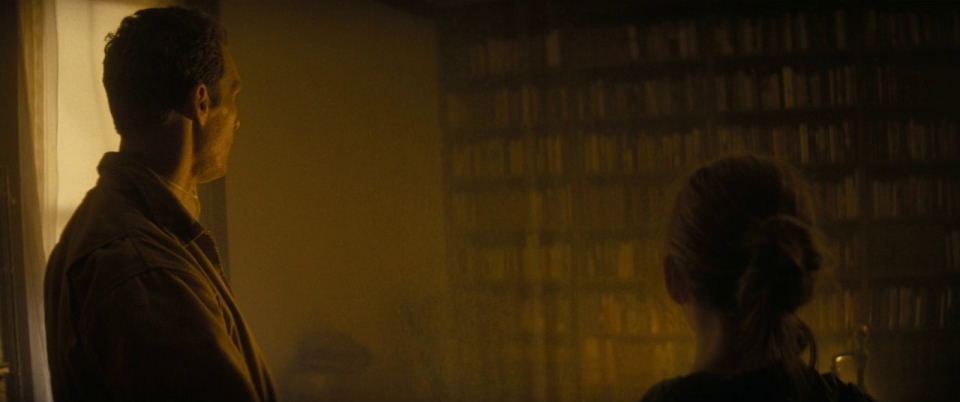
How to spot it: If information exists in a causal loop with no clear origin, it is a bootstrap or ontological paradox.
In Interstellar, guidance appears to come from “elsewhere,” but later the film ties it to a future-enabled mechanism connected to the protagonists. The result is a loop: the message helps create the situation that makes the message possible.
Grandfather paradox: Back to the Future (1985)
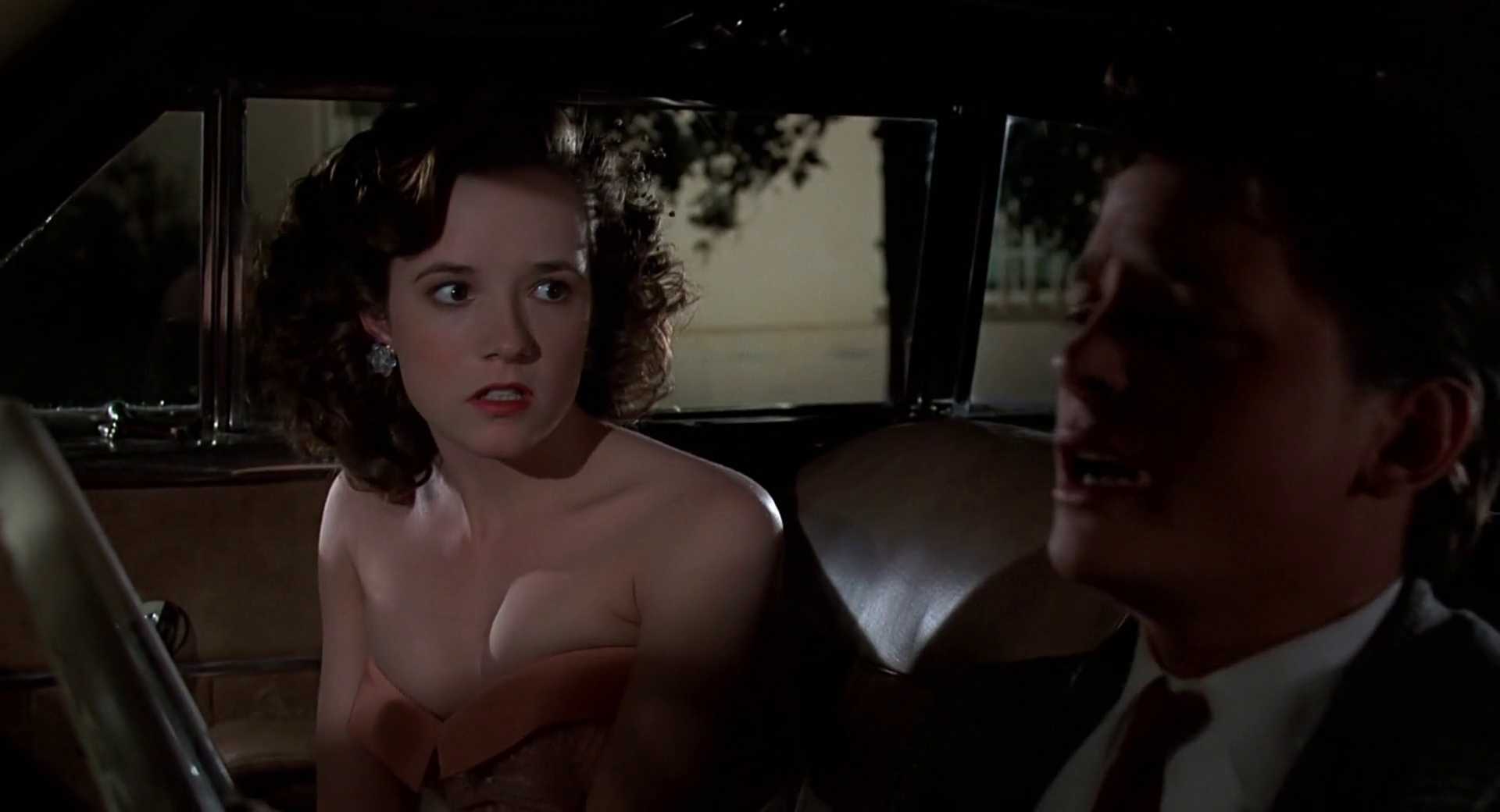
How to spot it: If changing the past would prevent the time traveler from ever existing, it is a grandfather paradox setup.
Marty interferes with the events that lead his parents to fall in love, which threatens his own birth. The film makes the paradox visible by showing his existence become unstable as the past slips out of alignment.
Self-interaction and timeline pressure: Looper (2012)
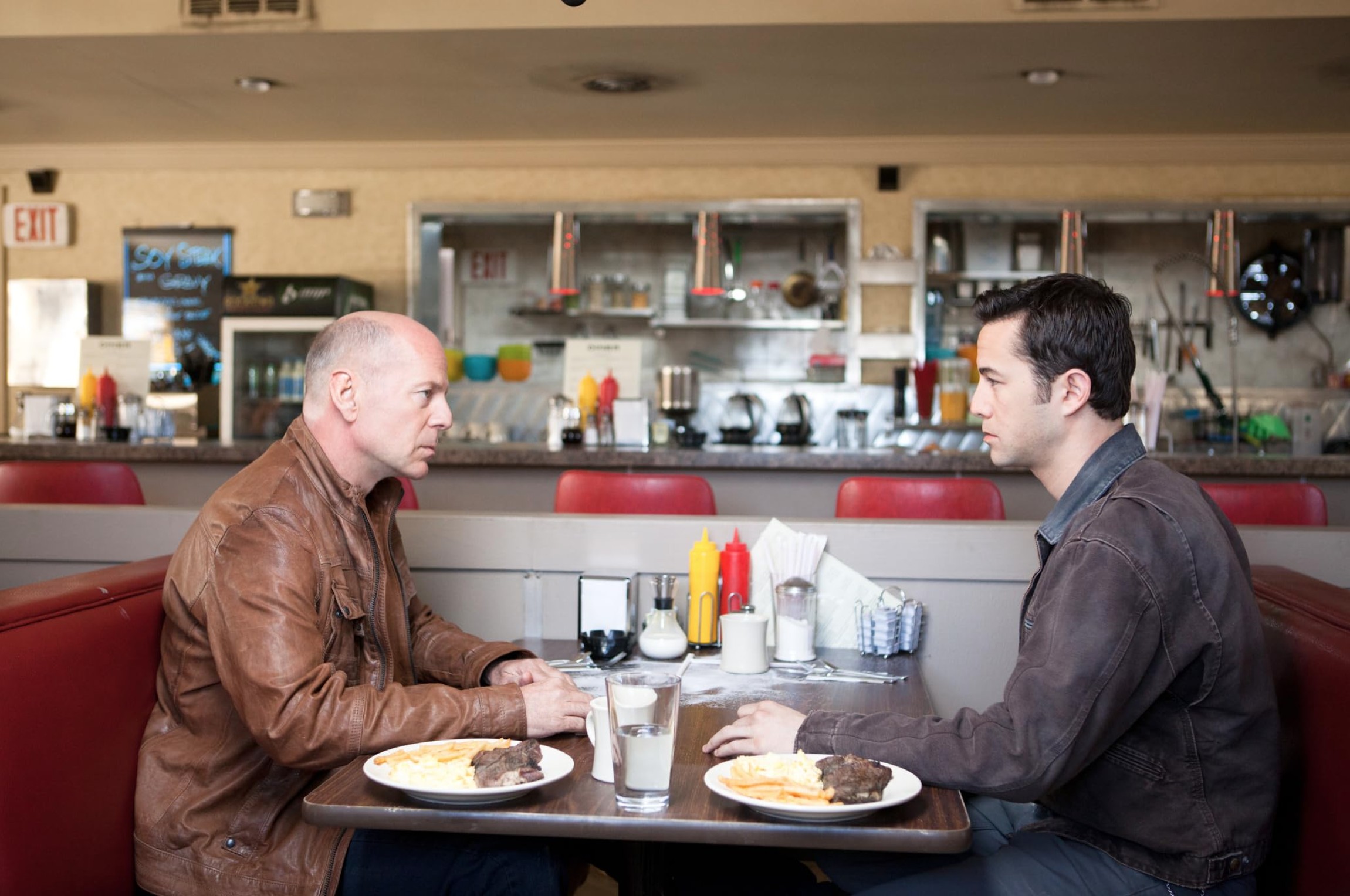
How to spot it: If a character can meet, harm, or change their past or future self, the story puts timeline consistency under stress.
In Looper, a hitman is assigned to kill targets sent back from the future, and that eventually includes his older self. The tension comes from cause and consequence across time: what happens now can rewrite what “must” happen later.
Bootstrap paradox: The Terminator (1984)
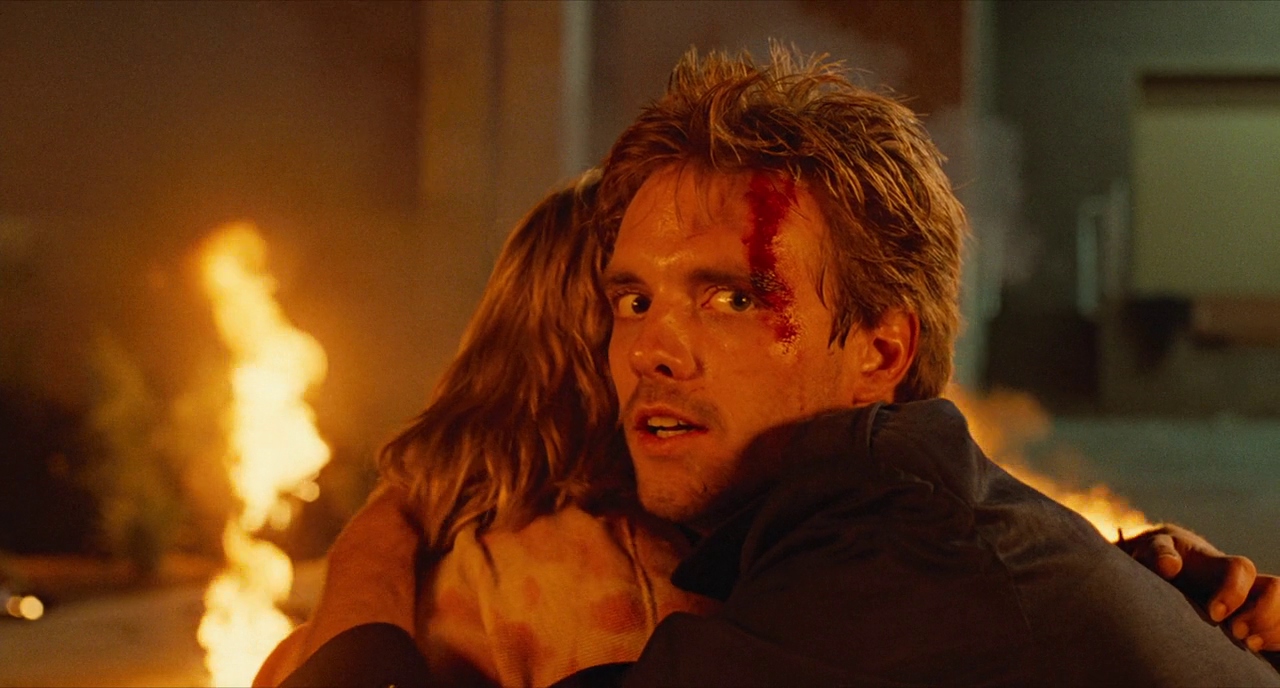
How to spot it: If a future event causes a past event that is necessary for that same future to occur, the story forms a causal loop.
Skynet sends a Terminator back to prevent John Connor’s birth, and the resistance sends Kyle Reese back to protect Sarah. Reese becomes John’s father, which ties John’s existence to the future war that motivated the mission. The origin becomes circular.
Bootstrap loop: Harry Potter and the Prisoner of Azkaban (2004)
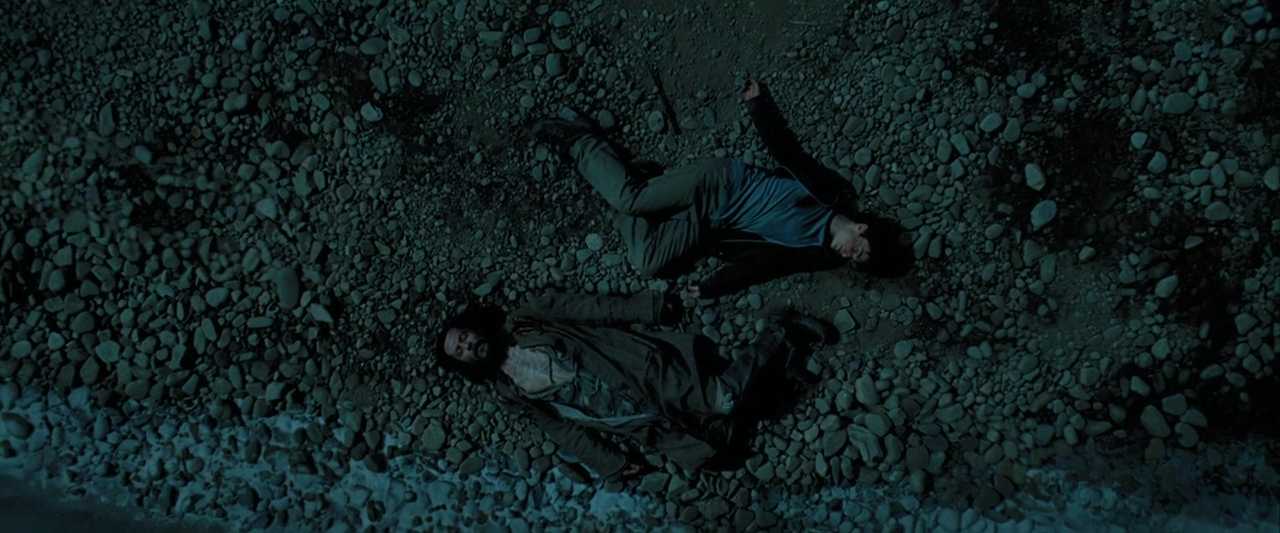
How to spot it: If an action is only possible because the character has already seen themselves do it, the story forms a self-supporting loop.
Harry succeeds because he has already witnessed the outcome and later becomes the person who creates it. The “first time” is hard to locate because the loop supplies its own knowledge.
Examples of logical paradoxes
A logical paradox is a statement or argument that appears to follow reasonable steps, but it leads to contradiction. That forces you to examine hidden assumptions in language, reference, or rules.[1][2]
The liar paradox
The liar paradox is often expressed as: This statement is false.
If it is true, then it must be false. If it is false, then it appears true.[2][3]
- If the statement is true, then what it says must hold, so it is false.
- If the statement is false, then it is not false, so it appears true.
The barber paradox
This classic paradox describes a barber who shaves all and only those men in town who do not shave themselves. The paradox appears when you ask whether the barber shaves himself. If he does, then he should not. If he does not, then he must.
- If he shaves himself, then (by the rule) he cannot shave himself.
- If he does not shave himself, then (by the rule) he must shave himself.
Examples of paradoxes in common sayings
Paradox also shows up in everyday language as short lines that compress a tension between goals, values, or perspectives. Many are rhetorical rather than formal logical paradoxes, but they still stick because they sound contradictory and still feel “true.”
| Paradox | Explanation |
|---|---|
This statement is false. | A self-referential form of the liar paradox: if it is true, it is false; if it is false, it appears true. |
Less is more. | A rhetorical paradox that argues restraint can create a stronger result than excess. |
The only rule is that there are no rules. | If it is a rule, then at least one rule exists, which contradicts the claim. |
The enemy of my enemy is my friend. | Alliances can flip depending on context, so “friend” and “enemy” labels stop feeling stable. |
I can resist anything except temptation. | A witty paradox about weakness: the one thing you “cannot resist” is exactly what you are meant to resist. |
You have to be cruel to be kind. | A rhetorical paradox that frames short-term harshness as a path to long-term care. |
Freedom is slavery. | A propaganda-style paradox that flips meaning by force. It is famous as one of the Party slogans in Orwell’s 1984. |
Common confusions (paradox vs. lookalikes)
Paradox often gets confused with other kinds of contradiction, or with sloppy writing. These quick distinctions help you keep your terms clean.
Paradox vs. plot hole
A paradox is a deliberate contradiction or loop the film uses for meaning and stakes. A plot hole is an unintentional inconsistency that the film does not acknowledge and cannot support within its own rules. If the movie builds tension around the contradiction and pays it off, it is likely a paradox. If it breaks stakes with no payoff, it is likely a plot hole.
Paradox vs. contradiction
A contradiction is simply two claims that cannot both be true. A paradox is a contradiction (or an unacceptable conclusion) that grows out of premises that seem plausible, so the contradiction exposes hidden assumptions.[1][3]
Paradox vs. oxymoron
An oxymoron is a short phrase that places opposite terms side by side (for example, “deafening silence”). It can be poetic without creating a real logic problem. A paradox is usually a reasoning problem or a story-rule problem, not just stylistic wording.
Writer’s toolkit: using paradox without breaking stakes
Paradox is most useful when the contradiction creates pressure you can actually stage and pay off.
Use paradox when you want:
- Theme-driven conflict: fate vs. free will, responsibility, identity, belief, knowledge.
- Structural suspense: you want the viewer experience to include reconstruction of the real timeline from fragments.
- Character irony: the protagonist’s best effort causes the outcome they fear.
Be careful when:
- It erases consequence: if nothing can change, you need another kind of stake (cost, sacrifice, or meaning) to keep scenes alive.
- The rules shift scene to scene: people read it as a mistake, not an intentional paradox.
- The payoff is weak: a complex setup needs a clear emotional or thematic landing.
Pick a time-travel model early (and commit)
- Fixed timeline: attempts to change the past are already part of the past.
- Branching timelines: changes create new branches instead of rewriting the original line.
- Rewritable past: the past can be altered, but you must show the consequences and handle contradictions on purpose.
A simple craft method that catches problems early
Write your premise as two short rules:
- Possible: what time travel, knowledge, or identity tricks can do in your story.
- Impossible: what they cannot do, or what they always cost.
Then test every major scene against those rules. If a scene violates the rules, revise it, or make the violation the explicit paradox and give it consequence and payoff.
Summing Up
Paradox in film creates tension through logic itself. It pulls you into cause and effect, character choice, and meaning across time. The contradiction becomes part of the story’s design.
When you break paradox into types (grandfather paradox, bootstrap loop, predestination loop), you can see what the story is doing and why it feels tight or unstable. The quick tests help you check whether the contradiction is intentional and supported.
Paradox works best when it connects to theme and character. The loop or contradiction should change what a character wants, what it costs, and what they are forced to accept.
Read Next: Curious how film theory shapes the way we watch movies?
Start with the Film Theory section to break down realism, formalism, structuralism, and more — with examples from iconic films.
If you want studying film theory I recommend starting with The FilmDaft overview of film theory discourses to break down realism, formalism, structuralism, and more — with examples from iconic films.
Then explore the full Film History, Theory & Genre collection to see how movements, styles, and storytelling traditions have evolved.
Whether you’re into Soviet montage or 2000s genre mashups, there’s something here to sharpen your understanding.
Further reading / References
- [1] Stanford Encyclopedia of Philosophy — “Paradoxes and Contemporary Logic”: https://plato.stanford.edu/entries/paradoxes-contemporary-logic/
- [2] Stanford Encyclopedia of Philosophy — “Self-Reference and Paradox”: https://plato.stanford.edu/entries/self-reference/
- [3] Internet Encyclopedia of Philosophy — “Logical Paradoxes”: https://iep.utm.edu/par-log/
- [4] Stanford Encyclopedia of Philosophy — “Curry’s Paradox”: https://plato.stanford.edu/entries/curry-paradox/
- [5] Stanford Encyclopedia of Philosophy — “Time Travel”: https://plato.stanford.edu/entries/time-travel/
- [6] Stanford Encyclopedia of Philosophy — “Russell’s Paradox”: https://plato.stanford.edu/entries/russell-paradox/
- [7] David Bordwell — “Understanding film narrative…”: https://www.davidbordwell.net/blog/2014/01/12/understanding-film-narrative-the-trailer/
- [8] Seymour Chatman — Story and Discourse (Cornell University Press): https://www.cornellpress.cornell.edu/book/9780801411311/story-and-discourse/
