

Published: January 19, 2026

What is Tungsten lighting? Definition & Meaning
Tungsten lighting is light made by a heated tungsten filament (incandescent or halogen lamps), and in film work it also means a “tungsten-balanced” target that is usually around 3200K for stage and film tungsten-halogen fixtures. Tungsten lighting is not a label for every warm-looking light. Tungsten lighting is not a guarantee that every practical bulb in a location matches 3200K, especially when bulbs vary by type and dimming lowers the Kelvin value.
Why tungsten still matters
Tungsten matters because it sits at the center of everyday lighting decisions. It affects how you set white balance, how you treat practical lamps, and how cleanly your shots match across coverage. If you want a broader map of lighting topics on FilmDaft, start with the Lighting section.
Tungsten is a shared baseline for crews
On set, “tungsten” often means a practical plan: you treat the room as a warm interior, and you build your keys, fills, and practicals around that idea. That shared baseline helps lighting and camera move faster because the team knows what “neutral” should look like once the camera is balanced.
Tungsten changes skin tone when white balance is off
If your camera is balanced for daylight and the room is lit with tungsten, the image shifts orange, especially on skin and white walls. If you balance closer to tungsten, tungsten-lit areas look neutral, and daylight sources often shift blue. FilmDaft’s white balance guide explains how that baseline gets recorded by the sensor.
What “tungsten” means on set
Tungsten has two common meanings in film work. One meaning is a real lamp type. The other meaning is a color target, usually linked to the 3200K standard. You get better results when you name which meaning you are using.
Tungsten as a lamp type
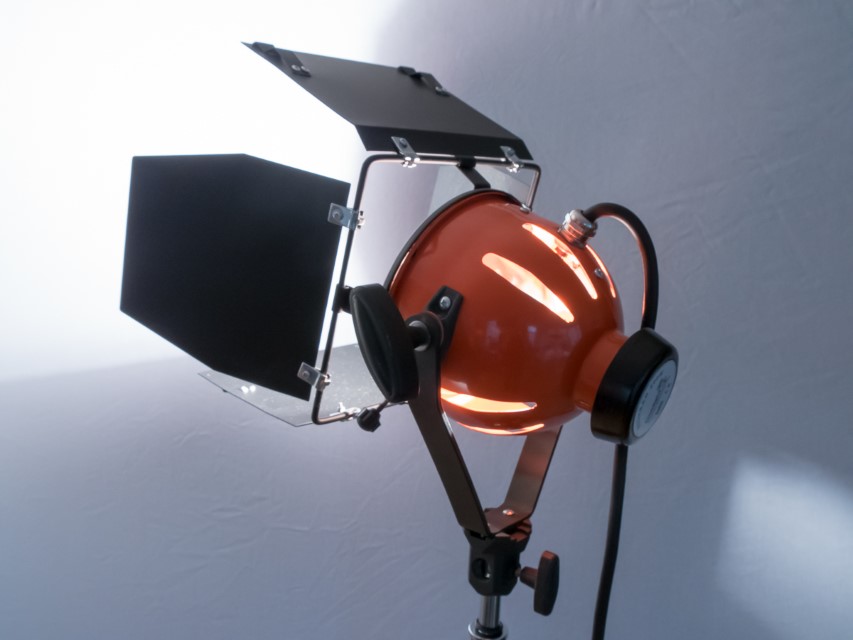
Tungsten fixtures create light by heating a tungsten filament until it glows. Classic units include tungsten Fresnels and open-face fixtures, plus many halogen lamps and traditional household incandescent bulbs. FilmDaft’s Types of Lamps and Modifications guide is a useful reference for how these units behave and how you control spill and contrast with scrims, barn doors, flags, and diffusion.
Redheads and Blondes are classic tungsten open-face lights
On many sets, a Redhead means a small open-face tungsten-halogen light, often around 800W. A Blonde is the larger version, often around 2kW. Crews use these names as shorthand, so the exact wattage can vary by brand and kit.
These fixtures are open-face, so the bulb sits in a reflector without a lens in front. That gives you a harder beam that can throw light across a room. Many models let you move between flood and spot by shifting the lamp relative to the reflector, then you control spill with barn doors, flags, and diffusion.
Color-wise, they usually sit near the tungsten baseline when run at rated power. If you dim them, the light shifts warmer, so treat dimmer settings as part of continuity for the scene.
Tungsten as a film and stage color standard (about 3200K)

In film and stage lighting, “tungsten-balanced” usually points to a working target around 3200K, which fits many tungsten-halogen fixtures at rated voltage. That target is a planning tool, not a promise that every bulb in a location matches it. FilmDaft’s color temperature guide explains Kelvin values and where tungsten sits compared to daylight.
Household practicals often run warmer than the 3200K standard
Many household bulbs read warmer than the film tungsten baseline, and dimming pushes them warmer still. That is why a “tungsten room” can contain bulbs that differ from each other, even before you add any film lights. If you want practicals to cut together cleanly across angles, you often need bulb swaps, dimmer consistency, or a camera white balance choice that fits the whole room.
Why tungsten looks warm on camera
Tungsten looks warm because its color temperature is lower than daylight, so it contains less blue relative to a daylight reference. Your eyes adapt fast, so the room may feel normal in person. Your camera records the difference until you set a white balance that defines what “neutral” should be for the scene.
Daylight balance plus tungsten light equals an orange cast
If you set the camera near a daylight preset and you light with tungsten, whites and skin often skew orange. This is useful when you want warm, practical motivation to read strongly, and it causes problems when you want neutral skin across coverage.
Tungsten balance makes tungsten sources neutral and daylight sources cooler
If you set the camera closer to the tungsten baseline, tungsten-lit areas often look neutral, and daylight through windows can go blue. This can be a clean look when the scene is meant to feel interior and warm, with cool daylight as contrast that stays believable.
Matching Kelvin does not guarantee matching color quality
Two sources can both be set to “3200K” and still render colors differently, especially when one source is LED. The safest habit is to test on your actual camera with a face and a neutral reference, then compare shots on a calibrated monitor. FilmDaft’s CRI guide helps you judge when “3200K” still produces a green or magenta shift on skin and wardrobe.
How tungsten changes when you dim it
Dimmers are common with tungsten because they are fast and intuitive. The tradeoff is that dimming changes color as well as brightness, so continuity can drift unless you treat dimmer levels as part of the look.
Dimming tungsten lowers filament temperature and lowers Kelvin
When you dim tungsten, the filament runs cooler, so the light gets warmer as it gets darker. This is why practical lamps can turn deep amber at low dimmer levels, and it is why your close-ups can mismatch your wides if dimmer positions change between takes.
Keep dimmer decisions consistent across coverage
If you dim tungsten for mood, lock that choice for the whole setup and record the dimmer positions. If you need exposure changes without a big color shift, you can often use distance, diffusion, scrims, flags, or camera-side exposure choices instead of changing the dimmer level mid-coverage.
When tungsten is a strong choice
Tungsten is strongest when the scene is built around practical lamps and warm interior motivated lighting. It is also useful when you want a repeatable baseline that stays consistent once you lock voltage and dimmer decisions.
- Practical-motivated interiors: You want your off-camera units to match the on-camera lamps in color and direction.
- Warm, intimate spaces: Bedrooms, bars, kitchens, and hallways often benefit from a warm baseline that feels natural for the location.
- Continuity across a controlled set: You can block or manage daylight, then keep the same tungsten baseline for the whole scene.
- Match work with existing footage: You need new shots to sit inside a tungsten-balanced scene without color jumps.
When tungsten is unnecessary or a bad fit
Tungsten is not always the practical choice. Heat, power draw, and tight locations can turn tungsten into a slow setup, especially when a modern LED can hit the same target Kelvin with less risk.
Daylight-motivated scenes often want a daylight plan
If windows are a major part of the shot and the scene is meant to feel like real daylight, a daylight-balanced plan can reduce the amount of correction you need. You can still add warmth with practical bulbs, gels, or warmer fixture settings in the areas where you want it.
Mixing tungsten with daylight and LEDs
Mixed lighting looks messy when you let it happen by accident. Mixed lighting looks controlled when you pick a baseline and then make a small number of deliberate corrections to bring the outliers closer.
Pick the baseline first, then decide what must change
Start by choosing what “neutral” means for the scene, then set white balance to support that choice. If the scene is about windows and daylight, target daylight. If the scene is about practical lamps and warm interior motivation, target tungsten. FilmDaft’s Different Types of Light guide is a good overview of why mixes happen and how to control them.
Correct the source that is easiest to change
Daylight through windows is hard to change quickly, so crews often adapt fixtures and practicals to it. Practical bulbs are easy to swap, so changing bulbs can be the cleanest fix for a warm-cool mismatch that keeps ruining skin tones.
Use motivated lighting so the mix has a reason
Mixed color works best when the viewer can point to a reason in the frame. A warm practical in the background can stay warm, and a cooler window can stay cool, as long as your key and fill choices support the logic of the scene. FilmDaft’s motivated lighting guide helps you decide when to keep warm sources warm and when to neutralize them for consistent skin across angles.
Shaping tungsten light for faces and locations
Tungsten units often start as relatively hard sources, especially when the emitting area is small, and the light is far from the subject. You usually control tungsten in the same way you control any hard source: change source size, change distance, and block spill with flags.
Diffusion increases apparent source size and softens shadows
Diffusion works because it spreads the light over a larger surface, which makes shadow edges softer on faces. FilmDaft’s light diffuser guide explains the tradeoffs, including output loss and how diffusion can lift the room if spill is not controlled.
Book lighting is a repeatable way to get soft tungsten keys
Book lighting uses a bounce surface plus diffusion, so the subject sees a large, soft source with controlled direction. It is a strong option in interviews and close-ups because you can keep skin smooth while still holding shape with negative fill. FilmDaft’s book lighting guide breaks down the setup and the control points.
Power, heat, and safety
Tungsten is a planning topic because it draws more power and produces more heat than many modern alternatives. If you treat it as “just a look,” you can end up with tripped circuits, uncomfortable talent, and rushed resets.
Plan power draw before you place fixtures
Check what circuits you have, how many fixtures you can safely run, and where your cable paths go before you commit. FilmDaft’s watts, lumens, and lux guide helps you translate brightness expectations into practical power and output decisions.
Heat changes blocking and working distance
Hot fixtures limit how close you can place units to faces and practical set dressing, and they can make small rooms uncomfortable fast. Gloves, safe clearances, and clear communication during moves are part of working with tungsten in a professional way.
Quick ways to recognize tungsten in a location
You do not always have time to meter every source. These cues help you decide whether you are dealing with real tungsten filament sources, a tungsten color plan, or a mix of warm LEDs and practicals that only look like tungsten.
- Warm cast under daylight white balance: Skin and whites skew orange when the camera is set near daylight.
- Dimming makes the light warmer: The bulb shifts toward deeper amber as it gets darker.
- Noticeable heat near the source: Classic tungsten units and many halogen practicals run hot.
- Windows go blue when you balance for the room: A tungsten-balanced camera makes daylight sources look cooler.
Common misunderstandings and how to avoid them
Many tungsten problems come from assuming one Kelvin number explains everything in the room. Clear labels, simple tests, and consistent dimmer choices prevent most mismatches.
- Calling every warm source “tungsten”: Warm LEDs and mixed practical bulbs can look similar, so check bulb type and test on camera.
- Assuming 3200K matches every practical: Household bulbs vary, and dimming lowers Kelvin, so treat 3200K as a working target.
- Trusting Kelvin alone with LEDs: Two 3200K sources can render skin differently, so test a face and a neutral reference.
- Changing dimmer levels between angles: Dimming shifts color, so log dimmer positions and keep them consistent for coverage.
A practical on-set workflow you can repeat
This workflow keeps tungsten decisions concrete. It helps you set a baseline, keep continuity, and avoid spending the whole day chasing color mismatch across angles.
- Walk the location: Identify practicals, windows, signage, and any sources you cannot change.
- Choose the baseline: Decide whether the scene should read as tungsten-balanced or daylight-balanced on camera.
- Set white balance: Use Kelvin, a preset, or a custom reference, then lock it for the setup.
- Fix practicals early: Swap bulbs or set dimmers so the room starts consistent before you add film lights.
- Bring outliers closer: Use gels, fixture settings, and flags so daylight and practicals support the same plan.
- Verify with the real camera: Check a face and a neutral reference, then keep dimmer positions stable for coverage.
If you want a repeatable way to hold exposure while you tweak fixtures, FilmDaft’s light meter guide is a practical companion to this workflow.
Where tungsten intersects with AI inserts and matching
Tungsten planning matters again when you cut AI-generated inserts into real footage. If the live-action scene is tungsten-balanced and the inserts are daylight-balanced, the cut often feels wrong even if the framing is correct.
Write tungsten constraints you can verify in the edit
If you use AI for inserts, state the baseline in plain language, such as “tungsten-balanced interior, about 3200K,” then describe light direction and softness to match the real scene. FilmDaft’s AI B-roll and inserts workflow focuses on constraints you can check in the timeline, and AI shot planning covers how to keep those constraints consistent across coverage.
Use FilmDaft’s AI hubs when you need the bigger picture
If you are building a larger AI-assisted workflow, FilmDaft’s AI in Filmmaking overview and AI tools map help you place inserts, planning, and validation inside a broader production process.
Related FilmDaft guides that pair well with tungsten
If you want to go deeper, these FilmDaft pages connect directly to tungsten decisions: Color Temperature, White Balance, Motivated Lighting, Types of Lamps and Modifications, Light Diffusers, Book Lighting, Watts, Lumens, and Lux, and CRI, TLCI, and SSI.
Summing Up
Tungsten lighting is both a real filament lamp type and a film and stage color target that is usually around 3200K for tungsten-halogen fixtures. Practical bulbs vary, and dimming lowers Kelvin, so the smart move is to treat 3200K as a working baseline that you verify on your camera. Pick a baseline, lock white balance, keep dimmer decisions consistent, and correct the outliers with the smallest change that solves the mismatch. When you do that, tungsten becomes a controlled tool instead of a constant continuity problem.
Read Next: Want to explore how lighting transforms the mood of a scene?
Browse all lighting articles, from hard and soft light to color temperature, contrast, and key light setups.
Or return to the Cinematography section for lenses, framing, and camera movement techniques.
