

Published: June 18, 2019 | Last Updated: November 17, 2025

What is Scale in art? Definition & Meaning
Scale in art is the size of an object in relation to another object or to its environment. Artists use scale to control focus, create meaning, and guide the viewer’s experience of a work.
Scale is not the same as proportion! While scale compares different objects or figures, proportion is the size relationship within a single form. Both work together to create a visual structure.
Understanding Scale in Art
Scale helps establish visual hierarchy. Large elements dominate a composition and suggest importance. Small elements may feel distant, vulnerable, or insignificant. By adjusting scale, you shape how viewers interpret space, power, and emotion.
Hierarchical Scale
p>In ancient and medieval art, important figures were often shown much larger than others. This visual method is called hierarchical scale. A clear example is the tympanum at the Cathedral of Saint-Lazare in Autun (c. 1130), where Christ dominates the composition. His body is oversized, flat, and symmetrical, carved with decorative folds that emphasize his divine presence. He stares outward, unmoving, while smaller angels support the almond-shaped mandorla that surrounds him.
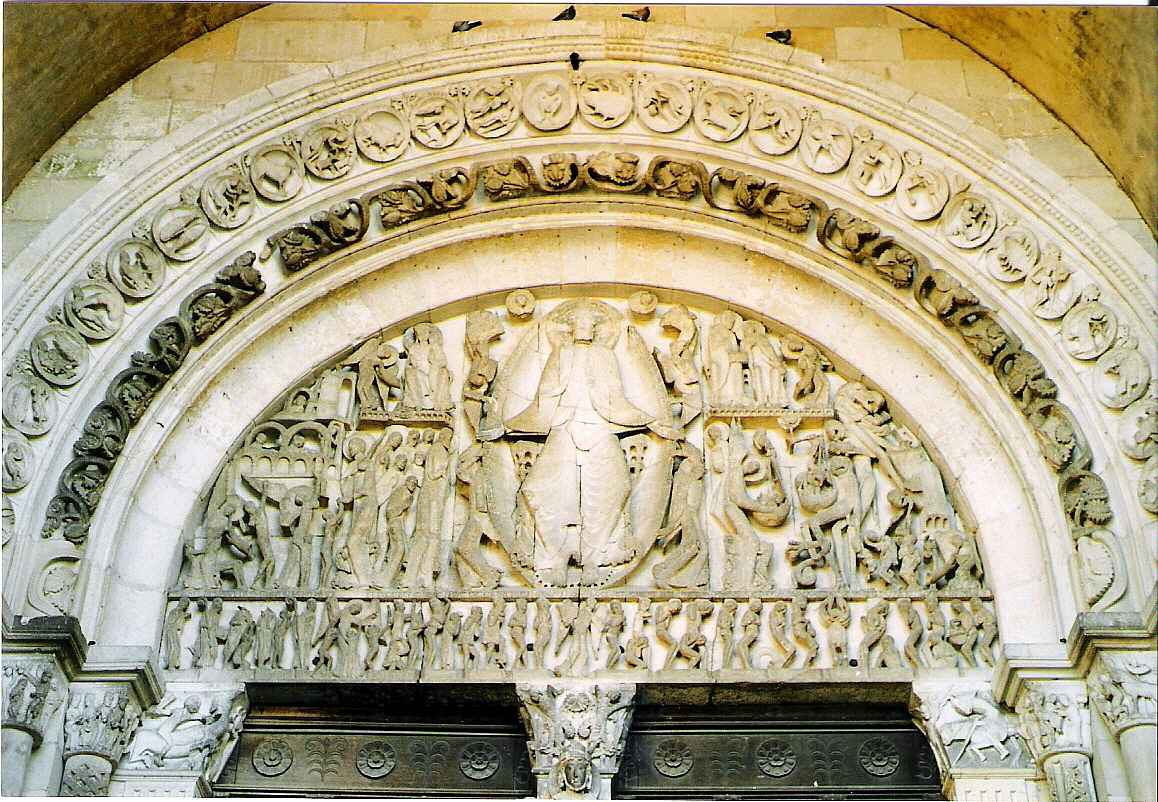
The image functions like a “sermon in stone,” showing the Last Judgment to viewers who could not read. Below, terrified souls rise from their graves as demons drag the damned into hell. Christ’s size and position make his authority unmistakable, i.e., he decides who will be saved and who will be condemned.
Ancient Egyptian art also used this approach, often showing pharaohs larger than servants to signal divine authority.

Monumental Scale
Monumental scale means making things unusually large to impress or intimidate. Classical architecture, propaganda statues, and some modern installation works use this effect.
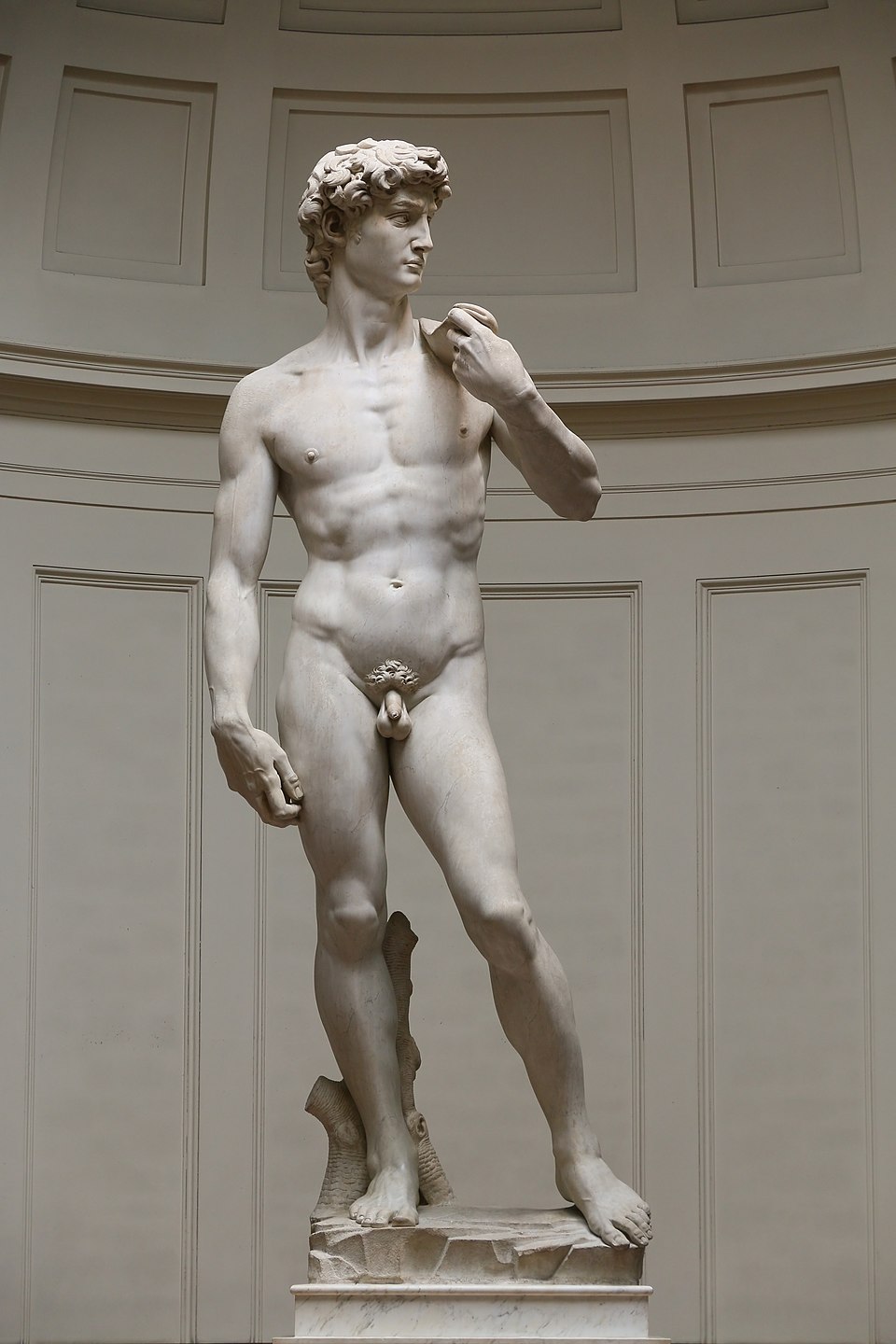
Michelangelo’s David (1501–1504) stands over 17 feet tall, far beyond natural size, which gives the figure a powerful presence even when calm and at rest. Most Renaissance statues were life-size or slightly larger, but David towers over the viewer.
Contemporary artists also work with monumental scale to reshape public space. A good example is Cupid’s Span (2002), where Claes Oldenburg and Coosje van Bruggen placed a 60-foot-tall bow and arrow along the San Francisco waterfront.

The sculpture turns a light, playful symbol into a massive urban landmark. Like much of their work, it uses scale to exaggerate everyday objects, making them feel strange, humorous, and overwhelming at once.
Miniature Scale
Some artists work in reverse, shrinking their subjects to draw the viewer closer. Persian and Indian manuscript painters filled small surfaces with intricate scenes.

Slinkachu, a contemporary artist who stages tiny figures in real-life city streets, turns sidewalks and gutters into large-scale worlds.
Naturalistic Scale
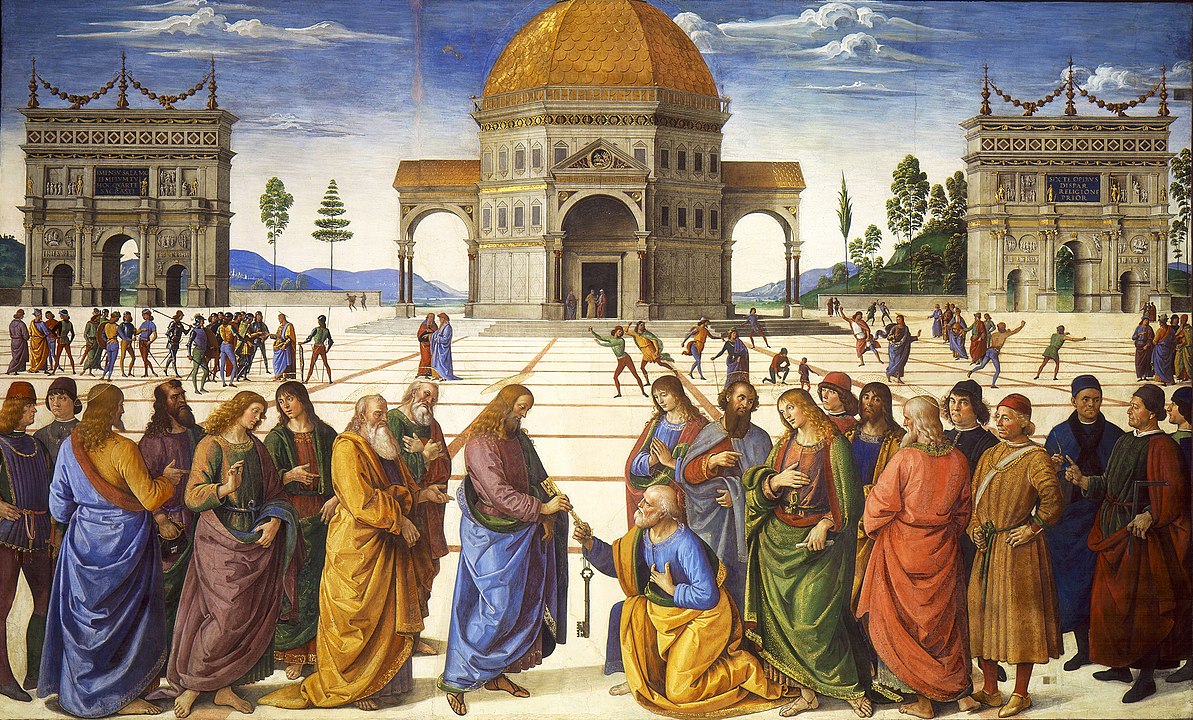
In the Renaissance, artists used naturalistic scale to create believable space. Painters like Perugino applied linear perspective to keep figures in proportion, preserving a sense of distance and depth in complex scenes.
Playing with Scale
Surrealism often bends scale to create strange or dreamlike effects.
In The Elephants (1948), Salvador Dalí paints towering elephants on thin, spindly legs. The distorted proportions make the scene feel unstable and uncanny.
Scale in Film and Photography

In visual storytelling, scale creates atmosphere and emotion. Wide shots can isolate a character in a vast landscape. In Lawrence of Arabia (1962, Columbia), the desert’s scale makes human presence feel small and temporary.
Directors also use scale to play with perception. In The Lord of the Rings trilogy (2001–2003, New Line), director Peter Jackson used forced perspective to make Hobbits appear much smaller than humans, even when shot on the same set.
Summing Up
Scale in art shapes meaning through size. Large-scale artworks or scenes can feel overwhelming or imposing. Small-scale pieces often create a sense of intimacy, encouraging close attention and a more personal experience. Filmmakers and artists rely on this emotional contrast to guide how viewers respond to a work. It helps viewers read importance, distance, and mood.
Read Next: Curious how art movements shaped film?
Explore our full Visual Art Timeline to see how styles like Surrealism, Cubism, and Suprematism influenced cinema’s most experimental moments.
Or keep browsing our Film Movements & World Cinema section for more on the histories that shaped screen culture around the globe.
