

Published: June 17, 2019 | Last Updated: November 18, 2025

What is Proportion in art? Definition & Meaning
Proportion in art is the relative size and scale of the elements in a composition. It describes how parts of an artwork relate to each other and to the whole, affecting balance, harmony, and how the viewer understands space, form, and meaning.
How Artists Use Proportion
Proportion is one of the core principles of design. It helps guide how figures, objects, and spaces are arranged in both realistic and abstract works.
When proportion is accurate, it reflects the way things appear in real life. When it is altered, it can create visual tension, surrealism, or symbolic meaning.
Naturalistic Proportion

Artists who work in a naturalistic style often use correct anatomical or spatial proportions. Renaissance artists studied human anatomy to understand how to depict proportion in a lifelike way. Leonardo da Vinci’s Vitruvian Man (c. 1490) is a classic study of human proportion based on ancient Roman ideals.
The Golden Ratio

The golden ratio, approximately 1.618 to 1, is a mathematical relationship that artists and architects have used for centuries to create visual harmony. It appears in the layout of paintings, sculptures, and buildings.
Classical structures like the Parthenon also follow this system in the spacing of columns and overall dimensions.
Distorted and Symbolic Proportion
Artists sometimes distort proportion deliberately. This choice can suggest importance, emotion, or abstraction. In ancient Egyptian art, for example, pharaohs are depicted larger than attendants to signal power. This technique is known as hierarchical proportion.

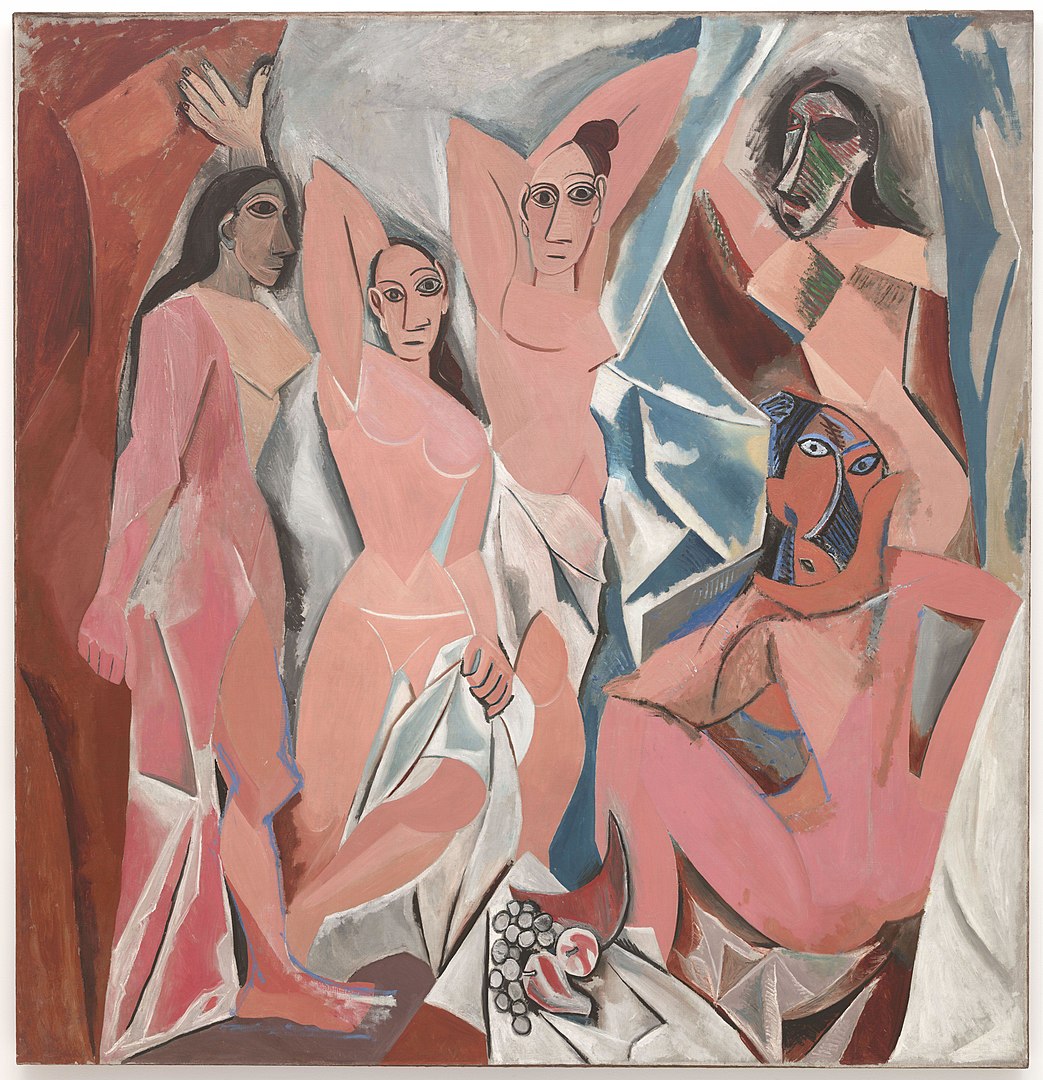
Modern movements also challenged traditional proportion. In Picasso’s Cubist paintings, like Les Demoiselles d’Avignon (1907), figures are fractured and distorted. The goal was not realism but showing multiple perspectives at once.
Proportion vs. Scale

Proportion describes internal size relationships. Scale is how large or small something is compared to the viewer or its environment. A figure might be proportionally correct but appear gigantic in scale.
A good example is Claes Oldenburg’s sculptures of everyday objects (such as a spoon, a banana, or a clothespin) that preserve their correct proportions while dramatically shifting the scale.
Techniques for Achieving Proportion
Artists use several practical techniques to achieve accurate proportion. These include using a pencil or brush to compare distances at arm’s length, dividing the face or body into equal segments, or using a grid to scale up drawings.
During the Renaissance, artists built compositions using geometric planning and measured ratios. Today, digital tools allow artists to map proportions precisely in 2D and 3D work.
Proportion Across Artistic Movements
Different art styles apply proportion in distinct ways.
Renaissance painters used anatomical accuracy and geometry to achieve harmony.
Mannerist artists, such as Pontormo and Parmigianino, exaggerated limbs and torsos for expressive effect.
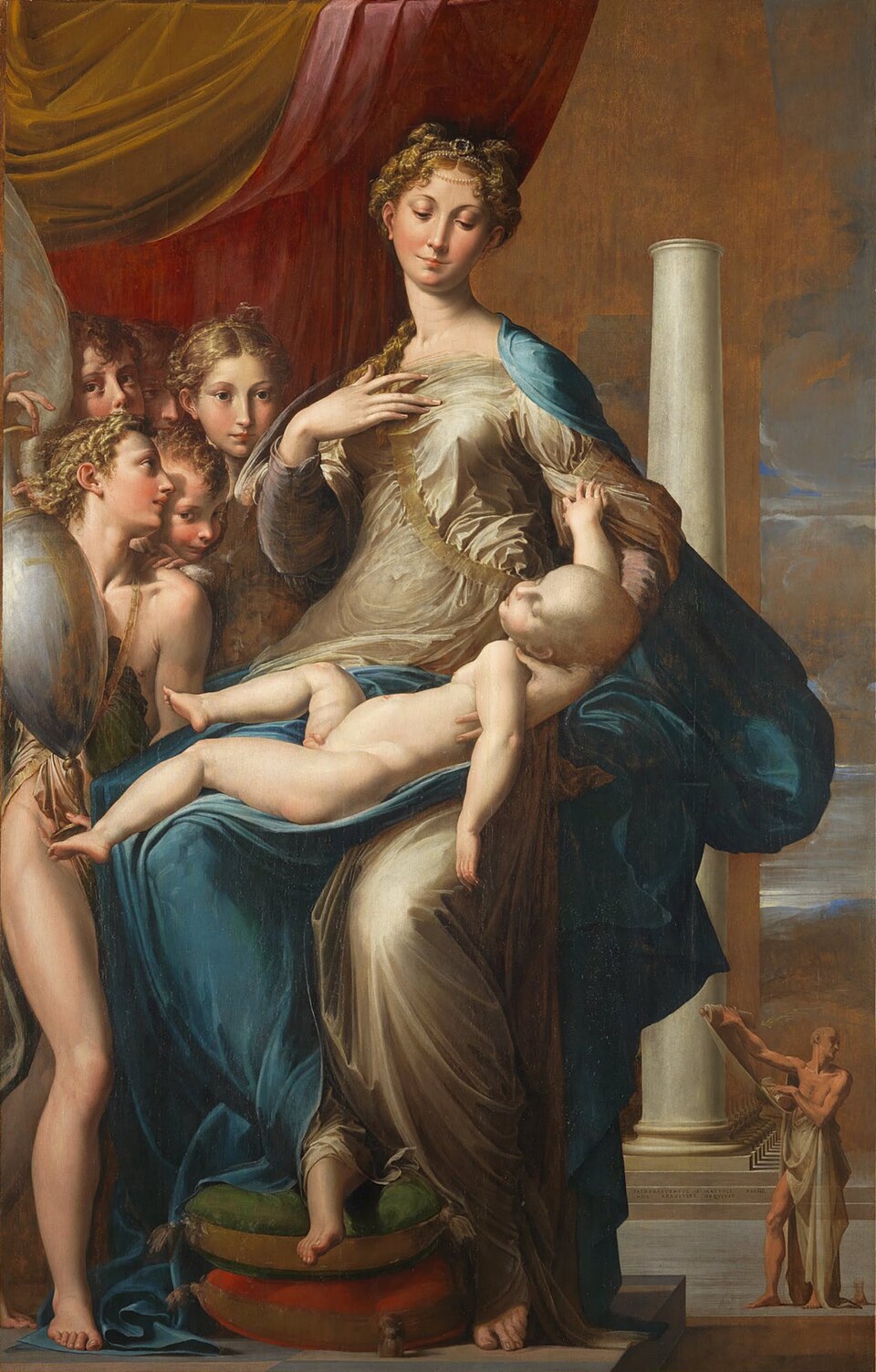
Realist painters focused on accurate scale and form, while Cubists disrupted proportion to explore space.
African sculpture, by contrast, often enlarges heads or hands based on symbolic importance rather than realism.
Proportion in Architecture

Proportion plays a key role in how buildings feel and function. Classical architects used mathematical systems to guide design, balancing structure with harmony.
The Parthenon in Athens shows how columns and spaces were arranged using ratios that feel visually stable.
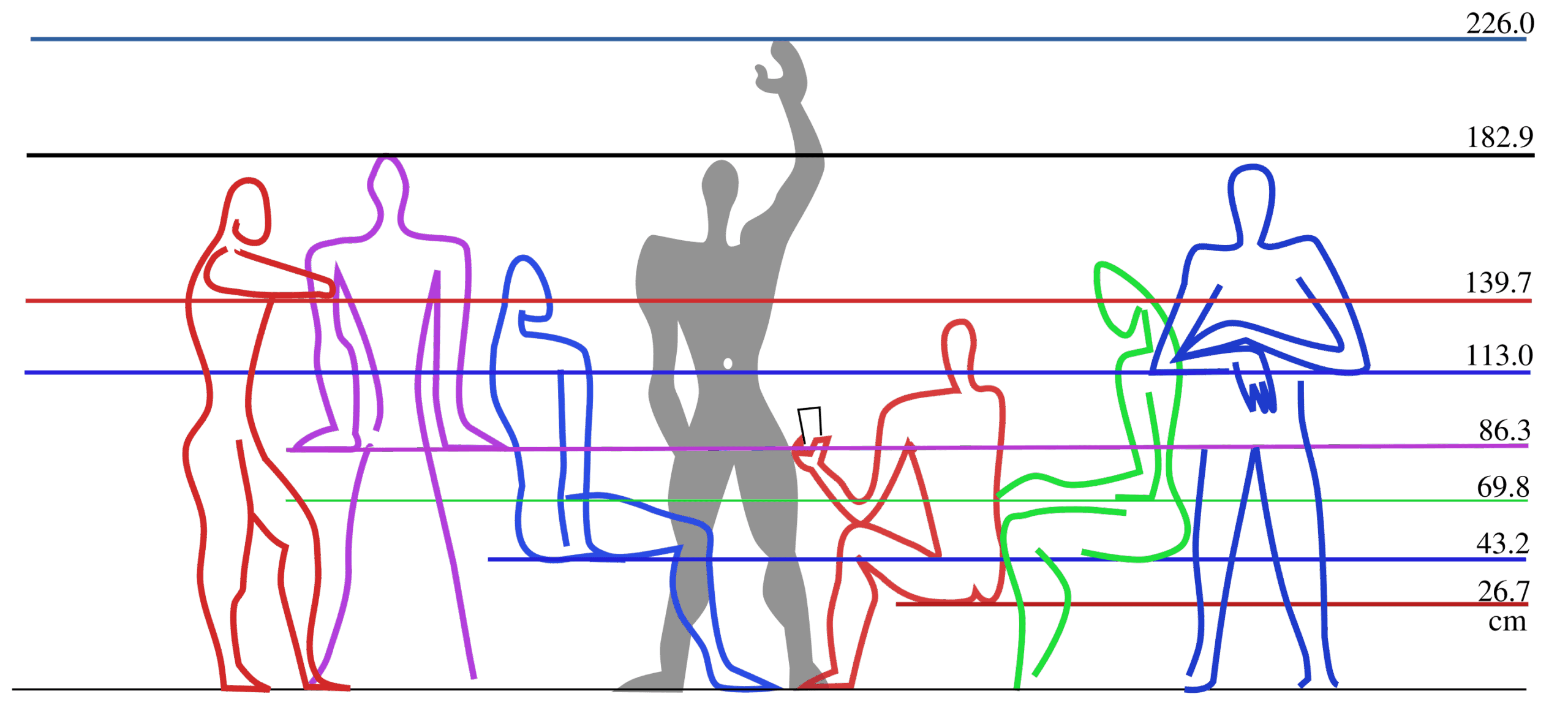
In the 20th century, Swiss-French designer and painter Le Corbusier developed the Modulor system (a scale based on human proportions and the golden ratio and a continuation of da Vinci’s Vitruvian Man) to guide modern architecture.
Contemporary Approaches
Contemporary artists continue to experiment with proportion using new media. Digital tools allow for exaggerated scale, complex layering, and surreal distortion.

In illustration, 3D modeling, and virtual reality, proportion is often adjusted to shape emotional or spatial experience. Though the golden ratio remains a reference point, today’s artists use proportion with more flexibility than ever before.
Proportion in Film Composition
In film, proportion shapes how we understand characters in relation to their surroundings. A good example is Fritz Lang’s Metropolis (1927, UFA) from German Expressionism, which uses monumental set design to make workers appear small and overwhelmed by industrial machines.

The architecture’s exaggerated proportions reflect the film’s themes of class hierarchy and control. Proportion here is used to visually reinforce power structures, not just to frame the scene.
Summing Up
Proportion allows artists to shape meaning, structure, and style through the relative size of forms. Whether it supports realism or abstraction, proportion remains one of the most consistent and powerful tools across all visual art disciplines.
Read Next: Curious how art movements shaped film?
Explore our full Visual Art Timeline to see how styles like Surrealism, Cubism, and Suprematism influenced cinema’s most experimental moments.
Or keep browsing our Film Movements & World Cinema section for more on the histories that shaped screen culture around the globe.

