

Published: June 16, 2019 | Last Updated: January 28, 2026

What is Texture in art? Definition & Meaning
Texture in art refers to the surface quality of an object or image: how it looks or feels to the touch. Texture can be actual (tactile) or implied (visual), and artists use it to create contrast, focus, atmosphere, and meaning within a composition.
Understanding Texture: Actual vs. Implied
Texture is one of the formal elements of art, alongside line, color, shape, and space. It describes the sensory surface of an artwork. This surface can be physically built up or simply suggested through technique. In other words, there is a difference between physical and visual texture in art, i.e., between actual physical texture and implied texture.
Actual Texture (Tactile)

Actual texture refers to a real, physical surface that could be touched. You find this in sculpture, mixed media painting, ceramics, and installation. Materials like canvas, wood, clay, or layered paint contribute their own tactile character.
Artists like Anselm Kiefer build thick layers of paint, straw, and debris into the canvas, pushing the boundary between painting and relief sculpture.
Implied Texture (Visual)
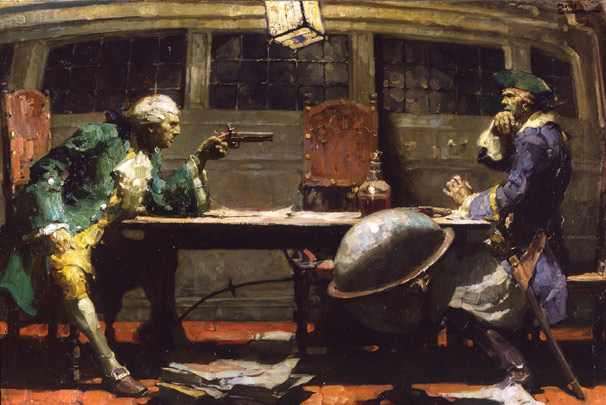
Implied texture appears to have a tactile surface, but is actually smooth or flat. It is created through techniques like hatching, cross-contour, scumbling, digital mapping, or photographic realism.
Traditional oil painters, such as Mead Schaeffer, used intentional brushwork to suggest different surfaces, without adding any actual physical depth (as Kiefer did above).
Types of Texture in Art
Once you understand actual and implied texture, the next step is knowing how artists apply texture in different ways. These categories focus on how texture is designed, imagined, or layered in a visual composition. They help when analyzing painting, drawing, collage, and digital work.
- Simulated texture: Painted or drawn to look like real surfaces, such as fur, wood, or cloth
- Invented texture: Repeating marks or patterns that don’t copy real materials, used for movement or rhythm
- Abstract texture: Textures that are simplified, distorted, or exaggerated to create a visual mood
- Composite texture: A combination of different textures in one image, often used for contrast or storytelling
Let’s look at some cool examples of visual texture in famous paintings:
Simulated texture

In Jan van Eyck’s The Arnolfini Portrait (1434), oil paint creates the illusion of velvet, glass, and metal. Each object has a different surface quality, even though the painting is completely flat.
Invented texture
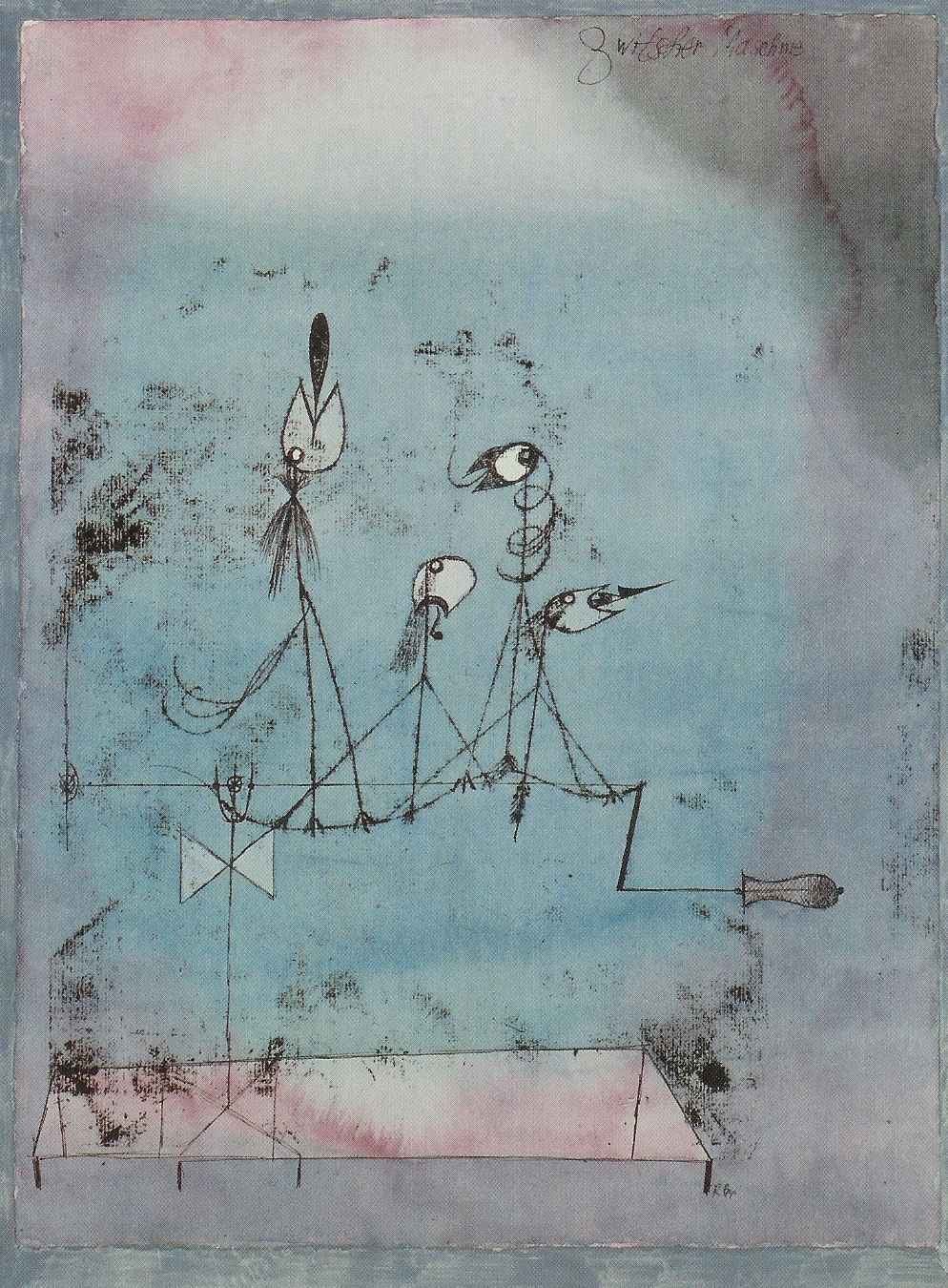
In Paul Klee’s Twittering Machine (1922), repeating lines and hatch marks create playful, rhythmic textures. These marks don’t copy real surfaces but give the image energy.
Abstract texture
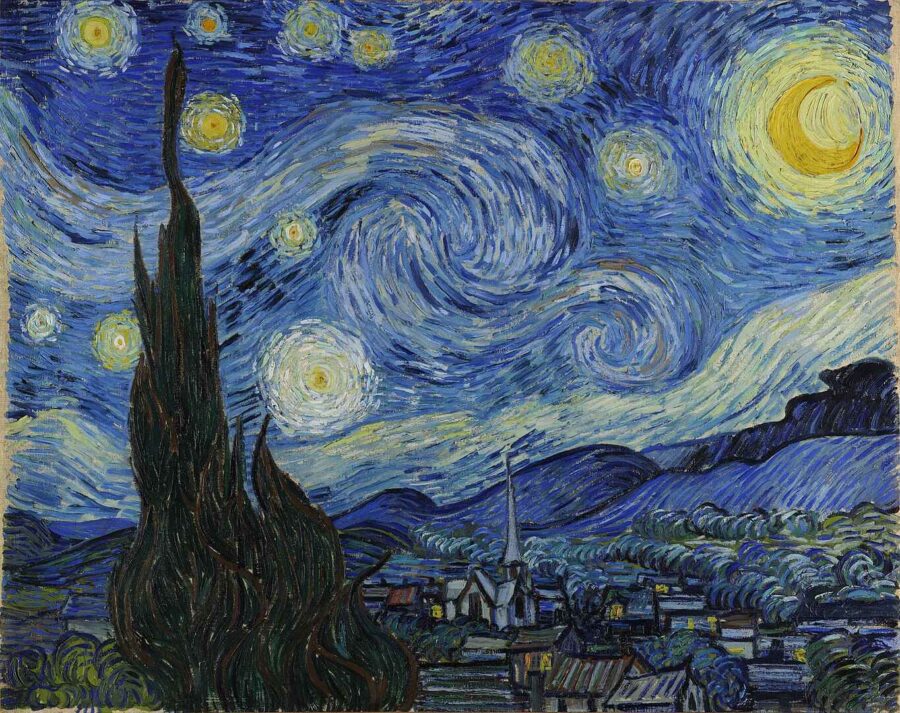
Vincent van Gogh’s The Starry Night (1889) uses thick, swirling brushstrokes. The texture doesn’t describe the actual night sky but adds motion and feeling.
Composite texture
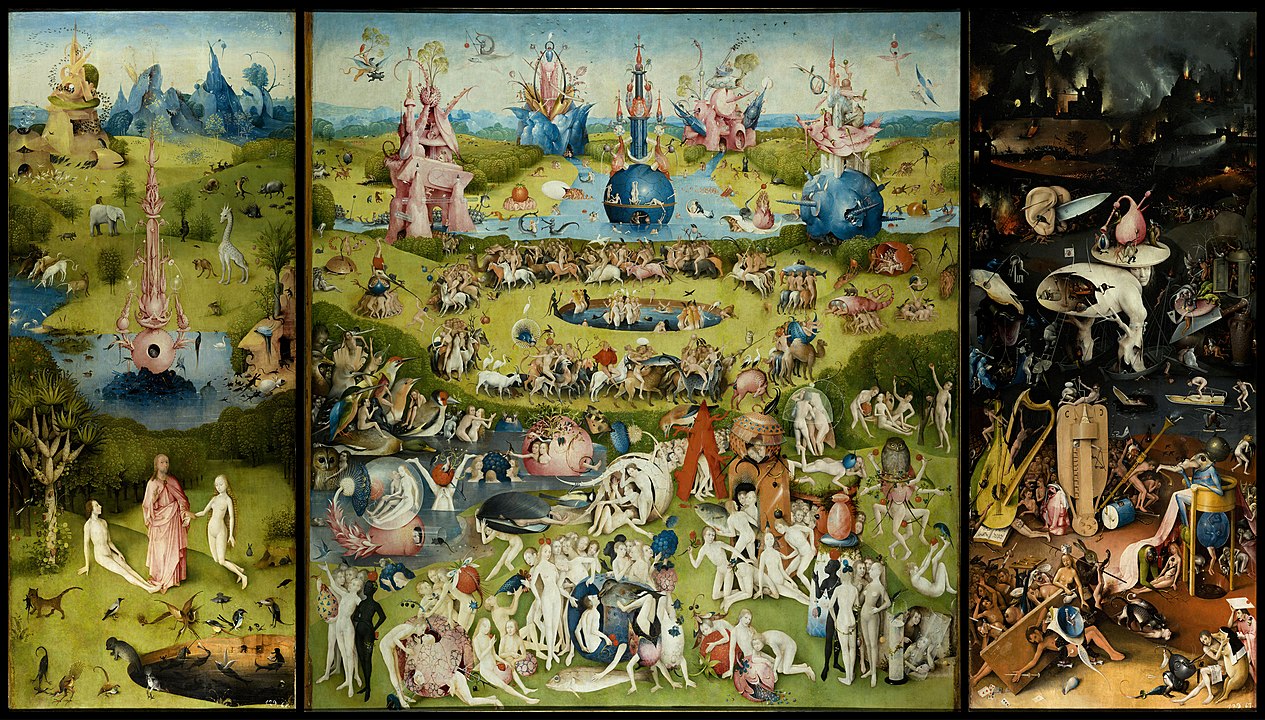
Hieronymus Bosch’s The Garden of Earthly Delights (c. 1490–1510). Bosch layers many types of visual texture across the three panels.
In Eden (left), he paints smooth skin, soft animals, and gentle landscapes. The central panel adds glossy water, shiny metal, and patterned fruit. Hell (right) shifts to jagged structures, dark flames, and matte surfaces.
Each texture feels distinct, even though it’s all oil on panel. Bosch varies the surface treatment based on the subject, making this an early and ambitious use of multiple implied textures in one work.
Comparison Chart
| Texture Type | Definition | Example Artwork | Artist |
|---|---|---|---|
| Simulated | Painted illusion of real materials | The Arnolfini Portrait (1434) | Jan van Eyck |
| Invented | Non-real patterns and marks | Twittering Machine (1922) | Paul Klee |
| Abstract | Stylized or distorted texture | The Starry Night (1889) | Vincent van Gogh |
| Composite | Mix of multiple textures in one work | The Garden of Earthly Delights (c. 1490–1510) | Hieronymus Bosch |
Why Texture Matters in Art
Texture shapes how we see and how we feel about a work of art. Artists use contrast (like rough and smooth, soft and dense, glossy and matte) to guide the eye across the image. Texture can create rhythm, tension, or calm. It can suggest mood, material, or even time of day.
Texture also helps build believable settings. In animation and games, textured environments feel more grounded. A worn surface suggests age. A slick surface feels new or artificial.
A good example is Sleeping Beauty (1959, Walt Disney), where background artist Eyvind Earle used dense brush textures to give the painted world weight and depth. This contrasted with the cel-animated flat character style.

Character of Texture: What It Feels Like
Texture words describe more than touch. Artists use terms like smooth, sticky, rough, slick, or soft to talk about both physical and visual qualities. These choices affect light, reflection, and realism.
A shiny surface bounces light. A matte one absorbs it. A soft texture may feel inviting. A hard one might feel cold or distant.
Texture and Composition
Texture helps organize an image. Detailed areas tend to pull attention. Smooth areas fade into the background. Many artists use this balance to control where the viewer looks. Bob Ross (yes, that one!) often painted trees and rocks with thick texture and kept skies blended and soft.
Contemporary painters like Kerry James Marshall and Carrie Mae Weems use texture to support meaning. Marshall often places sculptural paint beside flat color. That contrast makes the viewer shift between seeing the surface and entering the image.
Texture in Film and Media
In film, texture is visual and atmospheric. It comes through in lighting, set design, and surface detail. Grit, gloss, and grain all carry meaning.
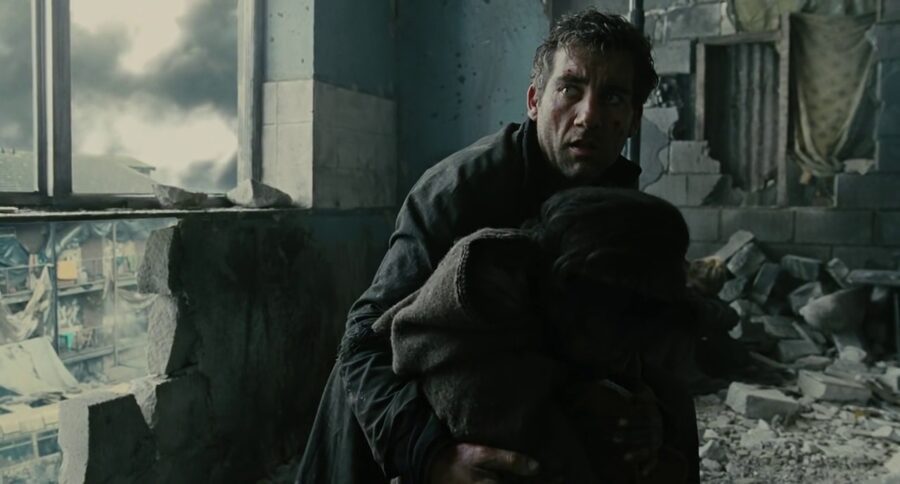
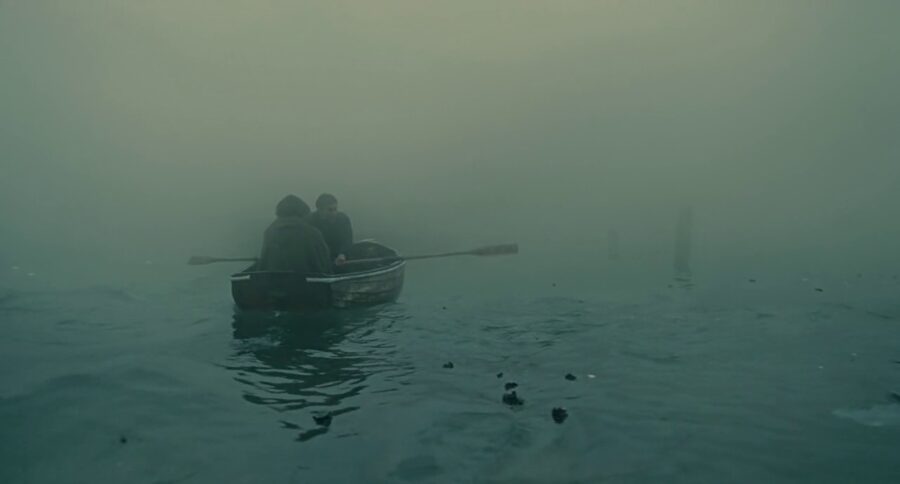
A good example is the grimy, rusted interiors, worn walls, and industrial decay in Children of Men (2006, Universal), which suggests collapse.
The hand-painted surfaces in Loving Vincent (2017, BreakThru) recreate the look of oil painting onscreen. The entire film was painted frame by frame in oil by over 100 artists. The texture is literal, and you can see the impasto brushwork in the faces, skies, and backgrounds. One of the most direct cinematic uses of paint texture to define the entire visual experience.
Digital artists use texture maps in 3D modeling to add roughness, gloss, or bump detail. These maps control how light reacts on a surface. Even in 2D animation, grain and brush patterns are added to avoid flatness and build realism.
Read more on animation.
Artists known for textured paintings (and what to study)
Texture is more than a surface “effect.” It comes from specific choices (think tool, material, and handling) that change how light interacts with the work, where attention gathers, and what the surface suggests emotionally or symbolically. In analysis, focus on where texture appears, how it was made, and what visual job it performs (emphasis, depth cues, atmosphere, realism, or meaning).
Before the list of artists, here is some study advice:
Study tips: how to look for and describe texture in art
If you’re not sure how to approach texture, start with what you can observe. Decide whether it’s actual (physically raised) or implied (visually suggested), then describe where it appears, how it was made, and what it does—especially through light, edges, and emphasis.
What to look for
- Placement: Where is texture strongest, and where is it minimized?
- Process clues: Brush, knife, scraping, stamping, pouring, or added material—what evidence is visible?
- Light behavior: Does relief create bright reflections and small cast shadows under angled/raking light?
- Contrast: Where does the work shift from textured to smooth, and how does that steer attention?
- Interpretation: What might the texture suggest (energy, softness, decay, luxury, realism, process)—and what visible evidence supports that?
Student checklist
- Type: actual vs implied
- Scale: fine vs coarse
- Distribution: concentrated / scattered / uniform / patterned
- Direction: linear / swirling / crosshatched / radiating / random
- Contrast: textured-to-smooth shifts and what they emphasize
- Effect: realism / energy / atmosphere / symbolism / process visibility
- Light and sheen: matte / satin / gloss (paint / medium / varnish) and how it affects visibility
Rembrandt van Rijn
- Known for: localized impasto, often emphasized in highlights
- How it’s made: thicker paint applied in focal zones (for example, light-catching accents)
- Why it’s used: raised passages can create bright reflections and small cast shadows under angled light, reinforcing emphasis and volume
- What to study: contrast between thick highlights and smoother passages; the way texture clusters around focal points rather than covering the entire surface
Vincent van Gogh
- Known for: visible, directional brushwork with frequent impasto
- How it’s made: loaded strokes that remain legible as marks; stroke direction often follows form or motion (for example, swirling skies or directional vegetation)
- Why it’s used: stroke rhythm and direction act like visual “vectors” that guide the eye and convey energy or agitation
- What to study: stroke direction (does it wrap, swirl, or radiate?); density shifts (crowded vs. open passages); where texture intensifies emotional focus
Claude Monet (late period)
- Known for: layered strokes that soften edges and suggest atmospheric shimmer
- How it’s made: repeated, layered applications (sometimes thicker) that break contours and fragment transitions
- Why it’s used: broken edges reduce hard outlines and help suggest changing light on water and vegetation
- What to study: edge behavior (hard vs. dissolved); how small raised strokes can create specular highlights from certain viewing angles
Jackson Pollock
- Known for: poured/dripped paint layered into dense networks of lines
- How it’s made: fluid paint applied through pouring, dripping, and splattering; layers overlap and pool in places
- Why it’s used: the surface records sequences of gesture, gravity, and flow—shifting attention from illusionistic depth to process and movement
- What to study: layer depth (overlaps and crossings); density shifts that steer eye movement; where pooling or thicker build-up changes surface relief
Willem de Kooning
- Known for: repeatedly worked surfaces (dragged, layered, and reworked)
- How it’s made: wet-into-wet manipulation—smearing, dragging, and revising—so the surface shows evidence of change over time
- Why it’s used: visible revision foregrounds process; energetic transitions can produce a sense of tension or instability without requiring literal depiction
- What to study: where edges are smeared vs. crisp; signs of revision (overpainting, dragged passages); how reworking affects figure/ground clarity
Anselm Kiefer
- Known for: heavily encrusted mixed-media surfaces
- How it’s made: thick media and embedded materials (often including substances such as straw, ash, or lead in various works)
- Why it’s used: physical materials can carry cultural and historical associations; surface weight, decay, or abrasion becomes part of the subject
- What to study: how material choice shapes meaning; the relationship between surface damage/accumulation and the themes of the work
Antoni Tàpies
- Known for: “matter painting” with gritty, wall-like surfaces
- How it’s made: added aggregates and binders (for example, sand-like or dust-like materials in some works) to create granular, matte textures
- Why it’s used: the surface itself becomes a primary subject—reading like weathered architecture or “skin,” not just a support for imagery
- What to study: incisions, scuffs, and layered build-up; how texture turns a flat picture into something that feels materially present
Alberto Burri
- Known for: altered materials (for example, burlap, stitched supports, and burned plastics in different series)
- How it’s made: cutting, stitching, patching, burning, and assembling nontraditional surfaces to create real relief and scarring
- Why it’s used: damage and repair become formal and thematic content—texture is not decorative but structural to meaning
- What to study: seams, burns, and patches as compositional elements; how surface transformation changes the “reading” of abstraction
Gustav Klimt (Golden Phase)
- Known for: gilded effects and dense ornament that suggest surface richness
- How it’s made: decorative patterning and metallic effects (including gold-like surfaces in key works)
- Why it’s used: patterned, reflective passages can signal luxury and iconic associations, shifting attention to surface and symbol
- What to study: where ornament replaces modeling; how reflectivity and pattern flatten or intensify figure/ground relationships
Glossary of common critique terms
The terms below are commonly used in critiques and art analysis to describe how a surface is made and how it reads. I recommend using them to replace “rough” or “smooth” with specific observations about technique (for example, impasto or scumbling), physical surface (relief, tooth, sheen), and visual effect (highlights, shadows, softened edges).
| Term | Meaning (how it’s used in critique) |
|---|---|
| Impasto | Paint applied thickly so it stands above the surface; relief can catch light and cast small shadows. |
| Relief | Raised projection from a surface. In sculpture, “low relief” projects shallowly; “high relief” projects more deeply. |
| Facture | A criticism term for visible handling—the marks and material decisions that show how a work was made. |
| Painterly | Brushwork and surface marks remain visible; the “hand” of the artist is legible in the paint handling. |
| Tight / controlled handling | Brushmarks are minimized and the surface is smoother; texture is subdued to prioritize clean edges or finish. |
| Palette-knife work | Paint spread or scraped with a knife, often creating sharp ridges, planar facets, and abrupt transitions. |
| Scumbling | A broken, dry application (often over dry paint) that lets an underlayer show through; useful for haze and grain. |
| Dry brush | Minimal paint on a relatively dry brush so marks “skip” over the surface tooth, producing a scratchy, granular look. |
| Glaze | A transparent layer that typically does not add much physical relief, but can unify color and soften the appearance of texture. |
| Sgraffito | Scratching or incising through a top layer (paint, plaster, or clay) to reveal a lower layer, creating drawn lines as texture. |
| Stippling | Tapping small dots to build a pebbled or vibrating surface. |
| Frottage | Rubbing paper over a textured surface with pencil/charcoal to transfer the texture pattern into the image. |
| Tooth | The “grip” of a surface (paper, canvas, ground) that catches pigment; more tooth often increases visible grain. |
| Ground | A preparatory layer (for example, gesso) that can be smooth or textured and changes how paint sits on the support. |
| Encrustation | Crust-like build-up of paint, medium, or mixed materials that forms a raised, often irregular surface. |
| Patina (primarily sculpture/metal) | Surface alteration from aging or deliberate chemical/pigment treatment; affects color and how texture reads in light. |
| Haptic texture | Emphasizes bodily/tactile presence (the surface feels touchable). |
| Optical texture | Texture suggested mainly through visual illusion (shading, pattern) without physical relief. |
| Raking light | Light at an oblique angle that exaggerates relief by casting small shadows across raised texture. |
Sentence templates for essays and critiques
Use these templates to turn quick observations into clear, evidence-based sentences. Fill in the blanks with what you see in the artwork (where the texture appears, how it was made, and what it does visually).
- “Texture is concentrated in [area], which strengthens emphasis on [focal element].”
- “The surface shifts from [smooth/tight] to [heavily worked/painterly], increasing contrast between [two areas].”
- “Under raking light, the impasto produces minute cast shadows that reinforce the volume of [form].”
- “The facture is [prominent/subdued], and can suggest [mood/tempo] through the rhythm of marks.”
- “Implied texture created by [hatching/pattern/value shifts] makes [material] appear [coarse/soft/reflective] without raised paint.”
With a good disposition and these sentence “template” ideas to get you started, your next texture analysis assignment for art history class is off to a good start.
Texture in sculpture vs. painting
Texture functions differently in sculpture because the surface turns through real space. As the viewer moves (or as the light changes), texture can become more or less visible, and shadows can shift dramatically. Painting can also have real relief (impasto, mixed media), but it is typically read from a more stable, primarily frontal viewpoint.
Quick comparison
| Aspect | Painting | Sculpture |
|---|---|---|
| Light & shadow | Relief can create highlights and small cast shadows across the paint film. | Texture can produce stronger shadow changes because the surface has actual depth and turns away from light. |
| Viewing position | Often viewed primarily frontally; oblique viewing can reveal sheen and impasto more clearly. | In-the-round works change continuously with viewpoint; relief sculpture shifts strongly under raking light. |
| Material meaning | Texture may describe materials (skin, fabric) or function symbolically/processually. | Texture is closely tied to the object’s material identity (stone, bronze, clay, wood) and method (carving, casting, modeling). |
| Process evidence | Brush/knife marks can foreground the act of painting. | Tooling, casting traces, seams (retained or removed), and patina often reveal how the object was made and finished. |
Useful texture vocabulary for sculpture
In sculpture analysis, these terms help you describe how the surface was formed and finished, and how those choices affect the texture you see under changing light and viewpoints.
- Modeled: Shaped by adding material (clay or wax), often preserving fingerprints or tool marks.
- Carved: Formed by removing material (stone or wood), leaving chisel direction, facets, or polished planes depending on finish.
- Cast: Formed in a mold (bronze, resin). Casting can preserve very fine textures; seams can be retained or chased away.
- Tooled: Surface shows deliberate marks from tools (chisel, rasp, modeling tools), which become part of the final texture.
- Polished vs. rough/abraded: Polished surfaces reflect light smoothly; rough or abraded surfaces scatter light and emphasize grain and toolmarks.
- Patinated: Surface treated (especially in bronze) to alter color and depth, affecting how texture reads under light.
Summing Up
Texture in art is a tool for feeling, structure, and meaning. Whether created with real materials or simulated with software, texture helps define space and material. It guides the eye, shapes the mood, and grounds the image in a physical world. Learning how to use texture gives artists more control over how their work is seen and felt.
Read Next: Curious how art movements shaped film?
Explore our full Visual Art Timeline to see how styles like Surrealism, Cubism, and Suprematism influenced cinema’s most experimental moments.
Or keep browsing our Film Movements & World Cinema section for more on the histories that shaped screen culture around the globe.
