

Published: February 8, 2024 | Last Updated: February 4, 2026

Overview
Definition: Foreshadowing is a deliberate early detail that prepares you for a specific later payoff.
What you’ve seen before: You notice a small line, prop, or shot that feels normal. Later, the story uses it again, and it suddenly matters.
Example: In Jurassic Park (1993, Universal), Alan Grant demonstrates a raptor claw and explains how raptors hunt. Later, the kitchen sequence pays it off when the raptors test the kids’ hiding places and coordinate as a pair.
Why it matters: Foreshadowing makes later turns feel earned because the setup is already on the page and on screen. It also affects craft choices. You decide which details appear early, how much attention the camera gives them, and whether the detail repeats. Push the hint too hard and you tip the surprise.
- Key takeaway 1: Plant one clear detail early, then pay it off later in a specific moment.
- Key takeaway 2: Control emphasis with framing, duration, focus, and repetition.
- Key takeaway 3: Test the chain. Remove the setup and see if the payoff gets weaker.
Next, we’ll define foreshadowing in a broader way, then break down the main types and the film tools you can use to plant it.
What is Foreshadowing in film? Definition & Meaning
Foreshadowing is a technique where you plant an early hint that later pays off as a plot event, a character turn, or a theme reveal. The hint usually looks like normal detail until the payoff makes its purpose clear.
Good foreshadowing feels fair in hindsight. After the payoff, you can point to earlier details and explain why they mattered. On a first watch or read, those details can look like atmosphere, character texture, or simple set dressing.
Why you use foreshadowing
Foreshadowing helps you control attention and expectation. It creates tension now, then it makes later moments land with extra meaning.
- Build suspense when you plant a quiet question early and delay the answer.
- Make twists feel earned because earlier scenes contain clues you can re-read later.
- Create cohesion when early details connect cleanly to later outcomes.
- Reinforce theme by repeating images, sounds, or phrases with a consistent meaning.
Types of foreshadowing in narrative writing
Foreshadowing can be obvious or subtle. It can also live in different places, such as dialogue, imagery, structure, or symbolism.
1) Overt (direct) foreshadowing
Overt foreshadowing signals what is coming in a clear way. You see it through warnings, prophecies, narration, or a character stating what they fear will happen.
Common in: tragedies and suspense-driven stories where anticipation matters more than surprise.
2) Subtle (indirect) foreshadowing
Subtle foreshadowing hides inside normal detail. A throwaway line, a background object, a small habit, or a brief look feels ordinary until the payoff makes it matter.
Common in: twist-driven plots and rewatchable mysteries.
3) Symbolic foreshadowing
Symbolic foreshadowing uses recurring images (weather, animals, colors, repeated objects) to point toward theme or character direction without predicting one exact plot beat.
Common in: character-driven and theme-driven stories.
4) Structural foreshadowing (patterns and parallels)
Structural foreshadowing builds expectation through repetition. You may see mirrored scenes, repeated situations that escalate, or a line that returns later with sharper meaning.
Common in: stories built around escalation, inevitability, or gradual character change.
5) Genre-based foreshadowing
Genre-based foreshadowing uses genre rules to prepare consequences. A horror film may establish a rule early, then punish a character for breaking it later.
Common in: horror, noir, action, and comedy.
Foreshadowing in film: techniques and examples
Film can plant setup through image, sound, performance, and editing. A hint can sit in props, framing, music, camera focus, or the way scenes cut together.
Spoiler note: Foreshadowing overlaps with reveals. The examples below stay general, but they still point toward later turns.
1) Dialogue that reads as casual until it matters
Dialogue can hide a clue inside normal speech. A line can play as a joke, a complaint, or small talk. Later, the same wording can land as clear setup.
- What to watch for: unusually specific wording, a line that repeats later, or a phrase that returns with new meaning.
- How to use it: keep the line natural for the moment. Avoid “clue dialogue” unless the character has a reason to talk that way.
Example pattern: In Fight Club (1999, 20th Century Fox), the narrator sometimes talks as if Tyler’s knowledge is his knowledge. After the reveal, those lines read like early setup for identity.
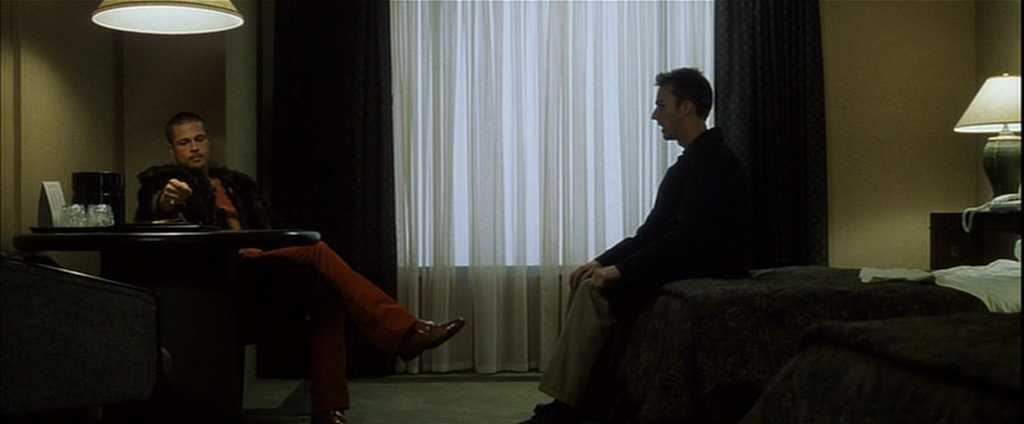
- Shared knowledge phrasing: the narrator frames certain facts as something he “knows” through Tyler, which fits the later reveal.
- Extreme worldview lines: Tyler’s statements about loss and freedom point toward the destructive path the film builds toward.
See more: What is dialogue in film? Definition and examples.
2) Props and objects with payoff potential
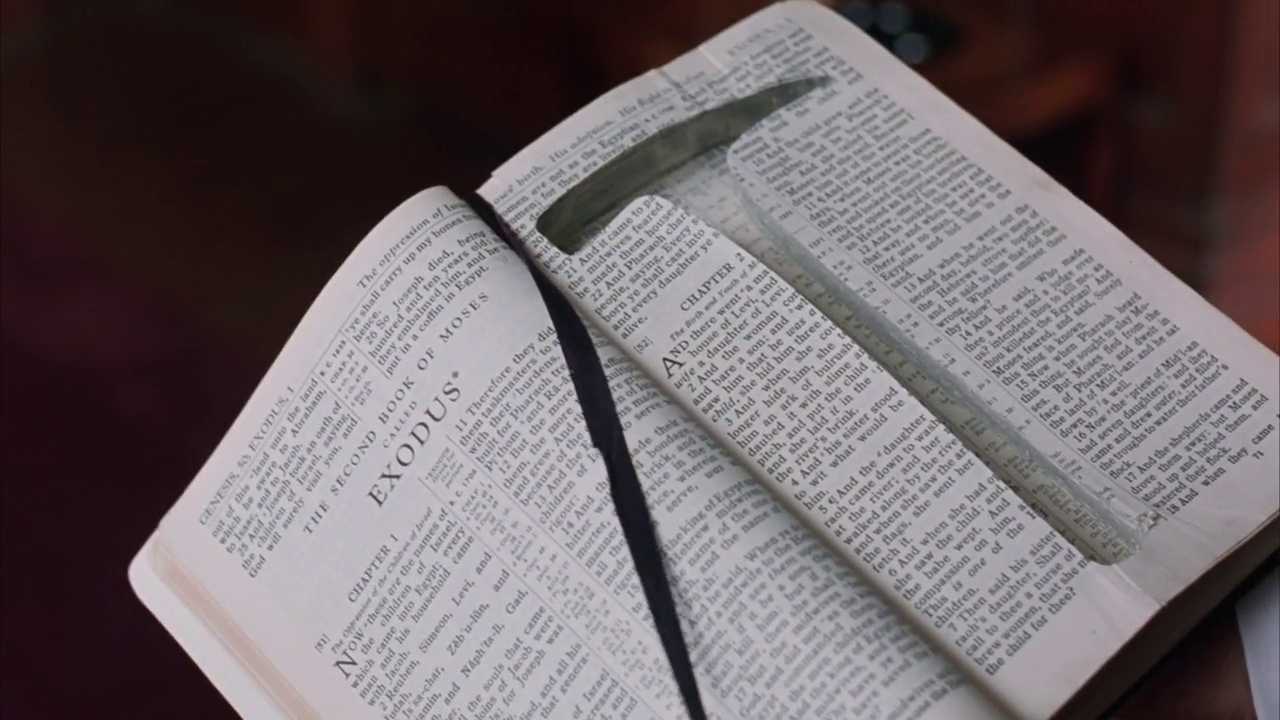
A prop becomes setup when it appears early and later becomes important (a key, note, medication, photo, tool). The object should feel believable in the world before it becomes plot-relevant.
- Rule of thumb: extra emphasis (a close-up, repeated framing, deliberate focus) is a strong signal, but it is not proof. Directors also linger on objects to build mood or reveal character.
- How to use it: introduce the object for a normal reason, then let the payoff arrive later through action.
Example pattern: A tool or hobby looks harmless early. Later, the same detail becomes evidence of long-term preparation.
In The Shawshank Redemption (1994, Columbia Pictures), Andy’s interest in rocks reads like a quiet hobby at first, then the film reframes it as planning. The Bible works as foreshadowing because the story sets up the warden’s earlier cell search. The warden hands the Bible back and says, “Salvation lies within.” Later, when he finds the rock hammer inside the same Bible, the line flips into payoff. The page is Exodus, which fits the escape because Exodus is about leaving captivity.
3) Blocking and framing
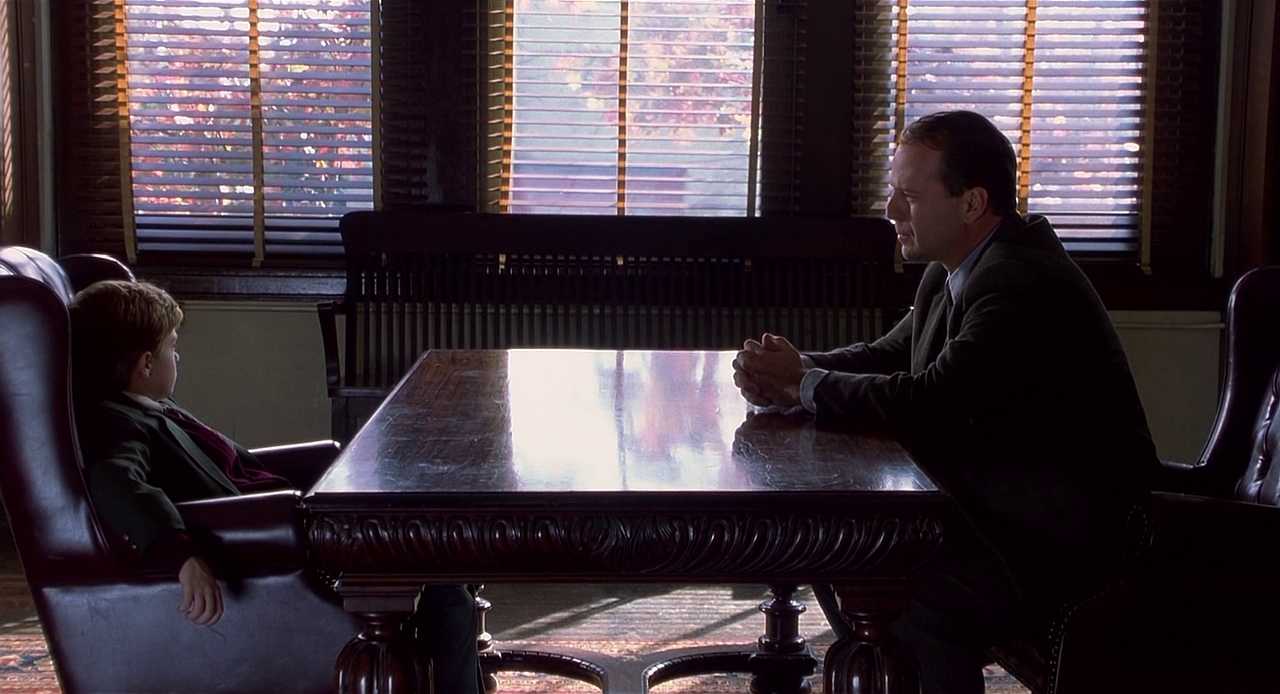
Blocking and framing can hint at power, concealment, isolation, or threat before anyone says it out loud. Watch who stays centered, who gets pushed to the edge, and what sits between characters.
- How to use it: keep emphasis brief. One clear composition choice can plant the idea, then the scene can move on.
Example pattern: In The Sixth Sense (1999, Hollywood Pictures), Malcolm is often staged slightly apart from other adults. That pattern supports the film’s later reframing of what you have been watching.
4) Sound and music cues
A recurring sound cue or musical phrase can teach you an association (danger, guilt, longing). When the cue returns, you feel the meaning before the plot confirms it.
- How to use it: give the cue one clear meaning, then repeat it with control. Too many meanings can blur the signal.
Example pattern: In Jaws (1975, Universal), the two-note motif signals the shark’s presence. The music builds dread before the threat appears on screen.
See also: Diegetic and non-diegetic sound design in movies.
5) Visual motifs (repeated images)
A visual motif is a repeated image (reflections, doors, clocks, water, animals, patterns) that carries meaning. Motifs often foreshadow theme or character direction. Some motifs also support plot payoffs.
- How to use it: pick one or two motifs and keep their meaning consistent across the film.
Example pattern: In The Shining (1980, Warner Bros.), the maze returns in different forms. The repetition prepares you for the final chase and the feeling of entrapment.
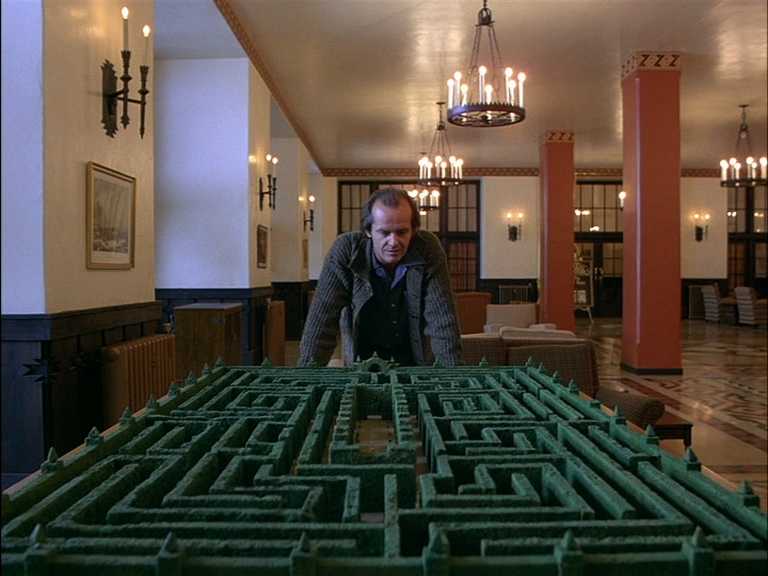
Here are a few motif patterns the film repeats:
- The maze: the film introduces it early, then returns to it as danger escalates.
- “REDRUM”: Danny writes “REDRUM,” and the meaning becomes clear when you see it in a mirror.
- The typewriter pages: the repeated line signals Jack’s collapse before the final threat.
- The elevator blood image: the repeated flood of blood points toward the Overlook’s violent history.
- Ghostly figures: appearances of past guests suggest a cycle that keeps repeating inside the hotel.
You might also like: How to create subtext in movies and screenplays.
6) Editing and transitions
Editing can prepare you for what comes next by connecting ideas. A cut can link fear to a place, or link desire to cost, before the consequence arrives.
- How to use it: connect scenes by idea (cause to consequence; desire to cost), not only by time.
Quick, low-spoiler patterns you can recognize
These patterns show up across many films, especially in thrillers, mysteries, and horror.
- Threat preview: a repeated cue appears before the threat fully arrives.
- Twist readiness: early scenes avoid specifics, skip key reactions, or use careful wording that gains meaning later.
- Consequence setup: a repeated habit, shortcut, or lie creates a path that later turns into fallout.
Visual foreshadowing in movies explained
Visual foreshadowing is setup delivered through imagery rather than direct explanation. It can point toward a plot outcome, a character shift, or a theme reveal. It often becomes easier to spot on rewatch.
Common forms of visual foreshadowing
Visual setup often hides in what the camera shows, what it withholds, and what it repeats.
- Background details: a headline, a date, a warning sign, or a detail placed where your eye naturally lands.
- Costume and color choices: wardrobe or palette shifts that match a character’s change, based on the film’s own visual logic.
- Composition choices: framing that suggests separation, confinement, vulnerability, or dominance (doorways, barriers, distance).
- Mirrors and doubles: reflections and symmetry that suggest hidden identity, split motives, or inner conflict.
Foreshadowing can hint at what will happen later in the plot, but it can also prepare theme and character turns. In film, those hints can come from dialogue, visuals, music, performance, or editing.
How to identify foreshadowing in movies
To spot foreshadowing, watch what the film repeats and what it highlights. Setup often hides inside emphasis. A close-up, a pause, or a repeated sound can tell you, “Store this for later.”
What to look for
This checklist helps you separate normal detail from detail the film wants you to remember.
- Repetition: repeated lines, images, sounds, or objects often signal that you should hold onto them.
- Deliberate emphasis: close-ups, a pause that isolates a detail, or a quiet beat that frames an object.
- Unusually specific detail: a prop, line, or gesture that feels more precise than the scene needs.
- Rules and promises: early statements about what is forbidden, dangerous, or required often get tested later.
- Repeatable micro-choices: habits, lies, avoidance, or coping strategies can point toward later consequence.
A fast rewatch method
After a reveal, rewatch the first act and ask these questions:
- What did the film emphasize that I ignored?
- What did characters avoid saying directly?
- What objects or sounds arrived with noticeable attention?
Those moments are common places where setup gets planted.
Rules of thumb (not hard rules)
When spotting foreshadowing, treat these as signals, not guarantees. Films emphasize details for many reasons (mood, theme, character, comedy, pacing), so emphasis alone does not prove a later plot payoff.
- If a detail is emphasized once: it may be atmosphere or theme, not setup.
- If it is emphasized and repeated: the odds increase that it matters (plot, character, or theme).
- If emphasis lands near a turning point: the detail is more likely to be intentional setup.
- If the detail connects to a stated rule: the detail is more likely to return later as payoff.
- If nothing pays off in plot: the emphasis may still be doing thematic work through motif or emotion.
Quick check: Ask, “Is the story training me to remember this?” If yes, it is probably foreshadowing, or deliberate misdirection like a red herring.
Foreshadowing in literature: definition and examples
In literature, foreshadowing uses early hints that later pay off, but the tools are different. Writers can use narration, tone, pacing, imagery, and scene placement to prepare you for what comes next.
Common literary techniques for foreshadowing
These are common ways a book plants setup without spelling it out.
- Tone shifts: narration turns ominous before danger arrives.
- Unusually vivid description: one object, place, or gesture gets more detail than the rest of the scene.
- Recurring imagery: repeated references (storms, rot, light and dark, broken objects, doors, birds) build expectation.
- Strategic omission: the narrator skips past something important or avoids direct explanation.
- Scene placement: setup often lands at chapter openings and closings because attention resets during a shift.
A simple example you can recognize
A narrator mentions a “harmless” habit (a character never locks the door, ignores a small pain, leaves a candle burning). It reads like character detail at first. Later, the same habit becomes the mechanism of a consequence.
Famous examples of foreshadowing in classic books
These works are often discussed for how they prepare later outcomes through early setup, tone, and repeated imagery. The notes below stay spoiler-light, but they still describe the kind of setup each book uses.
- Of Mice and Men (John Steinbeck): early scenes stress strength, accidents, and “small harm,” which prepares later consequences.
- Romeo and Juliet (William Shakespeare): the prologue and repeated doom language make the ending feel inevitable long before it arrives.
- The Great Gatsby (F. Scott Fitzgerald): repeated warnings about carelessness, plus imagery tied to decay, points toward disaster.
- Lord of the Flies (William Golding): early symbols of order weaken step by step, which prepares the breakdown.
- Jane Eyre (Charlotte Brontë): strange sounds, locked spaces, and anxious reactions hint that the house contains a concealed truth.
- Frankenstein (Mary Shelley): early warnings about ambition and responsibility set up the long chain of consequences that follows.
Foreshadowing vs. red herring and Chekhov’s Gun
These terms can feel similar because they all relate to clues. The purpose is different in each case.
Foreshadowing vs. red herring
Foreshadowing is intentional setup that later connects to a payoff (plot, character, or theme). A red herring is plausible misdirection that pushes you toward a false conclusion.
Mysteries often use both. Foreshadowing makes the ending feel fair. Red herrings keep the guesswork alive.
Chekhov’s Gun vs. foreshadowing
Chekhov’s Gun is a principle linked to Anton Chekhov, a Russian playwright and short story writer. The idea is simple: if a story draws strong attention to a detail, that detail should matter later. Foreshadowing is broader. It includes subtle setup that prepares plot, theme, or character.
- Chekhov’s Gun: prominent setup with clean payoff.
- Foreshadowing: subtle setup that can support plot, character, or theme.
Memory aid: Chekhov’s Gun is about what you spotlight. Foreshadowing is about how you prepare the payoff.
Foreshadowing techniques for writers and screenwriters
A reliable way to write foreshadowing is to plan the payoff first, then plant setup earlier in the draft. During revision, you can tune how visible the hint feels.
Practical techniques you can use immediately
These techniques work for novels and scripts because they focus on cause, attention, and payoff.
- Plant a normal version early: introduce the object, location, or behavior in an everyday context.
- Write for two reads: build a line or image that reads one way now, then reads differently after the reveal.
- Embed setup in character: let habits, fears, values, and blind spots plant details that later turn into action.
- Repeat with escalation: bring back a detail two or three times with higher stakes each time.
- Control emphasis: heavy spotlight makes a clue obvious; zero spotlight can make a payoff feel random.
- Mix setup types for major turns: combine rules, emotion, and concrete detail for a stronger chain of logic.
A quick self-edit checklist
This checklist helps you test whether the setup is fair and readable in hindsight.
- If a detail is emphasized, does it pay off as plot, character, or theme?
- If a twist happens, did I include at least one clue that becomes clear in hindsight?
- Do the hints match character motivation and the rules of the world?
- Do I have too many setups competing for attention?
Summing Up
Foreshadowing helps a reveal feel earned. You plant a detail early, then you pay it off later. When it works, you can rewatch the first act and trace a clear path from setup to outcome.
Read Next: Curious how film theory shapes the way we watch movies?
Start with the Film Theory section to break down realism, formalism, structuralism, and more — with examples from iconic films.
If you want studying film theory I recommend starting with The FilmDaft overview of film theory discourses to break down realism, formalism, structuralism, and more — with examples from iconic films.
Then explore the full Film History, Theory & Genre collection to see how movements, styles, and storytelling traditions have evolved.
Whether you’re into Soviet montage or 2000s genre mashups, there’s something here to sharpen your understanding.
